Oncidium (Dancing Lady Orchid) Growing Methods and Precautions, with Detailed Explanation of Blooming Period and Propagation Methods
Oncidium is native to the United States, Mexico, Guyana and Peru. So what are the growing methods and precautions for Oncidium? When does it bloom? How do you propagate it? According to available information, Oncidium likes humid and semi-shaded conditions. Besides watering to increase humidity, you should frequently spray water on the leaves and the ground. Increasing air humidity at the right time is very important for leaf growth. Thick-leaved varieties have very strong drought tolerance, and will not dry out and die if not watered for a long time in winter.
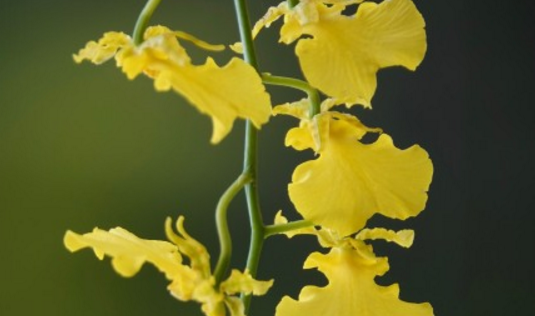
I. Growing Methods and Precautions for Oncidium
Soil Requirements
Oncidium likes a relatively dry environment. Before planting, lay a layer of broken tiles and broken bricks at the bottom of the pot. The soil should preferably have good drainage and aeration. You can choose a mix of 4 parts crushed fern roots, 1 part peat soil, 2 parts crushed charcoal, 2 parts vermiculite and 1 part sphagnum moss.
Light and Temperature Requirements
Oncidium likes a semi-shaded environment. In winter it can be grown under full sun without shading, which can promote flowering. In other seasons, do a good job of shading to avoid scorching the leaves.
Different varieties of Oncidium have different temperature requirements. For thick-leaved varieties, the temperature must not be lower than 12 degrees C, and the most suitable growing temperature is 18-25 degrees C; for thin-leaved varieties, the most suitable growing temperature is 10-22 degrees C, and the minimum temperature must not be lower than 8 degrees C.
Water and Fertilizer Requirements
Oncidium likes a relatively dry environment, and you can water when the soil surface becomes dry. During the growing season, you can appropriately increase the amount of watering, watering once in the morning and once in the evening, making sure there is no water accumulation. In winter, reduce the amount and frequency of watering; controlling water is good for flowering. When the temperature is below 10 degrees C, stop watering to avoid cold damage.
In spring and autumn, apply organic fertilizer once every 20 days, with all elements balanced, either by drenching the roots or spraying the leaves. Do not fertilize when the winter temperature is too low.
Precautions:
Repotting Time
Repotting Oncidium is usually done after flowering. For small Oncidium seedlings, it should be done before the growing season, such as in early spring or after autumn when the weather is cool. When repotting, according to the plant's growth, either move it to a larger pot or replace part of the soil.
Watering Method
In summer, pay attention to shading and cool the plant down promptly when the temperature is high. In midsummer, water once a day, watering thoroughly, that is, until water flows out from the bottom of the pot. At other times, water when the soil is half dry.
II. When Does It Bloom?
The flowering period of Oncidium generally begins in mid-October each year. Its flowering period is relatively short, the flowers are plain and beautiful, and there are many varieties, making it highly ornamental.
However, because the species are diverse and the growing regions differ, the flowering periods vary, and there is no fixed flowering period.
Oncidium is an important raw material for potted flowers in the world.
III. How to Propagate?
1. Division Propagation
Oncidium is a sympodial type of orchid. After the plant matures, it will produce offset plantlets. We need to wait for these offset plantlets to grow pseudobulbs, then cut off the offset plantlets. Generally, the pseudobulbs with two buds are cut off, so they can be planted directly in a pot with sphagnum moss. The air humidity needs to be a bit higher, which can encourage the bud-bearing pseudobulbs to quickly grow new shoots and new roots.
This method of division propagation is generally carried out after Oncidium blooms or in spring and autumn.
2. Tissue Culture Propagation
When using this propagation method, you need the young shoots growing from the base of the Oncidium. First, use 70% alcohol to disinfect the surface of the young shoots. After disinfection, rinse them clean with sterile water, thinly slice the stem tips, and inoculate them on a previously prepared culture medium. Maintain a certain warmer environment. Generally, after more than 20 days, new shoots will grow and roots will develop. It takes about one hundred days to grow two or three leaves, and then it is a complete seedling.
However, this culture method has relatively high technical requirements, and it is not commonly used in our daily flower growing.
3. Hydroponic Culture
This culture method is also very technical. Hydroponic culture of Oncidium requires more than half a year of cultivation in a professional hydroponic flower base, allowing Oncidium to grow water roots and fully adapt to a still-water environment. Growing Oncidium in water also looks very beautiful, and placing it in a home environment or work environment is very elegant and attractive. In the future, hydroponic cultivation of Oncidium will become a new trend.