Differences Between Calibrachoa and Petunia and Their Flowering Care Methods
Calibrachoa, also known as million bells, is a perennial herb often grown as an annual or biennial. So what is the difference between calibrachoa and petunia? When does it bloom? How do you care for it? According to information, although calibrachoa has a relatively long flowering period, its ability to adapt to the environment is average, and only careful care can make year-round blooming possible.
I. What Is the Difference Between Calibrachoa and Petunia
1. Differences in Flowers
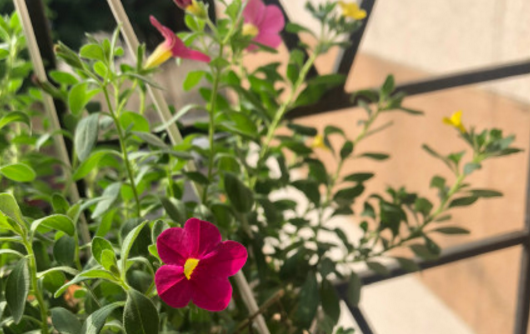
The flowers of calibrachoa are smaller than those of petunia, with a funnel-shaped corolla, and the flower colors are relatively rich. The flower shape resembles a bell, which is why people affectionately call it “million bells”.
The flowers of petunia are larger than those of calibrachoa, funnel-shaped, colored white, purple, or various shades of red, with colored edges.
2. Differences in Leaves
The leaves of calibrachoa are smaller than those of petunia, relatively smooth, oblanceolate or narrowly elliptic, with entire margins.
The leaves of petunia are relatively large, soft in texture, and ovate.
3. Differences in Stems
The stems of calibrachoa can become semi-lignified or even lignified, but petunia does not show this condition.
II. When Does It Bloom?
1. Spring is the flowering period of calibrachoa; generally, beautiful flowers can bloom in the same year after sowing. The flowering period of calibrachoa is relatively long, lasting up to several months. Calibrachoa growing in Europe can bloom from April each year until frost. The corolla is trumpet-shaped, and the flower forms include single, double, ruffled petal edges, or irregular serrations. The flower colors are rich, including not only red, white, pink, and purple, but also various types with spots, netting, and stripes.
2. The flowering period of a single flower is relatively long; each flower can bloom for about a week, and the whole branch is covered with dense flowers, playful and lovely. Because its flowers resemble bells, plus its abundant quantity, it is called “million bells”. There is also an interesting saying that flower lovers who own “million bells” can call themselves “millionaires”, and by the same logic, if they own more than ten pots of “million bells”, then they become “ten-millionaires”, the kind of people envied, resented, or even “robbed” by everyone.
III. How Do You Care for It?
1. Hard Pruning
After the flowering period of calibrachoa, it is basically autumn and winter, and hard pruning should be carried out in the early stage of winter, when the temperature is relatively suitable. The stems of calibrachoa are prone to lignification, so during hard pruning, cut off weak branches, keep strong branches with buds, and also keep the whole plant at a height of about 10-15 cm; after that, you can safely wait for spring to arrive.
2. Soil and Moisture Requirements
After the flowering period of calibrachoa, the soil must not be too moist; moisture needs to be strictly controlled. The soil must not dry out completely, and water cannot be given arbitrarily. If too much water is given when the soil has not dried out, the soil will become too wet, which may cause the plant to die.
3. Fertilizer Requirements
You can choose “Bisheng” to supplement nutrients, but if the winter temperature is below 5°C, calibrachoa is basically in a semi-dormant state at this time, and fertilizer does not need to be applied.