How to Grow Geranium Seeds? A Detailed Guide to Varieties and Benefits
Geranium, also known by aliases such as geranium beak, crow's beak, guanjin, and lao guanjin, so how do you grow geranium seeds? What varieties are there? What benefits and effects does it have? According to available information, geranium prefers a warm and humid growing environment, is relatively cold-resistant and moisture-resistant, and likes plenty of light. When choosing soil, loose and fertile soil is best.
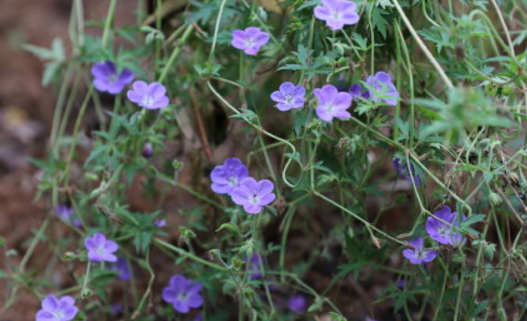
I. How to Grow Geranium Seeds?
Seed Collection
1. Most geraniums produce seeds, though a few cannot, and seed collection is relatively convenient. This plant grows freely, has many varieties, and mutates easily. Seeds are said to grow wherever they are ejected, but collecting and sowing your own seeds allows you to control the variety and form, unlike the wild ones which grow haphazardly.
2. When the seed pods begin to mature, they gradually change color, and then some of them start ejecting seeds outward. At this point, you can collect them in paper bags and save them for sowing later. You can also buy seeds yourself.
Sowing Method
1. Prepare a seedling tray and fill it with substrate. Geranium has no special requirements for soil, but soil that is too heavy and sticky definitely will not work; basic air permeability and looseness must be ensured. If the soil does not meet these requirements, you can add some sandy soil, or mix peat, vermiculite, and perlite, stirring evenly to make a substrate.
2. Scatter the collected seeds on the soil. If you have a tray with divided cells, you can sow them cell by cell; if there are no divisions, sow them at appropriate spacing, not too densely. No pressing is needed. After sowing, cover them with a layer of coarse sand.
3. Place them directly in a greenhouse or directly outdoors; as long as the temperature is not too low, there will not be much of a problem, though conditions will vary with local climate. They will germinate gradually in about a week, and of course a few will sprout a bit earlier.
Later Care
1. This plant has a strong resistance to heat and humidity; after all, it is a flower that can grow even in roadside grass ditches, and it mostly grows in damp places. When watering, you can give a bit more, but not too much; long-term waterlogging at the roots is also bad for plant growth. You can move it outdoors to get some sunlight.
II. What Varieties Are There?
1. Erodium stephanianum
Erodium stephanianum is an annual or biennial herb, about 10 cm tall. Its root is cylindrical, its stem has many branches and grows many long soft hairs. The leaves of Erodium stephanianum are long ovate or long rounded-triangular, and the petals are obovate, light purple or blue-purple in color. The flowering period of Erodium stephanianum is from April to August each year, and the fruiting period is from June to September.
2. Siberian Geranium
Siberian Geranium is a perennial herb, with a height between 20 cm and 100 cm. Its stem also has many branches and slightly backward-pointing hairs. The flowering period of Siberian Geranium is from June to July each year, and the fruiting period is from July to September.
3. Nepalese Geranium
Nepalese Geranium mainly grows in Nepal and the Bengal region, and in China it is mainly distributed in Hubei, Sichuan, Yunnan, Guizhou and other areas, mainly in thickets, mountain deciduous forests, and hillside grasslands. Moreover, Nepalese Geranium has many benefits and effects, and its medicinal value is very significant.
III. What Benefits and Effects Does It Have?
Geranium Dispels Wind and Invigorates Blood
The main function of geranium is to treat rheumatism, invigorate blood vessels, and unblock meridians. It is often used for symptoms such as rheumatic pain, rheumatic paralysis, limb numbness, and traumatic injuries. It can be taken internally or applied externally; it can be pounded into a paste for topical application or decocted in water for oral use. Geranium can be taken together with a series of medicines such as angelica, safflower, and Sophora flavescens to treat illnesses.
Geranium Supplements Vitamins and Fights Bacteria
Geranium has a strong resistance effect against bacteria. It has an inhibitory effect on many kinds of bacteria, including Staphylococcus aureus, beta-hemolytic Streptococcus, Streptococcus pneumoniae, and Neisseria catarrhalis, and it also has a certain inhibitory effect on influenza A.
Geranium Stops Diarrhea
The extract of Nepalese Geranium has a certain anti-diarrheal effect. Its extract inhibits the activity of the small intestine and duodenum, and promotes the activity of the cecum, but if the dosage is increased, diarrhea will occur.
Other Effects of Geranium
Geranium also has a certain anti-cancer effect, a certain cough-relieving effect, and can provide oxidation resistance; it has a certain antioxidant effect and also an anti-inflammatory effect.