Detailed Guide to Elaeocarpus Flower Cultivation Methods, Precautions, Disease Control and Benefits
Elaeocarpus flower mostly grows in mixed mountain forests below 1000m in altitude. So what are the cultivation methods and precautions for Elaeocarpus flower? What about its diseases and their control? What benefits does it have? According to available information, Elaeocarpus flower prefers a warm and humid growing environment, can tolerate shade, but is not cold-tolerant. It likes moist, fertile soil with good drainage, and its growth rate is relatively fast.
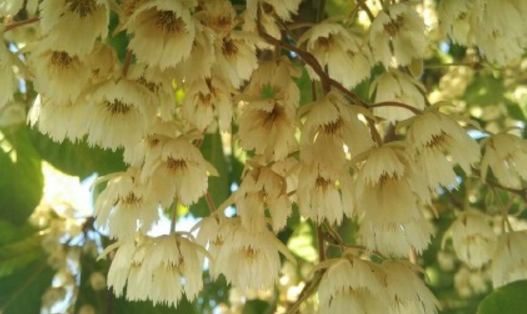
I. What are the cultivation methods and precautions for Elaeocarpus flower?
Soil
Elaeocarpus flower likes a warm and humid environment and is suitable for growing in acidic soil. It has relatively high requirements for soil, needing moist, fertile soil with good drainage.
Fertilizing
In the early stage of Elaeocarpus flower's initial growth, it is recommended to use dilute natural fertilizer, after which urea solution can be chosen for nutrient supply.
Weeding
To help Elaeocarpus flower grow better, it is necessary to remove weeds promptly. This allows Elaeocarpus flower to better absorb water and nutrients and prevents other weeds from competing with it.
Precautions
Elaeocarpus flower grows relatively fast, so attention should be paid to reasonable watering and fertilizing. It should also be mentioned that Elaeocarpus flower has strong resistance to sulfur dioxide. When Elaeocarpus flower reaches its vigorous growth stage, thinning of seedlings should also be done promptly.
II. Diseases and their control?
Leaf blight
Main symptoms after infection: appearance of leaf spots or withered leaves. After leaf blight occurs, corresponding measures should be taken promptly, and chemicals can be chosen for treatment. Choose Bordeaux mixture wettable powder, or Sakukonjing wettable powder, chlorothalonil and other chemicals for spraying to eliminate the disease.
Damping-off
Main symptoms after infection: Elaeocarpus flower plants suddenly lodge, and the plants turn dark brown. Damping-off is mostly caused by pathogen invasion. The pathogen invades the root and stem of seedlings through the soil, causing the seedlings to fall over toward the ground. This is what we call the damping-off phenomenon. In addition, the symptoms of already lignified plants differ from those of seedlings, mostly appearing as withering, and if the growing environment is humid, pink pathogen colonies will appear at the site of the disease on affected plants.
For disease occurrence in seedlings, chemical treatment is recommended, spraying thiophanate-methyl wettable powder, dexon and other chemicals for sterilization and disinfection. Because damping-off is contagious, in order to reduce losses and better control the disease, diseased plants should be promptly removed to prevent infection of healthy plants. All diseases should be prevented from the very beginning. For this reason, at the initial planting stage, soil disinfection is recommended to kill pathogens.
Seedling damping-off is caused by Rhizoctonia solani in the soil. The pathogen mostly invades the base of the root and stem of seedlings from the surface soil. After the plant is affected, the diseased part sinks and constricts, appearing dark brown. Infected seedlings often fall over from the soil surface, causing the damping-off phenomenon (the so-called damping-off disease); if the seedling tissue has already become lignified, the diseased seedlings often do not lodge but instead show symptoms of standing wilt. When the soil layer is moist, pink mold layers often appear on the diseased part.
Sunscald
Sunscald is caused by external factors, and its symptoms include cracks appearing in the bark and wood, making it prone to breaking in windy weather. Preventive measures mainly involve paying attention to planting density when planting, with spacing not too wide. Also protect the main trunk of the tree from exposure to the sun; a feasible method is to wrap the trunk with straw rope for protection.
III. What benefits does it have?
Landscape ornamental value of Elaeocarpus flower
Elaeocarpus flower has a certain ornamental value. Its branches and leaves are dense, and some leaves turn red after frost.
Elaeocarpus flower is relatively suitable for planting on lawns, slopes and other places. It can also be grown in courtyards and along roads, and can also be grown as a background tree for other trees.