Jerusalem artichoke (sunchoke) seed planting methods, timing and prospect analysis
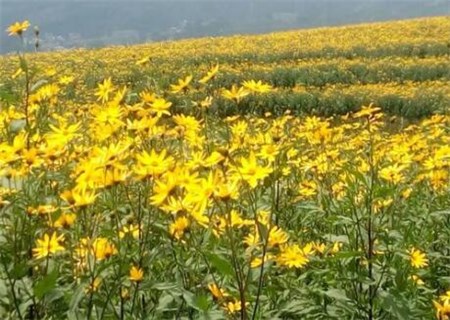
Jerusalem artichoke is an annual herbaceous plant in the Asteraceae family, genus Helianthus. Jerusalem artichoke is grown for its underground tubers. There is scattered cultivation throughout our city, so do you know what the seed planting methods for Jerusalem artichoke are? What are the prospects for growing it? When should it be planted? From a farmer who has grown Jerusalem artichoke year-round, we learned that Jerusalem artichoke is sown in spring. It is planted by the hole-sowing or furrow-sowing method.
I. What are the seed planting methods for Jerusalem artichoke
1. Growth habits of Jerusalem artichoke
Jerusalem artichoke originated in North America and was introduced to China via Europe; it is now cultivated in most parts of China. It is cold- and drought-tolerant, and its tubers can safely overwinter in frozen soil at -30°C. In early spring the seedlings can withstand light frost, and in autumn the mature leaves can withstand short periods of -4 to -5°C. A temperate 18 to 22°C and 12 hours of light favor tuber formation. It tolerates poor soil and is not demanding about soil; apart from acidic soil, swamps and saline-alkali land, which are unsuitable for planting, it can grow in land unsuitable for other crops, such as wasteland, beside houses and along roadsides.
2. Propagation methods of Jerusalem artichoke
After the spring thaw, select tubers weighing 20 to 25 grams for planting; 50 kg of tuber seed is needed per mu, with a plant-to-row spacing of 0.5 m and a sowing depth of 10 to 20 cm; seedlings emerge about 30 days after sowing. Jerusalem artichoke is sown once, and after harvest tubers remain in the soil, so it need not be sown again the following year; however, to keep the plants evenly distributed, thin out the seedlings where they are too dense and fill in gaps where plants are missing.
3. Cultivation techniques for Jerusalem artichoke
① Weeding: after the Jerusalem artichoke seedlings emerge, fill in gaps promptly, and carry out one weeding together with gap filling. For inter-row cultivation and weeding, generally 30 to 40 days after sowing, loosen the soil to a depth of about 6 cm, and weed at the same time. The second inter-row cultivation is before budding, carried out together with weeding, to create good conditions for tuber growth and development. Also earth up the soil together with inter-row cultivation; during the tuber swelling period, remove flowers and buds to promote tuber swelling.
② Fertilizing: after the autumn harvest, prepare the land for Jerusalem artichoke, applying 5000 kg of farmyard manure per mu, with 70% broadcast and 30% applied in concentrated furrows at sowing. In addition, apply 15 kg of potassium sulfate, plow deeply to 30 cm, and after plowing level the land and make beds ready for sowing. On the basis of sufficient base fertilizer, two topdressings are needed during the growing period: the first around late May, applying 10 kg of urea per mu to promote strong seedlings and more new branches. The second at the early budding stage, applying 15 kg of potassium sulfate per mu, followed by watering.
③ Watering: the seedling stage, jointing stage, budding stage and tuber swelling stage are the four key periods for watering Jerusalem artichoke. Generally, water for emergence can be given in mid-April, water for jointing in late May, water for budding in mid-August, and water for tuber swelling in mid-October. Although Jerusalem artichoke is drought-tolerant, sufficient soil moisture can greatly increase the yield.
II. What are the prospects for growing Jerusalem artichoke
Limited market demand does not mean the market prospects for Jerusalem artichoke are poor:
1. Jerusalem artichoke tubers are rich in amino acids, sugars, vitamins and so on; their texture is white, fine, crisp and tender, with no off-flavor. They can be eaten raw, stir-fried, boiled or sliced and deep-fried; if pickled into pickles or made into preserved Jerusalem artichoke, they have an even more distinctive flavor. Jerusalem artichoke is a superior raw material free from pest damage and pesticide contamination, suitable for making green foods.
2. Jerusalem artichoke is rich in inulin. Inulin, oligofructose and ultra-high fructose syrup refined from Jerusalem artichoke through modern biotechnology deep processing are among the all-around products of today's health food industry.
3. After fermentation, fructose can also be made into alcohol, known as green petroleum; it is a very good alternative fuel and also an ideal enhancer for increasing the combustion quality of gasoline.
4. Jerusalem artichoke can be used medicinally; its tubers are sweet and neutral in nature, non-toxic, promote diuresis and remove dampness, and can help prevent and treat diabetes.
Among these, inulin has long become a relatively popular functional food internationally, and at present overseas market demand still exceeds domestic demand. Enterprises in Inner Mongolia, Qinghai, Gansu and other places in China are all producing it, but the immaturity of deep processing technology is currently one of the most important reasons restricting the domestic market for Jerusalem artichoke.
It is believed that as people pay more attention to health and Jerusalem artichoke deep processing technology continues to develop, various related products will also keep increasing and demand will gradually expand, so the market prospects are still quite promising.