How to care for the true fern staghorn fern? Detailed guide to division and planting methods and its functions and effects
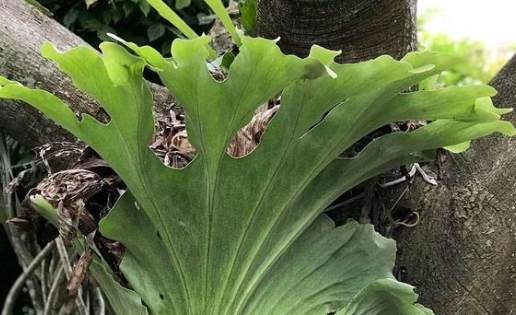
The staghorn fern is one of the most oddly shaped ornamental ferns, belonging to the epiphytic ornamental ferns. So what is the cultivation method for staghorn fern? How do you divide and plant it? What functions and effects does it have? According to the available information, the staghorn fern likes a warm and humid growing environment. When cultivating the staghorn fern, you need to know that the staghorn fern is rather afraid of direct strong light and needs diffused light. Its water demand is relatively greater, and it requires a humid environment. The temperature should be kept relatively warm; in winter the care temperature must not be too low, at least not below 5°C.
I. What is the cultivation method for staghorn fern?
Temperature
The arrowroot plant (Maranta) originally comes from Brazil and other places; it is a tropical plant that prefers high temperatures and humid environments, and its optimal growing temperature should be kept at around 25°C. In summer, place it in a shaded spot; in winter, pay attention to cold protection. Light
The arrowroot plant grows best under diffused and scattered light. In summer, direct sunlight very easily causes sunburn damage to the leaves. If leaf scorch occurs, it must be moved immediately, and the scorched leaves must be removed.
Moisture
The most suitable growing humidity for the arrowroot plant is around 80%. Suitable air humidity is beneficial to the organism's growth; air humidity that is too high or too low will cause unhealthy leaf growth. During the plant's growing season, water frequently; in high temperatures, frequently spray water on the leaf surface. The best watering method is to spray with water in the morning, water the potting soil at noon or in the afternoon, and water the whole plant in the evening.
Growing medium (potting soil)
The arrowroot plant's soil requirements are fertile, well-draining and loose; generally leaf mold or a coarse medium is used.
Fertilizing
Fertilizing principle for the arrowroot plant: apply frequently and lightly; during the peak growing season, fertilizing about once every two weeks is best. The fertilizer should mainly be nitrogen-based; phosphorus and potassium fertilizers are also acceptable. For the arrowroot plant, nitrogen fertilizer can make the leaves more attractive.
Notes:
Temperature and sunlight
In summer, prevent direct sunlight; in winter, pay attention to cold protection, and you can move it to a windless, relatively warm indoor spot to overwinter.
Moisture
When watering, be careful not to overwater, otherwise it will cause root rot and even lead to disease. When the temperature is relatively low, pay attention to keeping the soil dry.
Soil
The planting soil for the arrowroot plant must not become compacted, nor must water accumulate.
Fertilizing
The fertilizer concentration for the arrowroot plant must not be too high, otherwise it will scorch the leaves and may even kill the whole plant. Do not fertilize in winter when the plant stops growing, nor when it is too hot in summer.
II. How do you divide and plant it?
Division time for staghorn fern
The best time to divide the staghorn fern is early spring, when the soil has just thawed and the temperature is suitable; the staghorn fern grows relatively vigorously, making it a good time for division. At this time, the wounds left by division heal easily, and rooting is relatively vigorous, improving the survival rate of the staghorn fern after division.
Specific steps for dividing the staghorn fern
First, knock the mother plant out of the flowerpot, remove some of the excess old soil, and prune the withered and dead branches. The roots of the staghorn fern should also be pruned to a certain extent; cut off the overly long and dense fibrous roots, then use a small knife to cut it into two or three plants. If the staghorn fern is very large, it can also be divided into four or five plants; you must learn to be flexible and decide according to the situation. In addition, note that each plant's roots must retain a portion of soil, as this makes survival easier. Plant the divided staghorn ferns as individuals in flowerpots, and keep the soil in the pots loose, breathable and with sufficient nutrients.
Care for staghorn fern after division
After planting is completed, the staghorn fern should first be watered thoroughly, then placed in a cool, humid environment for care, and watered and fertilized regularly. The watering schedule is not fixed: in summer, two to three times a day, and in winter it can be reduced appropriately. The fertilizing schedule is generally once every half month. With careful care, under normal conditions it can take root in three to four weeks.
III. What functions and effects does it have?
1. Greening function
The staghorn fern is sometimes also called the elk fern. Because its shape is extremely similar to deer antlers, it has very high ornamental value, so it has always been regarded as a garden plant. Planting it in gardens can not only embellish the garden scenery but also absorb harmful gases and purify the air, achieving multiple benefits at once. Therefore, the charming figure of the staghorn fern can be seen in some gardens and even beside buildings.
2. Decorative function
The staghorn fern can be made into a hanging basket, which is relatively common in Europe and America. A hanging basket decoration placed in a bedroom or living room purifies the air while also making people feel happy and relaxed; placed on a restaurant wall, it can not only embellish the restaurant environment but also attract customers; decorated in a garden, it can enrich the garden elements and cultivate character; in addition, making a DIY staghorn fern hanging basket yourself will also add a lot of fun to life.
3. Making potted plants
There is no need to say much about staghorn fern potted plants; the most common staghorn fern is the potted type. Its advantage is that it can be moved along with the flowerpot and is easy to care for; if you feel it is not suitable on the balcony, just move it somewhere else. With a staghorn fern that can be moved around at will, you do not need to worry whether the sun is blazing or thunder is rumbling. In this way, don't you feel that the staghorn fern adds a touch of convenience to our artistic life?