Marantaceae Arrowroot (Calathea lancifolia): Care Methods, Propagation Techniques and Value Explained
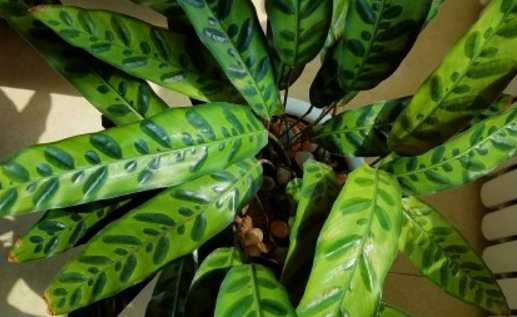
Calathea lancifolia, also known as lance-leaved calathea and variegated arrowroot, so what are its care methods? How is it propagated? What value does it have? According to available information, Calathea lancifolia is native to Brazil and other places. It likes a warm and humid growing environment and prefers partial shade. It is a shade-tolerant plant, so it is quite suitable for indoor cultivation. When grown indoors, it can be placed in a fairly bright spot, and it can also be placed in a room with poor light, where it can still grow normally.
I. What are the care methods for Calathea lancifolia?
Temperature
Calathea lancifolia originated in Brazil and other places. It is a tropical plant and prefers high temperatures and humid environments. The optimal growing temperature should be maintained at around 25°C. In summer, place it in a shady spot; in winter, pay attention to cold protection. Light
Calathea lancifolia grows well under diffused light and scattered light. In summer, if exposed to direct sunlight, it is extremely prone to scorching the leaves. If leaf scorching occurs, it should be moved immediately, and the scorched leaves should be removed.
Water
The most suitable growing humidity for Calathea lancifolia is around 80%. Suitable air humidity is beneficial to the organism's growth; air humidity that is too high or too low will cause unhealthy leaf growth. During the plant's growing season, water frequently. In high temperatures, frequently spray water on the leaves. The best watering method is to spray with water in the morning, water the potting soil at noon or in the afternoon, and water the whole plant in the evening.
Growing medium (potting soil)
The soil for Calathea lancifolia needs to be fertile, well-draining and loose. Generally, humus soil or coarse medium is used.
Fertilizing
Fertilizing principle for Calathea lancifolia: apply frequently and lightly. During the peak growing season, applying fertilizer about once every two weeks is optimal. The fertilizer is mainly nitrogen-based; phosphorus and potassium fertilizers are also acceptable. For Calathea lancifolia, nitrogen fertilizer can make the leaves more attractive.
Notes:
Temperature and sunlight
In summer, prevent direct sunlight; in winter, pay attention to cold protection. It can be moved to a windless, relatively warm indoor space to overwinter.
Water
When watering, be careful not to water too much, otherwise it will cause root rot in the plant and even lead to disease. When the temperature is relatively low, pay attention to keeping the soil dry.
II. How is it propagated?
There are two propagation methods for Calathea lancifolia: division propagation and cutting propagation.
Division propagation
Division propagation is more commonly used for Calathea lancifolia. Cutting propagation is used less often than division propagation. The optimal propagation temperature for Calathea lancifolia is around 20°C. If division propagation is carried out indoors, then with good control of temperature and humidity, division propagation can be carried out year-round. What are the steps of division propagation? First, we need to cut apart the root tubers with stems, leaves and buds using a knife. For home growing, simply plant the cut root tubers directly. When carrying out division propagation, be sure to maintain the planting temperature and humidity.
Cutting propagation
Cutting propagation is also one of the propagation methods for Calathea lancifolia. Although it is not used as much as division propagation, it is also an important propagation method for Calathea lancifolia. Cutting propagation generally uses the relatively tender shoot tips of the plant as cuttings. The length of the cuttings is most suitable at about 10 cm to 16 cm. Also, keep the leaves according to their actual size, retaining about half of the leaves. The cuttings are first treated with naphthalene acetic acid. After treatment is completed, insert the cuttings into the seedbed, taking care to maintain the row spacing. After planting is completed, cover the top with plastic film. The management method for cutting propagation is no different from that for division propagation. The optimal temperature for cutting propagation is 20°C, and the cuttings will take root about 40 days after the cuttings are completed.
III. What value does it have?
1. Landscape greening value of Calathea lancifolia
The leaves of Calathea lancifolia come in many colors and have strong ornamental value, and its ability to adapt to the environment is relatively strong, so Calathea lancifolia can be seen in many places, such as courtyards, parks, and along roadsides. Its value for landscape greening is very high. It is used in mass planting, clump planting, or paired with other plants for landscape greening.
2. Indoor decorative value of Calathea lancifolia
Calathea lancifolia has good shade tolerance and beautiful leaves, so it is often grown as an indoor decorative plant in public places such as hotels and shopping malls, and can also be made into a small potted plant and placed at home.
3. Medicinal value of Calathea lancifolia
The rhizomes of Calathea lancifolia contain a certain amount of starch. It can not only be used as an edible material, but also has good medicinal value, such as diuretic and heat-clearing effects.
4. Other values of Calathea lancifolia
Calathea lancifolia has a relatively beautiful appearance, especially its leaves, whose colors are colorful and varied, making it very suitable as illustration material. Calathea lancifolia has a unique appearance in that its leaves have many neat and striking stripes. It is a very high-end cut-leaf material and can be used directly in flower arrangements or as a supporting material for flower arrangements.