When does the ornamental peach bloom? Common pest and disease control, and can the peaches on the tree be eaten?
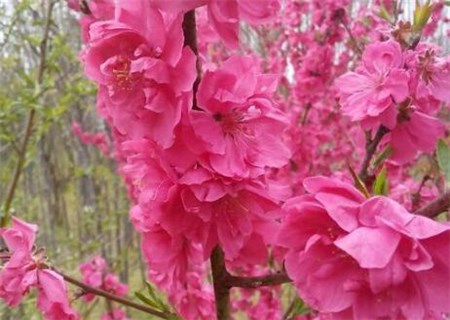
The ornamental peach is a variety of peach, belonging to the semi-double and double-flowered cultivars of ornamental peach blossoms, collectively known as ornamental peach. In East China, the ornamental peach flowering period is from March to April, with plump flowers, rich and vivid colors, and many flower forms. So do you know when the ornamental peach blooms? What are the common pests and diseases and their control methods? Can the peaches on the tree be eaten? According to experienced ornamental peach growers, the flowering period of the ornamental peach: in East China, the ornamental peach flowering period is from March to April.
I. Common pests and diseases of the ornamental peach and their control methods
1. Aphids
They overwinter as eggs in the leaf axils and crevices of the ornamental peach branches, begin to hatch in early spring of the following year when the tree blooms, and gather on the tender buds to suck sap. Aphids reproduce very quickly, and the damage is most severe in late May. The damaged leaves curl backward, shrink and become deformed, affecting shoot growth. The gathered aphids excrete large amounts of honeydew, contaminating the twigs and leaf surfaces and reducing ornamental value.
Control methods:
Fertilize reasonably, apply less nitrogen fertilizer, and ensure vigorous plant growth. Take care to protect natural enemies such as ladybugs, flower bugs, and green lacewings. In severe cases, chemical control can be used; commonly used agents include imidacloprid, dichlorvos, aphid-killing fungi, and pirimicarb. Try to use low-toxicity insecticides such as imidacloprid and acetamiprid.
2. Small green leafhoppers
They mainly damage plants by adults and nymphs sucking leaf sap. The damaged leaves initially show yellow-white spots, which gradually expand into patches, and the leaves lose their green color. Leafhoppers cause the most severe damage from July to September.
Control methods:
In autumn and winter, clean up dead branches and fallen leaves and burn them in a centralized manner to eliminate overwintering adults. During the peak hatching period of nymphs, spraying 20% leafhopper powder or 10% imidacloprid wettable powder at 2500 times dilution in time can achieve good results. When they occur in large numbers, spray 4.5% beta-cypermethrin at 1500 times dilution.
3. Red spider mites
They mainly harm the leaves, stems, and flowers of the ornamental peach, piercing and sucking the plant sap. In the early stage of damage, there are many needle-tip-sized yellow-brown spots on the upper surface of the leaves where green has been lost. In the later stage, a large number of leaves lose their green color, turn yellow, curl, and fall off; in severe cases, this causes massive defoliation. Under high-temperature and dry climate conditions, red spider mites reproduce rapidly and cause severe damage.
Control methods:
Strengthen management, enhance tree vigor, prune reasonably, increase ventilation and light penetration, and water timely during drought. When the tree buds swell, spray 0.5 to 1 degree Baume lime sulfur mixture to control newly hatched young mites. When they occur in large numbers, spray dicofol at 1800 times dilution or 70% thiophanate-methyl wettable powder at 1000 times dilution. Once every 10 days gives better results.
4. Peach fruit borers
This insect does not bore deeply, generally boring to 2 cm to 4 cm from the shoot tip. After the shoot tip is bored by the larvae, gum often flows out and the tip wilts and droops.
Control methods:
Clear weeds around the ornamental peach plants, scrape off the loose bark on the trunk, and eliminate overwintering larvae. If tender shoots are found to be shrinking in May and June, cut them off in time and burn them. For chemical control, spray 10% cypermethrin at 2000 times dilution, or 1.8% abamectin at 3000 to 4000 times dilution, or fenitrothion at 1000 times dilution on the twigs two or three times to kill the larvae.
5. Red-necked longhorn beetles
One generation occurs every 2 years, with larvae overwintering inside the host branches and trunks. In the Hebei region, adults emerge from mid-July to mid-August, lay eggs in cracks in the bark of branches and trunks, and after hatching the larvae bore into and feed on the phloem; after overwintering, they bore into the xylem. The bore tunnels generally run from top to bottom, are flat and wide, and irregular.
Control methods:
During the peak emergence period of red-necked longhorn beetles, adults can be captured manually and killed in a centralized manner. During the larval stage in the xylem, use 50% phoxim emulsifiable concentrate at 50 to 100 times dilution for injecting into the bore holes, or use 5% imidacloprid emulsifiable concentrate for trunk injection, then seal the holes tightly with mud.
6. Peach globular scale insects
Nymphs and female adults gather on branches or leaves to suck sap, causing weakened tree growth or dieback of branches and leaves. Once this insect appears, it spreads rapidly and densely infests branches and trunks.
Control methods:
In spring, manually brush off the insects and prune out infested twigs. In early May, spray with jiesijing at 800 times dilution to kill female adults. In mid-June, during the nymph hatching period, spray with phoxim at 1000 times dilution for a remarkable effect.
II. Can the peaches on the ornamental peach tree be eaten?
The fruit of the ornamental peach is edible because it is non-toxic and harmless, but its size is hardly impressive, because the fruit produced by the ornamental peach tree is too small to be used for eating and is often grown for ornamental purposes.
The ornamental peach itself is actually a variety of peach; strictly speaking, it belongs to the genus Prunus in the rose family, and is mostly used for landscaping in environments of human activity such as parks and residential communities. Generally, ornamental peaches come from artificial cultivation. Common cultivated varieties include white ornamental peach, ornamental peach, red ornamental peach, and Sajin ornamental peach, which has pink and white colors on the same plant, the same flower, or even the same petal, etc.