Cultivation and Sowing Methods of Drosera (Sundew) in the Order Nepenthales, Plus Precautions and Benefits
Drosera, also called sundew, so what are the cultivation methods and precautions for sundew? What about sowing methods? What benefits and effects does it have? According to available information, drosera is a plant that likes relatively moist places in Shenzhen, and watersides or moist meadows are the places where it often grows. Drosera comes in rich colors, and the surface of its leaves grows glandular hairs that can secrete sticky fluid, and it will bloom with white or red flowers.
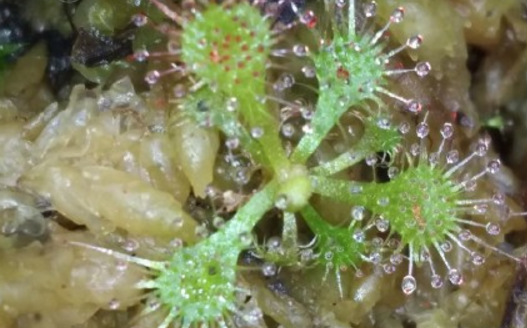
1. What are the cultivation methods and precautions for drosera?
Soil
Drosera has low requirements for soil. You can use soil mixed with peat soil, perlite and river sand, or you can use sphagnum moss or pure peat soil.
Light and temperature
Drosera likes sunlight, and sufficient light helps drosera develop vivid colors. When caring for drosera, you need to maintain a relatively long period of light every day, and placing it on a balcony or windowsill is fine. If it cannot directly receive direct light, you can also provide bright indirect light. Note that in summer, when the light is strong, shading is needed to avoid scorching. Drosera does not like environments that are too cold or too hot. The suitable temperature for growth is between 15°C-25°C. In winter, it needs to be kept warm, and the lowest temperature needs to remain above 0°C. If necessary, keep it indoors; in summer, if the temperature is too high, it will enter dormancy.
Watering and fertilizing
Drosera can tolerate moisture, though it does not have high requirements for air humidity. However, in summer the humidity must not be too high, to avoid stem and leaf rot. For watering, the soil needs to be kept moist, and generally the "waist water" method can be used to supply water; the water used for watering is best soft water. For fertilizing, apply thin fertilizer frequently. During the growing season, apply dilute liquid fertilizer once or twice a month, and pay attention to the concentration to avoid fertilizer damage.
Precautions:
Propagation methods
To propagate drosera, you can use cuttings, generally leaf cuttings, or remove the small bulbils from the plant and plant them promptly. You can also use seed sowing for propagation, which is also relatively simple.
Pests and diseases
During the growth process, drosera will encounter harm from some pests in spring and summer, such as aphids, caterpillars and cutworms. These pests may all gnaw on drosera leaves. Once discovered, they need to be caught and eliminated promptly, and insecticides can be used if necessary.
2. Sowing methods?
1. Sowing drosera seeds
Drosera seeds are very small, black and granular, so when opening the package, be sure to be careful, otherwise it may cause waste of seeds. Evenly sprinkle the seeds from the package on the surface of the substrate; do not cover the surface with soil. (If some seeds stick to the package, just scrape them off.)
2. Sowing substrate for drosera
It is recommended to use finely crushed sphagnum moss as the substrate, among which live sphagnum moss can better improve the germination rate. Add water to the prepared substrate and mix it wet, then place it in a container for later use.
3. Sowing pot for drosera
For sowing sundew, an ordinary flower pot is sufficient; fill the pot with the substrate. Use the tray method, placing the pot in a water tray or glass tank filled with purified water until the surface of the substrate is moist. If it is not yet completely moist, you can use a spray to moisten it.
4. Precautions
Spraying water
Use a spray to spray water on drosera, and be careful to spray gently, otherwise the seeds may be washed away. After that, place the flower pot on the inner side of a windowsill where sunlight can reach. If growing in a water tray, you need to cover the top opening with plastic to maintain humidity. Pay attention to replenishing water at any time.
Germination and seedling emergence
Under very good conditions, drosera can germinate in about 30 days, and seedlings can emerge in about 15 days.
Transplanting
If drosera grows too densely after growing larger, it can be transplanted with soil. When transplanting, be careful never to damage the roots.
3. What benefits and effects does it have?
1. Benefits of drosera
Drosera can be used medicinally. When used medicinally, drosera is warm in nature and pungent in taste, and slightly toxic, but it has the effects of promoting blood circulation and removing blood stasis, stopping bleeding and relieving pain. Two amazing substances in drosera extract have powerful antispasmodic effects. When drosera is used as a single Chinese medicinal herb, it is mainly used to treat sores and toxins, and can also treat stomach problems, malnutrition in children, and traumatic injuries and other conditions.
2. Medicinal effects of drosera
The medicinal value of drosera is very high. In clinical medicinal use, drosera can treat rheumatism and rheumatoid arthritis. Drosera can also treat neurodermatitis; you only need to mash drosera and apply and rub it on the affected area until there is a slight pain sensation, and it will have a relatively good effect. Drosera also has a very good effect on migraines, waist pain, cold pain of the muscles and bones, and traumatic injuries.
3. Ornamental value of drosera
Because there are many varieties of drosera, and some varieties of drosera have very pretty and lovely plant forms, many people also grow drosera as potted plants. The form of drosera is very peculiar, and growing it is also quite interesting. Placed at home, it is also a peculiar landscape. Because drosera is a carnivorous plant, growing it at home can kill indoor insects to a certain extent. Drosera is not a plant form we commonly see and has a certain distinctiveness, so it cannot be planted on a large scale for landscaping, but it can be planted on a small scale as a special landscape in places such as botanical gardens, and it has a certain appeal to citizens.