When Does the Obedient Plant Bloom? Propagation Methods and How It Differs from Snapdragon
The obedient plant is also known as false dragonhead, obedient plant, shellflower, bellflower, and sesame flower, among other names. So when does the obedient plant bloom? What is the difference between it and snapdragon? How do you propagate it? According to available information, the obedient plant prefers a warm growing environment with plenty of sunlight, and loose, fertile sandy soil is generally best. The obedient plant is cold-tolerant, can withstand heat, and can also tolerate partial shade. It is fairly robust by nature and also has a strong tolerance for fertilizer.
I. When Does the Obedient Plant Bloom?
1. Blooming period: summer
This plant blooms in summer. Its spike-like inflorescences cluster into a panicle-like form and grow at the very top of the plant. The corolla is lip-shaped, and the flowers open first at the lower part and gradually open toward the top, very densely packed. If we push its flowers to one side, they will not return to their original position, which is also the origin of its name.
The flowers come in many colors, including light purple, white, pink, and so on, and some varieties also have markings. The overall impression is fresh and elegant. It is very suitable for planting in courtyards or flower beds, and planting it in large groups is also a good option.
2. Care during the blooming period
① Sunlight: If there is no sufficient sunlight for a long time, besides causing the plant to grow leggy, it will also seriously affect its blooming. However, excessively strong sunlight should also be shaded.
② Water: Its blooming period is in summer. If water supply is insufficient in this season, the plant's growth will be restricted, and it will likewise affect the quality and quantity of the flowers. It should be placed in a spot with good air circulation, and the soil should be kept in a consistently moist state.
③ Nutrients: If you want it to keep blooming throughout the summer, nutrients are also very important. Apply flower fertilizer once every half month, and when the inflorescences are emerging, apply 1 to 2 additional applications of phosphorus and potassium fertilizer.
II. What Is the Difference from Snapdragon?
Morphological differences between snapdragon and obedient plant
1. Flowers
In terms of flowers, snapdragon flowers grow very compactly, that is, they all grow together and are very dense, while obedient plant flowers are more spread out, and often a single plant bears many obedient plant flowers.
2. Leaves
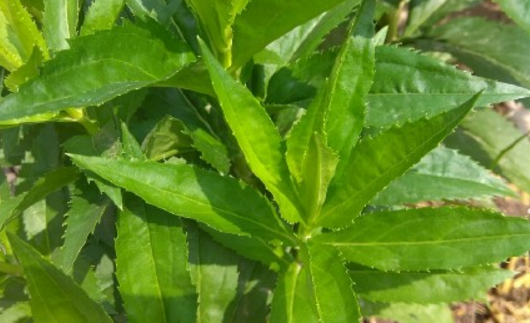
In terms of leaves, snapdragon leaves are green, crystal-clear, and glossy, with edges that feel very smooth to the touch, while the leaf tips of the obedient plant have some rather sharp, small saw-like structures that feel prickly when touched.
3. Stems
In terms of stem characteristics, the surface of the snapdragon stem is covered with tiny hairs, and the base has already become woody. On the other hand, the shape of the obedient plant stem is somewhat close to a quadrangular prism.
Differences in care
1. Sunlight requirements
1.1 Snapdragon
In terms of sunlight requirements, snapdragon loves light very much, so when growing it, it needs to receive sufficient sunlight. Good photosynthesis allows it to accumulate more nutrients and thus grow better. However, note that in summer, prolonged exposure to direct sun should be avoided as much as possible, and it should be shaded; otherwise, the flower color may not be as vivid as normal.
1.2 Obedient plant
Although the obedient plant also very much likes growing in the sun, it has relatively high temperature requirements. Its growth needs a relatively warm environment, and it cannot be too hot or too cold.
2. Soil
2.1 Snapdragon
In terms of soil, snapdragon does not have very high requirements; it only needs relatively loose and breathable soil. Be careful to water in moderation. Overall, snapdragon is still very easy to grow.
2.2 Obedient plant
Although the obedient plant likewise needs relatively loose soil, it has certain requirements for fertility, and when cultivating it, it is best to place it in a relatively fertile substrate for growth. It is relatively tolerant of fertilizer, so during cultivation you can apply a little more fertilizer.
III. How Do You Propagate It?
1. Division propagation of the obedient plant
Propagation time
Division propagation is carried out in spring before sprouting. Spring and autumn are the most suitable seasons for division.
Selecting plants for propagation
Generally, obedient plant plants about 3 years old are used for division.
Specific method
Simply cut young plants or underground rhizomes from the mature plant and plant them separately. Alternatively, in autumn, cut healthy new shoots and insert them into a well-drained sand bed for cuttings, then transplant them after they have rooted.
2. Cutting propagation of the obedient plant
Propagation time
Cuttings can be taken throughout the obedient plant's growing period, but they are generally taken from April to May each year.
Selecting plants for propagation
From April to May, take new shoots that sprouted in the current year, about 10 cm long.
Specific method
Insert them directly into the potting soil, with 2-3 plants per pot. After cutting, be careful to maintain moisture, and they will root in about 2 weeks. After new shoots emerge, apply fertilizer about once every 10 days. When the new shoots grow to about 10 cm, keep only 2 nodes and pinch off the top shoots to control the plant height and promote branching.
Cutting care
During the growing period, provide sufficient sunlight, and in summer shade appropriately. Be careful to maintain moisture, and when the weather is dry, spray water on the leaves to keep them moist. The first time; after the flowers fall, apply manure fertilizer 2 times to promote the growth of new shoots. In winter, move the Yangjiang obedient plant to a sheltered place.