How to Grow Tigridiopalma magnifica (Melastomataceae)? Detailed Guide to Seed Sowing and Propagation
Tigridiopalma magnifica (scientific name: TigridiopalmamagnificaC.Chen) belongs to the genus Tigridiopalma in the family Melastomataceae. So how do you grow Tigridiopalma magnifica? How do you sow the seeds? How do you propagate it? According to available information, Tigridiopalma magnifica grows in the wild in damp, shaded spots under dense valley forests or in the cracks of rocks in moist forests. It prefers a hot, humid, semi-shaded environment, has fairly strong cold tolerance, is not drought-tolerant, and dislikes direct sunlight.
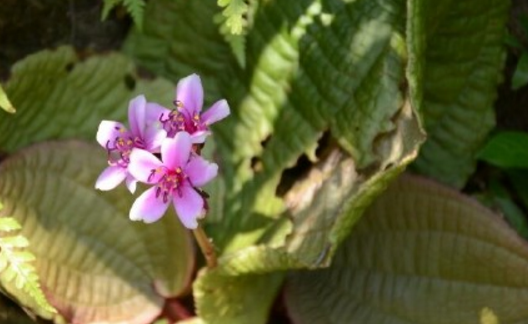
I. How to Grow Tigridiopalma magnifica?
Growing Medium
The best growing medium for Tigridiopalma magnifica is a fertile, loose, slightly acidic soil rich in organic matter, with good aeration and strong water- and nutrient-holding capacity but no waterlogging. It is generally made up of leaf mold, peat soil and coarse sand in a 2:1:1 ratio, with decomposed cow dung or chicken manure added as a base fertilizer.
Temperature and Light
Tigridiopalma magnifica prefers a hot, humid, semi-shaded environment, has fairly strong cold tolerance, and dislikes direct sunlight. Its growing temperature is 17-30°C; it can overwinter safely above 5°C and can tolerate short periods of 0°C. In summer, special attention must be paid to shading during cultivation and management, with a shade rate of 50%-70%, otherwise the leaves tend to turn yellow. In winter it should be grown in a greenhouse, or other insulation measures should be taken.
Watering and Fertilizing
Tigridiopalma magnifica has relatively high water requirements and is not drought-tolerant. During the growing season, fairly high air humidity must be maintained, but waterlogging should be avoided, otherwise root rot will occur. Generally, water once a day. During the growing period, apply a foliar compound fertilizer once a week; it is best to apply it diluted and often. Applying more nitrogen fertilizer helps keep the leaves green, but the leaves bruise easily. When fertilizing, do not spray water directly onto the leaves, otherwise, under high temperatures and poor ventilation, the leaves are prone to rot. In addition, note that the fertilizer needs of Tigridiopalma magnifica are closely related to the temperature: generally speaking, when the ambient temperature is higher, more topdressing can be applied, while when the ambient temperature is lower, less topdressing should be applied.
Propagation Methods
Tigridiopalma magnifica can be propagated by sowing, division, cuttings and tissue culture.
Notes:
Common Diseases of Tigridiopalma magnifica
During the growing season, especially in summer when it is hot and rainy, Tigridiopalma magnifica is extremely prone to root rot and stem rot.
Common Pests of Tigridiopalma magnifica
The main pests of Tigridiopalma magnifica include leaf beetles, noctuid moths, tiger moths, snails and slugs, which easily eat the leaves into holes.
II. How to Sow the Seeds?
1. Choosing the Soil
To grow a flower, you must first choose a good medium for it. When choosing the growing soil for Tigridiopalma magnifica, pay attention to its habits, so that the potting soil you select allows it to grow better.
It likes a shady, damp growing environment, so when choosing growing soil, it is best to use a potting soil with a certain moisture-retaining capacity. Such potting soil can provide it with a relatively humid growing environment, which is good for its healthy development.
Choosing a potting soil containing humus can provide it with more nutrients for growth and development, helping it grow better.
Try to choose a potting soil with good aeration, which can help the seeds germinate as quickly as possible.
2. Sowing Time
Tigridiopalma magnifica blooms in late November and fruits from March to May. After the fruit ripens, the seeds can be collected from it for planting. It is best to sow them as soon as they are collected; do not leave the seeds outside for too long.
First, if the seeds are left outside for too long, the germination rate may decrease. Second, March to May is exactly the season when spring warms and flowers bloom, so seeds sown into the soil at this time will have relatively good climatic conditions for development and growth.
3. Sowing Method
First, prepare the potting soil. Tigridiopalma magnifica likes fertilizer, so before sowing you need to add some organic fertilizer or animal manure to the potting soil in advance as a base fertilizer to ensure sufficient nutrients.
Choose a flower pot of moderate size, put the prepared potting soil into the pot and level it off, filling it to about nine-tenths full. Then use a watering can to water the pot, ensuring the potting soil in the pot is moist enough.
Then place the seeds on the soil surface. Be careful to keep a moderate distance between the seeds; it should not be too large or too small. If the spacing is too large, the grown plants may be too scattered, affecting the ornamental effect; if the spacing is too small, the grown plants may be too crowded, and the resources in the pot may not be enough to support all of them growing healthily.
After that, cover the sown seeds with a thin layer of soil. Note that the covering soil must not be too thick; just cover the seeds by 1cm.
Finally, place the sown seeds in a semi-shaded environment, water them on time, and wait for them to germinate.
III. How to Propagate?
1. Sowing as a Propagation Method for Tigridiopalma magnifica
The seeds of Tigridiopalma magnifica are tiny, so it is best to sow them immediately after collection. When sowing, sow shallowly. The sowing medium is made by mixing 1 part leaf mold, 2 parts peat soil and 1 part fine sand. After disinfecting and sieving, level the surface of the pot, soak it thoroughly with water, then sow evenly. After sowing, cover lightly with a thin layer of fine soil or fine sand. At a temperature of 18-25°C, they will germinate in 30 days, and after another 2 months they can be planted into pots.
2. Division and Cuttings as Propagation Methods for Tigridiopalma magnifica
Division and cuttings are best done in spring when repotting. When repotting, take out the mother plant carefully and do not break the leaves. Then cut the stolons into sections, each with at least 2-3 leaves, and after the cut surfaces have dried, plant them separately in pots. Coating the cut wounds with plant ash or charcoal powder can prevent the wounds from rotting and increase the survival rate.
3. Tissue Culture as a Propagation Method for Tigridiopalma magnifica
Using the axillary buds of Tigridiopalma magnifica as explants, under sterile conditions, after routine disinfection, inoculate them on MS medium supplemented with 1.0 mg/L synthetic cytokinin (BA) and 0.1 mg/L naphthaleneacetic acid (NAA) for culture. The medium contains 2% sucrose, 0.6% agar, and has a pH of 5.8. The culture temperature is (25±2)°C, the light duration is 10 hours/day, and the light intensity is 1100 lux (LX). Within 1 week, yellow-green callus tissue grows out, and within 20 days, clustered buds differentiate directly on the surface of the callus tissue. The clustered buds can proliferate rapidly through subculture on the above medium. Transfer the clustered buds to 50% MS rooting medium supplemented with 0.1 mg/L naphthaleneacetic acid for culture, and roots can grow within 10 days. After 1 month of culture, the test-tube plantlets can be transplanted into pots, and the survival rate of the seedlings reaches over 90%.