Cultivation Methods and Propagation Methods of Viburnum farreri of the Adoxaceae Order, and How It Differs from Lilac
Viburnum farreri is mainly distributed in temperate regions, and in China it is found in North China, Northwest China and other places. So what are the cultivation methods of Viburnum farreri? How does it differ from lilac? How is it propagated? According to available information, Viburnum farreri likes fertile, loose, well-drained slightly acidic soil and does not tolerate poor soil; Viburnum farreri is not drought-tolerant and likes moist soil, but grows poorly in waterlogged spots, so take care to drain promptly; Viburnum farreri likes light but not harsh sun, and can also grow in semi-shade conditions, and intercropping with larger trees is beneficial to its growth; Viburnum farreri has low temperature requirements and can overwinter outdoors in warm microclimates in the north.
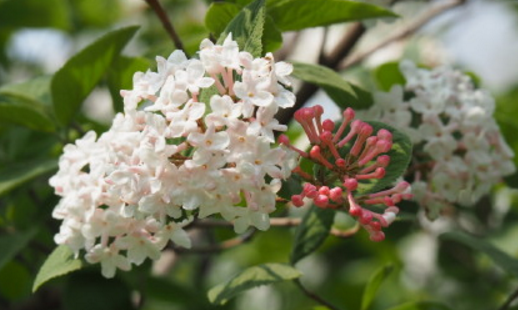
I. What are the cultivation methods of Viburnum farreri?
1. Seed collection of Viburnum farreri
The fruit of Viburnum farreri easily falls off after ripening, making the seeds impossible to collect, so pay attention to observing in early August and pick the fruit promptly once it is ripe. After harvesting the fruit, dig out the seeds, soak them for about 3 days, rinse away the flesh and impurities, scoop out the seeds and dry them in a cool, ventilated place, then use a sieve to remove impurities such as fruit skin. Put the clean seeds in bags and store them in a cool, ventilated, dry place until the sowing period arrives.
2. Planting of Viburnum farreri
Viburnum farreri is suitable for autumn sowing, because this saves both time and labor. Sow in late October, and after sowing just water thoroughly once. Before sowing, soak the seeds in copper sulfate solution for 6 to 8 hours, then rinse with clean water, let them dry slightly and they are ready to sow. The following spring, Viburnum farreri seedlings emerge uniformly and are strong.
3. Later care of Viburnum farreri
To ensure what Viburnum farreri needs for growth, topdress promptly. The first topdressing is generally when growth begins in spring, the second topdressing is best before flowering, and the third topdressing is after flowering. For topdressing, farmyard manure such as dried manure, manure water and cake fertilizer can be used; of course, chemical fertilizers also work, but pay attention to the concentration when applying to prevent burning the seedlings. During the growth period, pay attention to pests and diseases. The common ones are mainly underground pests such as cutworms and scarab beetles. Dilute insecticides such as dimethoate with water at a certain concentration and pour it around the roots of the seedlings to control the pests.
II. How does it differ from lilac?
1. Height difference between Viburnum farreri and lilac
Viburnum farreri and lilac are both deciduous shrubs, but Viburnum farreri is taller, reaching up to 3 m; by comparison, lilac is shorter, growing to 1 to 2 m.
2. Leaf difference between Viburnum farreri and lilac
The leaves of Viburnum farreri are obovate, with fine hairs on the leaf surface and tiny fine prickles along the leaf margin; lilac leaves are heart-shaped, with a smooth leaf surface. In the image below, the left side shows Viburnum farreri leaves, and the right side shows lilac leaves.
3. Difference in place of origin between Viburnum farreri and lilac
Viburnum farreri is native to China, mainly distributed in the north of our country, and was often planted in ancient gardens; lilac, on the other hand, comes from North America. It really did cross the ocean to find us.
4. Petal difference between Viburnum farreri and lilac
The petals of Viburnum farreri are divided into 5 parts, with five petals, while lilac has 4 petals. This is the most intuitive and quickest way to distinguish them. In the image below, the left side shows Viburnum farreri flowers, and the right side shows lilac flowers.
5. Flowering period difference between Viburnum farreri and lilac
Viburnum farreri flowers earlier, entering full bloom in mid-to-late March; by comparison, lilac flowers slightly later, generally opening from late March to April.
6. Flower language difference between Viburnum farreri and lilac
The flower language of Viburnum farreri is undying love, while the flower language of lilac is memories of youth, arousing tenderness, and light sorrow.
III. How is it propagated?
Seed propagation of Viburnum farreri
Collecting seeds
The seeds of Viburnum farreri are not so easy to collect. The fruit of Viburnum farreri easily falls off after ripening, so in August, during the period when the fruit of Viburnum farreri ripens, be sure to collect the seeds. After collecting the seeds, soak them, rinse away some impurities or flesh, then dry them in a ventilated place, then use tools to remove some impurities again, and then the seeds of Viburnum farreri can be stored to await sowing.
Soil treatment
Before propagation by sowing, loosen the potting soil, remove weeds, and it is best to apply base fertilizer so that the plant can grow more healthily.
Planting work
Autumn is a good time to plant Viburnum farreri. After sowing is completed, water thoroughly. To help Viburnum farreri grow better, we should topdress promptly: carry out the first topdressing in early spring of the following year, the second topdressing before flowering, and the third topdressing after flowering. When topdressing, be careful not to apply too much fertilizer and cause seedling burn. During the growth period, also pay attention to preventing and controlling pests and diseases, and promptly use pesticides to deal with pests and diseases.