How to grow the Buddhist pine (Podocarpus nagi)? Cutting and water culture methods and precautions
Other names for the Buddhist pine include Luohancai, Daguo Zhubai, Shanshan, and Zhuyebai. So what are the cultivation methods and precautions for the Buddhist pine? How do you take cuttings? Can it be grown in water? According to available information, the Buddhist pine prefers a warm and humid growing environment, with an ideal growing temperature between 18°C——26°C, and it can tolerate shade.
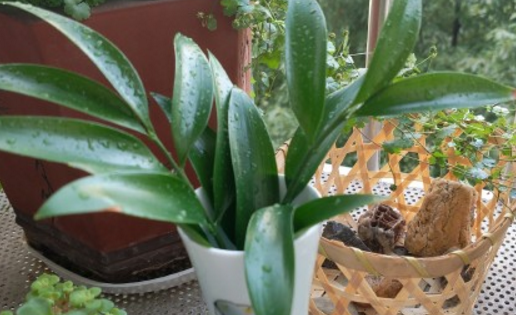
1. Cultivation methods and precautions for the Buddhist pine
Temperature
The ideal growing temperature for the Buddhist pine is between 18°C and 26°C. It has poor cold tolerance and can withstand temperatures as low as minus 7°C.
Light
The Buddhist pine is fairly shade-tolerant and dislikes harsh sun exposure. From May to September, pay attention to shading; you can set up a shade net or place the pot where there is no direct sunlight, so that strong direct light does not scorch the root and stem area and cause the plant to die.
Watering
The Buddhist pine likes a humid growing environment, but during regular care you must absolutely avoid waterlogging. Be sure to grasp the right amount and frequency of watering, and water only after the soil has dried. Ordinarily you can mist the leaves often to increase air humidity, which keeps the foliage dark green and glossy.
Soil
The Buddhist pine has fairly strict soil requirements and prefers deep, fertile, loose, acidic sandy loam.
Fertilizing
Potted Buddhist pines generally do not need fertilizing, but to ensure dark green foliage, you can apply alum fertilizer water 2-3 times during the peak growing season
Pruning
In winter the Buddhist pine enters dormancy or semi-dormancy. At this time you can cut off weak branches, diseased and pest-infested branches, overly dense branches, and dead branches, which not only maintains an attractive shape but also prevents pests and diseases.
Precautions
Each spring you can repot the Buddhist pine once. For the potting soil, it is suitable to use leaf mold or peat soil, garden soil, and sand mixed in a 3:2:1 ratio. In winter, place the Buddhist pine in a bright indoor spot, control watering, and keep the temperature no lower than 0°C for it to overwinter safely.
Once pests or diseases occur, carry out the corresponding control promptly.
2. How do you take cuttings?
1. Trimming and treating Buddhist pine cuttings
After cutting off a branch, choose a robust growing section and cut it into a piece about 5-15 cm long; each piece needs to have more than 3 leaf nodes. When taking the cutting, make a flat cut about 1 cm above the topmost leaf node, and make an angled cut at the lower end about 0.5 cm below the bottommost leaf node. Both the upper and lower cuts should be smooth, and only one leaf needs to be kept. Hardwood cuttings are taken after temperatures rise in early spring, and the cuttings should be chosen from robust first-year branches. Each cutting usually needs to retain 3 or 4 nodes, and the cutting method is basically the same as for softwood cuttings.
Soak the prepared cuttings in potassium permanganate solution for about 3 minutes, then soak their bases in LBA solution for about 4-5 hours.
2. Cutting method for the Buddhist pine
Before cutting, first use a bamboo stick to make small holes about 3-5 cm deep in the substrate, then insert the treated cuttings into the holes. Note that the leaves of the cuttings should all face the same direction, and when inserting, avoid covering the leaves of adjacent cuttings. Finally, press the base down firmly with your hand. Water promptly after inserting so that the cuttings and substrate can make close contact.
3. Management after planting Buddhist pine cuttings
After inserting, shade properly, with shading of about 50%-80%. Once the Buddhist pine has grown roots, gradually remove the shade net. On clear days, remove the shade net at 4 p.m. each day and put it back before 9 a.m. the next morning. When the seedlings are about 25-30 cm tall, they can be taken out of the nursery for afforestation.
3. Can it be grown in water?
The Buddhist pine can be grown in water culture.
Care and precautions for water culture of the Buddhist pine:
For the container used for water culture of the Buddhist pine, choose a slightly larger container so that the roots can spread out well in the water.
For the water, it is suitable to choose sterile cooled boiled water. If using tap water, because the bleaching agents it contains can have adverse effects on the plant's roots, it needs to be left to settle for a day before use. Do not use too much water; generally a depth of 3/4 or 2/3 of the roots is enough, and the rest can respire well even when exposed to air.