How to grow and sow sea buckthorn? Benefits, effects and precautions explained
Sea buckthorn is the same as vinegar willow, also called black thorn and sour thorn. So what are the growing methods and precautions for sea buckthorn? What benefits and effects does it have? How do you sow it? According to information, sea buckthorn is a relatively cold-tolerant plant, and it can tolerate salt, alkali and poor soil, with extremely tenacious vitality. Sea buckthorn is a very precious economic tree species. Because it contains a very high vitamin content, it has extremely high nutritional value and can be eaten in many ways. In addition, its root system is well developed and it has nitrogen-fixing root nodules, so it is often used as a tree species for wind prevention, sand fixation and soil and water conservation, and its ecological value is also very high.
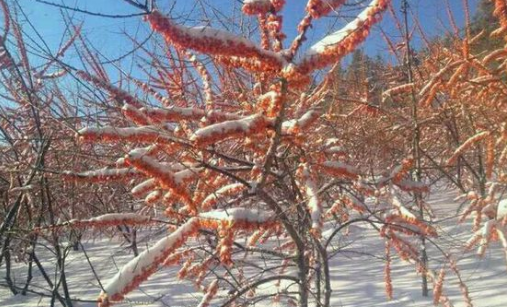
1. What are the growing methods and precautions for sea buckthorn?
Light and temperature
Sea buckthorn is not strict about temperature and is extremely tolerant of both cold and heat, withstanding a minimum of —50°C and a maximum of 50°C. Sea buckthorn is a sun-loving tree species and likes light, with an annual sunshine duration of 1500-3300 hours being suitable.
Water
Sea buckthorn tolerates poor soil and requires annual rainfall of more than 400 mm, but if it is planted in places such as mountain valleys or river floodplains, it can also grow normally. In addition, care should be taken to avoid waterlogging, and drainage should be done promptly during the rainy season.
Fertilizing
During the bud stage and fruit stage of sea buckthorn, spray Zhuangguodiling promptly to increase nutrients, which helps prevent flower drop, improves the fruit-setting rate, and at the same time speeds up fruit expansion, ensuring high quality and high yield of the fruit.
Soil
Sea buckthorn has strong adaptability to soil. It is suitable to choose gravelly soil, sandy soil, etc. with good air permeability, but soil that is too heavy and clayey should be avoided.
Precautions:
Pruning the tree shape
When sea buckthorn grows to about 2-2.5 m high, the top needs to be cut. Cut across, not lengthwise; remove the old and keep the new; prune where dense; keep vigorous branches in gaps; clear the inner canopy and cut the base well, and the crown will be full and the yield high.
Pest and disease control
Dieback is the main disease of sea buckthorn, while common pests of sea buckthorn include sea buckthorn aphids, spring cankerworms, apple small leaf rollers and so on.
For specific control of sea buckthorn dieback, disease-resistant varieties should be selected when planting sea buckthorn, while management should be strengthened, soil should be loosened regularly, soil air permeability should be improved, and the plant's disease resistance should be enhanced. Starting in late April, chemical control can be carried out by opening holes and pouring 500-fold 40% carbendazim suspension or 800-fold thiophanate-methyl, once a month, for 3-5 consecutive times.
For aphid damage, spray 2500-3000-fold 10% imidacloprid for control. For apple small leaf roller and spring cankerworm damage, spray 3000-fold 20% fenvalerate, or use 2500-fold 25% miehbi for control.
2. What benefits and effects does it have?
1. The effect of soil and water conservation
This effect of sea buckthorn is one that many plants have. Sea buckthorn itself has a strong ability to resist drought, and with its strong growth and relatively strong adaptability, it is also quite good at resisting wind and sand. Therefore, sea buckthorn is often planted in deserts, where it can very well play a role in conserving soil and water and greening deserts. In fact, besides deserts, some sea buckthorn is also planted in the poor-soil western regions to conserve soil and water. In addition, sometimes in the process of urban greening, sea buckthorn is sometimes also used as the preferred plant.
2. Nutritional effect
Sea buckthorn is currently the plant with the richest vitamin content in the world. Sea buckthorn is known as a “treasury of natural vitamins,” and its vitamin content has already far exceeded the vitamin content in fresh jujubes and kiwifruit. Everyone says that every 100 grams of sea buckthorn juiced contains about 500 mg of vitamin C, 400 mg of vitamin E, vitamin B1, 0.3 mg of vitamin B2, and so on. In this way, it is not hard to see that sea buckthorn is a treasury of natural vitamins.
3. Medicinal effects
Prevention and treatment of cardiovascular diseases
A large amount of total flavonoids can be extracted from sea buckthorn. Total flavonoids can relieve angina and improve ischemic electrocardiograms. In addition, the total flavonoids in sea buckthorn can strengthen heart function, enhance myocardial contractility, and also have a certain improving effect on myocardial relaxation, so they can effectively prevent cardiovascular diseases.
Anticancer effect
The anticancer effect of sea buckthorn is mainly shown in that it can inhibit cancer cell growth and can also organize cancer cell growth. After drinking sea buckthorn juice, sea buckthorn can block the synthesis of carcinogens in the body. Therefore, sea buckthorn is widely used in the treatment and prevention of cancer. From this aspect, it can be said to be good news for cancer patients.
Other effects
Besides preventing cardiovascular diseases, sea buckthorn also has some other medicinal values, such as preventing stomach diseases, treating burns and scalds, and for women, sea buckthorn can also care for the skin.
3. How do you sow it?
1. Seed selection
Before sowing, seeds must be carefully selected, and care must be taken that the seeds are fresh and free of pests and diseases.
2. Sowing season
Sea buckthorn can be sown in all three seasons of spring, summer and autumn, but spring is best.
3. Seed germination
When germinating, first disinfect with 0.5% potassium permanganate aqueous solution for two hours, then carry out germination. Put the treated seeds into gunny sacks and place them in a sheltered, sunny site. Turn them two or three times a day and wash them once with cool water, maintaining a certain temperature. When 30%-40% of the seeds have cracked, they can be sown.
4. Sowing method
In order to help the seedlings grow healthily and help with your management, sea buckthorn should be sown with larger row spacing and a wider sowing width. The row spacing should be about 23CM, and the sowing width about 13CM. Of course, if you are sowing in a seedling tray, you can skip this step. The bottom of the trench can be a bit flat. Scatter the seeds evenly into the sowing width, cover with about 2.3cm of fine sandy soil, then press down a bit so the seeds and soil have more contact. After sowing, it is best to cover with a layer of grass or plastic film. Once all the seedlings have emerged, it can be removed in stages, so that the tender seedlings that sprouted with such effort are not burned by the sun for being too tender.