How do you plant Berberis thunbergii f. atropurpurea seeds? How do you propagate it? What medicinal effects does it have?
Berberis thunbergii f. atropurpurea is extremely adaptable; it prefers sunny conditions but also tolerates partial shade. So how do you plant Berberis thunbergii f. atropurpurea seeds? How do you propagate it? What medicinal effects does it have? According to reference materials, Berberis thunbergii f. atropurpurea is native to Japan, southern Northeast China, North China and the Qinling Mountains, and is now cultivated in major cities across China. It is an excellent ornamental garden shrub.
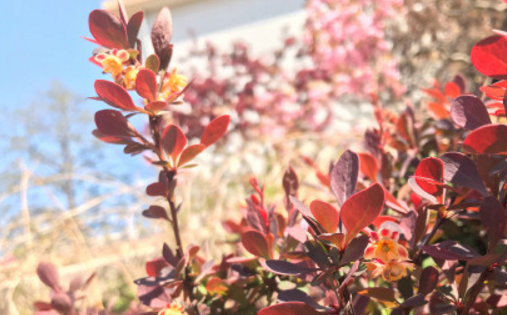
I. How do you plant Berberis thunbergii f. atropurpurea seeds?
Sowing time
Because regions and climates differ, sowing times must also differ to some degree. Taking the north as an example, the weather is warm in March and April, and the soil has just come through winter; the low temperatures have sterilised it and can reduce pathogens.
Treating the seeds
1. Soak the seeds in diluted carbendazim for one day. During this time, sieve river sand and add carbendazim to sterilise it. After soaking, scoop out the seeds and mix them into the sieved river sand, using a seed-to-sand ratio of 1:3.
2. Find a high, wind-sheltered spot on a sunny side and dig a square pit. Its size is unlimited and is determined by the number of seeds you want to stratify. Add 5 cm of river sand to the pit, and insert a pipe for ventilation.
3. Pour the seed-and-sand mixture described above into the dug pit, cover it with 5 cm of river sand, then cover with soil, also just 5 cm.
4. Check regularly whether the seeds have sprouted. Generally, if the temperature is suitable, in about ten days to half a month you can see the seeds split open and small sprouts emerge.
Making the seedbed
1. Choose field soil with good fertility and dig it deeply before sowing, to a depth of at least 30 cm. Clear away weeds, stones and other debris. Make a seedbed 10 m long, 1 m wide and 20 cm high, with 30 cm between each row. The bed surface should be level, and the size specifications should not differ too much; if you are unsure, you can measure and mark lines in advance.
Choose a sunny day to disinfect the soil with carbendazim, preferably five days before sowing.
2. Sow on the raised bed at intervals of 1 to 2 cm. After sowing, cover the seeds with soil to a thickness of about 2 cm. Water using a spray method; you can also irrigate in the furrows between two beds to provide moisture for seed germination. The soil layer must be thoroughly moistened.
Later management
1. Weeding
Weeds may appear after sowing; remove them promptly. Not even small weeds should be spared; remove them as soon as they are found. You can also loosen the soil.
2. Once the seeds grow into seedlings, they need fertiliser. When the seedlings reach 5 cm, irrigate with fertiliser promptly.
II. How do you propagate it?
Sowing
Berberis thunbergii f. atropurpurea is native to Japan and is now produced in places such as Zhejiang and Anhui in China; it is basically grown in northern cities. Collect seeds in autumn, remove all the fruit flesh, dry them in the shade, then store the seeds and sand in proportion in a high, dry pit. Take the seeds out the following spring and begin sowing. Besides spring sowing, you can also sow in autumn after collection.
Cuttings
There are two ways to take cuttings of Berberis thunbergii f. atropurpurea. One is hardwood cuttings, and the other is softwood cuttings. The suitable time for cuttings is June and July in summer. Choose semi-lignified branches and trim them, then insert them into sand or gravel. During this period, keep humidity and temperature steady, and roots will form in a little over half a month. In autumn, choose well-grown branches as cutting material; the cutting method is the same as in summer, and they can be transplanted the following spring.
Division
Berberis thunbergii f. atropurpurea has very strong growth ability, so division is also a good method. Apart from summer, which is not very suitable, division can be done at any other time. Divide the clumping plants for propagation.
III. What medicinal effects does it have?
1. Main functions and indications of Berberis thunbergii f. atropurpurea
Berberis thunbergii f. atropurpurea can clear heat and dry dampness, purge fire and remove toxins. It is often used to treat acute enteritis, jaundice, pneumonia, conjunctivitis, carbuncles, swellings, sores and boils, and metrorrhagia.
Usage of Berberis thunbergii f. atropurpurea
Internal use: decoct in water, 1 to 3 qian; or stew with meat and take. External use: decoct in water and drip into the eyes; or grind into powder and sprinkle on; it can also be decocted in water for hot compresses.
2. Clinical applications of Berberis thunbergii f. atropurpurea
Chronic bronchitis
The whole plant of Berberis thunbergii f. atropurpurea is decocted into a paste and then pressed into tablets. After taking them, there are effects of relieving cough, reducing phlegm and reducing inflammation, among which the anti-inflammatory effect is relatively good. Clinical studies show that after taking the medicine, patients' appetite increases, and their spirits and sleep improve, with no toxic side effects.
Pneumonia in children
Berberine can be extracted from Berberis thunbergii f. atropurpurea. Berberine is made into a sterilising and fever-reducing injection for intravenous injection, with obvious antibacterial, anti-infective and fever-reducing effects.
Dysentery and enteritis
Berberine (a crude extract) extracted from the roots of Berberis thunbergii f. atropurpurea is made into capsules. Taken with warm water, it can treat dysentery; adults take double the dose the first time, and children take half.
Epidemic cerebrospinal meningitis
Take the roots of Berberis thunbergii f. atropurpurea with the outer bark removed, soak them in water for a full day and night, add water and decoct. Used as nasal drops, it can clear the nasal passages.