Bischofia polycarpa Planting Tips, Care Knowledge, and a Detailed Guide to Its Origins and Prices
Bischofia polycarpa belongs to the Euphorbiaceae family. It is a tree species native to China, found throughout areas south of the Qinling Mountains and the Huaihe River basin, and commonly cultivated in the middle and lower reaches of the Yangtze River. It is usually grown as a street tree and as an ornamental garden tree. So do you know what the planting tips and care knowledge for Bischofia polycarpa are? Where are its main production areas? How much does one tree cost? At a nursery farm in Nanjing, we learned that a Bischofia polycarpa with a trunk diameter of 5 cm costs 35 yuan, 7 cm costs 60 yuan, 9 cm costs 180 yuan, 11 cm costs 280 yuan, 13 cm costs 550 yuan, and 15 cm costs 800 yuan.
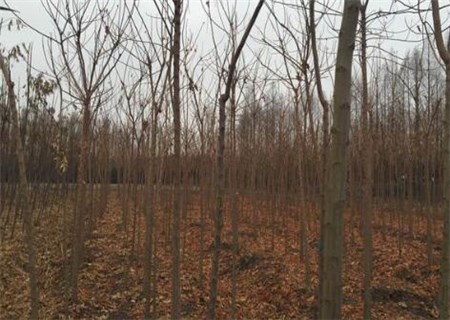
I. Bischofia polycarpa Planting Tips and Care Knowledge
Bischofia polycarpa Planting Tips:
1. Site Selection and Land Preparation
The nursery site should be chosen in a plot with convenient transportation and irrigation conditions. Managing from site selection and land preparation onward can effectively improve the survival rate of Bischofia polycarpa. Although Bischofia polycarpa has low requirements for environment and soil, in order to better cultivate superior varieties, a plot that is sheltered from the wind and faces the sun with relatively fertile soil should be chosen for planting. Attention should be paid to smooth drainage in the planting area, and it is best to use soil with a deeper cultivated layer, choosing a flat location free of pests and diseases as much as possible. Before planting Bischofia polycarpa, manure fertilizer should be used in land preparation to ensure base fertilizer, which can raise soil temperature, ensure the soil is more fertile, and prompt Bischofia polycarpa to germinate faster. For the selection of the Bischofia polycarpa nursery site, attention should be paid to choosing a soil depth of preferably more than 40 cm, with a pH value of 7 being best.
2. Collecting and Selecting Superior Seeds
When selecting Bischofia polycarpa seeds, note that the seeds of Bischofia polycarpa mature from September to November, and the seeds are reddish-brown. During this period, more attention should be paid to observing Bischofia polycarpa, and trees that grow well, have no rotten leaves and have strong resistance should be chosen as mother trees as much as possible, so that the selected Bischofia polycarpa seeds will also have better resistance and be easier to mature. After removing the seeds and soaking them in water for a period of time, rub the fruit in coarse sand, then rinse clean with clear water, and air-dry in a shady place. When collecting seeds, note that the storage method for Bischofia polycarpa seeds should be air-dried storage or mixed with sand for moist storage. Another method of storing seeds is to directly place them in a shady place to air-dry, adding the fruit peel for direct dry storage. Which method to choose for storage should be decided according to the different conditions of each region.
3. Land Treatment Before Sowing
Bischofia polycarpa should have its land turned and prepared in autumn, with a cultivation depth of 25-30 cm. Combined with land preparation, apply base fertilizer, level and rake fine, and make low beds before sowing. The bed surface width is 1.2-1.5 m, the ridge bottom width is 30 cm, the top width is 10 cm, and the height is about 15 cm. The length should be flexibly chosen according to the different terrain of each region. In areas with abundant rainfall, attention should be paid to making raised beds. After the seedling bed is made, attention should be paid to disinfecting the soil of the seedling bed to reduce the possibility of the soil carrying pests and viruses. The method for soil disinfection is to use 50 ml of formalin per sq m, dilute with water, and spray before sowing. Before sowing, it should be covered with plastic film to reduce ventilation, and the film should be lifted one week before sowing.
4. Timely Sowing
Generally, field drilling seedling cultivation is used. In mid-March, disinfect the seedling bed with a 800-fold dilution of 50% carbendazim before sowing. When the seed radicle grows to 1 cm, begin sowing. When sowing, break off part of the radicle, and drill in rows with a row spacing of 20 cm and a plant spacing of 9 cm, with a sowing rate of 30.0-37.5 kg/hm. After sowing, cover with 0.5 cm of fine soil, water thoroughly, and build a 2 m high 90% shade shed to ensure the seedlings are not harmed by sunscald.
The sowing row spacing is about 20 cm, and the sowing rate per mu is 2-2.5 kg. The covering soil thickness is about 0.5 cm, with grass placed on top. After sowing, seedlings emerge in 20-30 days, with a germination rate of 40-80%. One-year-old seedlings are about 50 cm tall, with the tallest reaching over 1 m. The lower part of the main trunk of the seedling tends to grow side branches, which should be pruned promptly so that branching occurs at a certain height. Transplanting should be done when the buds sprout and with a soil ball, so the survival rate is high.
5. Thinning and Transplanting Seedlings
After sowing, seedlings begin to emerge in 20-30 d, with a germination rate of about 70%. When the seedlings grow to 3 true leaves, begin thinning. Thinning is best done on cloudy and rainy days. Thin out the small and keep the large, remove the inferior and keep the superior, thin out the dense and keep the sparse, ensure sufficient light, and pay attention to pest and disease control. When the seedlings grow to about 2 m tall (May), they can be transplanted for planting. The transplanting plant and row spacing is 20 cm × 50 cm. Do this on cloudy and windless days.
Bischofia polycarpa Care and Management:
After Bischofia polycarpa seedlings emerge, attention should be paid to loosening the soil and removing weeds. To ensure the survival rate and the nutrition of the seedlings, attention should be paid to thinning. When fertilizing, attention should be paid to mainly applying organic fertilizer to maintain soil fertility. Any fertilizer used should undergo high-temperature fermentation to reduce pathogens or parasitic eggs carried in the fertilizer, and to meet hygiene standards as much as possible. Water supply should also be noted not to be too wet, but at the same time the air humidity should be maintained. Bischofia polycarpa seedlings are relatively fragile, so a certain degree should be maintained in both water supply and sunlight. When the sunlight is especially intense, note to pull up the shade net for shading. Weed removal should also be noted not to damage the seedlings. The main pest to focus on preventing and controlling for Bischofia polycarpa is the Bischofia polycarpa moth. The solution is to choose a nursery site at a higher elevation to prevent water accumulation, dig drainage ditches well, or sow early and apply sufficient base fertilizer so that the seedlings grow robustly.
Field Planting
When the sapling grows to about 2 m, it can be field planted, and can be used for street, highway, and garden greening. Before field planting, a soil ball should be made and wrapped well, and pruning should be done well to keep the trunk of the field-planted seedling straight, while also facilitating transportation and preventing damage to the sapling. The field planting time is generally chosen around Arbor Day each year, ending at Qingming Festival. The transplanting of field-planted trees must follow the requirements for large tree transplanting to ensure a high transplanting survival rate. After field planting is completed, management such as watering, topdressing, anti-lodging, and pest and disease control must be strengthened, especially the prevention and control of the Bischofia polycarpa clearwing moth. The specific control method is as follows: generally, the peak period of the 2nd and 3rd instar larvae of the Bischofia polycarpa clearwing moth appears from early July to July 15. Pesticide control can be applied once around July 5, and the second application should be done 5-7 d later. A 1000-fold dilution of 25% triflumuron type B, or a 1200-fold dilution of 3% high-phenoxycarb suspension concentrate, or a 1500-fold dilution of 1% emamectin benzoate can be used for large-area spray control.
II. Where Are the Main Production Areas of Bischofia polycarpa
It is produced from the Qinling Mountains and the Huaihe River basin southward to northern Guangdong and Guangxi, and is commonly cultivated in the middle and lower reaches of the Yangtze River. It is usually grown as a street tree and as an ornamental garden tree. There is a small amount of introduced cultivation in North China. Bischofia polycarpa likes light and is also slightly shade-tolerant. It is tolerant of drought and barren conditions, and also tolerant of water and moisture, with strong cold resistance.