Golden-edged Daphne water propagation method and winter care tips, is it toxic
Golden-edged Daphne (Latin scientific name: Daphneodora) is a variety of Daphne. So what is the water propagation method for Golden-edged Daphne? Is it toxic? How to care for it in winter? According to available information, before water propagating Golden-edged Daphne, you should first choose a container that can hold the branches, preferably with a bit more space and enough oxygen, which helps rooting. In addition, if you want long-term water propagation, you can prepare another pretty glass container, and after rooting it can be placed there for viewing. Plastic foam board, clean small stones, and loose soil after being put in the lower part.
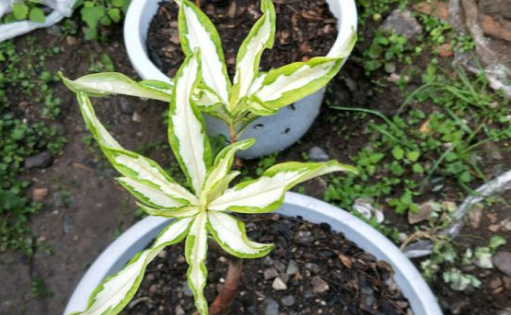
I. What is the water propagation method for Golden-edged Daphne?
1. Water propagating Golden-edged Daphne: material selection
Before water propagation, first choose a container that can hold the branches, preferably with a bit more space and enough oxygen, which helps rooting.
In addition, if you want long-term water propagation, you can prepare another pretty glass container, and after rooting it can be placed there for viewing.
Plastic foam board, clean small stones, and loose soil after being put in the lower part.
2. Water propagating Golden-edged Daphne: branch selection
Choose vigorous semi-lignified branches of the current year (the branches are slightly green), cut them to a length of 6~8 cm, and keep 1~2 leaves. The day before cutting the branches, you can use a sharp knife to make a ring cut at the cut end, which can speed up wound healing.
3. Water propagating Golden-edged Daphne: determining the time
Water propagation of Golden-edged Daphne can be done in all four seasons, but the season with the highest survival rate is still summer. In Shandong, late July is the best time, while in southern regions early July is most suitable. This is because at this time the branches tend to be more mature and root faster.
4. Water propagating Golden-edged Daphne: operation method
First split the lower end of the branch from the middle to make an opening, and use small stones to separate the two halves of the branch.
Then soak the branch in disinfectant solution for about 10 minutes, and take it out after disinfection.
According to the thickness of the branch, poke several small holes in the plastic board, insert the branch into one of them, and leave about 3~4 cm of the lower end of the branch exposed.
Then place the plastic foam in a container filled with water. The bottom of the branch should touch the water surface, and it can be placed in a sunny spot indoors.
5. Water propagating Golden-edged Daphne: care
Change the water once every 2~3 days. Spring water or river water is best, or tap water that has been stored for several days. When changing the water, moss may appear around the container, so clean it thoroughly, and at the same time disinfect with potassium permanganate solution.
If the weather is relatively hot and dry, add water to the container and sprinkle water on the ground in time. Generally, under conditions of about 22~28°C, roots can form in about 50 days.
II. Is it toxic?
Rumors are just rumors and have no scientific basis. Golden-edged Daphne is really not toxic. Moreover, research also shows that Golden-edged Daphne has anti-inflammatory, immune-regulating, analgesic, antibacterial, and anti-tumor effects.
Another rumor says that the floral fragrance of Golden-edged Daphne is toxic. Is it because the fragrance is rich that flower lovers all think it is toxic? This is not a problem with Golden-edged Daphne itself. Any friend with basic flower-growing knowledge knows that plants with a rich floral fragrance should not be placed in a closed environment, especially when cared for in the bedroom. Smelling it for a long time can cause a mild headache, so it should be placed in a well-ventilated place such as a balcony for care.
III. How to care for it in winter?
Placement location
After Frost's Descent, Golden-edged Daphne should be moved indoors for care. During the day, place it at a south-facing window to receive sunlight, and at night move it to a place indoors with a higher temperature. Do not place it by the window, to avoid frost damage from too low a temperature. In winter, ensure the indoor temperature is above 5°C, and open the windows for ventilation when the weather is clear.
Fertilization requirements
The potting soil for Golden-edged Daphne does not need base fertilizer, and liquid fertilizer should be applied frequently as a top dressing. However, note that raw fertilizer and concentrated fertilizer should be avoided, and ants and earthworms should not appear in the potting soil (although earthworms help enhance soil fertility, having earthworms in household potted plants is still a bit disgusting). When fertilizing, it is better to apply lightly than heavily.
For liquid fertilizer, mainly choose soybean water or potassium dihydrogen phosphate solution. If the fertilizer is too concentrated, water promptly and water continuously several times to let the fertilizer flow out from the bottom of the pot, reducing fertilizer damage, then place the pot in a ventilated place to let the potting soil dry as soon as possible.
Watering method
In winter, Golden-edged Daphne grows relatively slowly, so watering should depend on the situation. If the leaves are upright and pointing upward, it means water and fertilizer are normal; if the leaves droop, it means too much or too frequent watering. Once the cause is found, correct it promptly.
If root rot is caused by overwatering, deal with it promptly. Remove the plant from the pot in time, cut off the rotten roots, wash them with fungicide, and then replant. Of course, to help the plant recover as soon as possible, part of the upper leaves can be cut off to reduce nutrient consumption.