How to grow Daphne odora and things to note, and how to repot and prune?
Daphne odora (scientific name: Daphne odora), also known as Shuixiang, Penglai Zi, Fengliu Shu, Mao Ruixiang, Qianli Xiang and so on. So what are the growing methods and things to note for Daphne odora? When to repot? How to prune? According to available information, Daphne odora prefers a semi-shaded and fairly well-ventilated environment, and is rather afraid of strong sunlight and exposure. It likes moisture and is not very drought-tolerant, but you also need to be careful not to keep it too wet. For the soil, generally choose loose, fertile soil with good drainage. When fertilizing, nitrogen, phosphorus and potassium are the main nutrients, and a base fertilizer can be used.
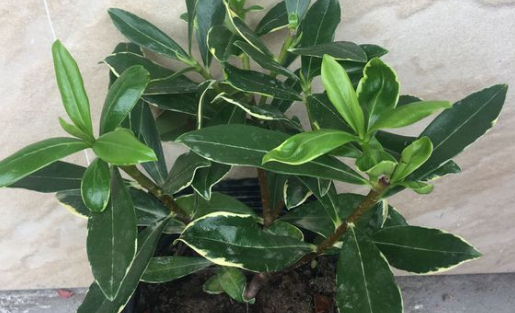
I. What are the growing methods and things to note for Daphne odora?
1. Soil
For the potting soil of Daphne odora, fertile, acidic leaf mold with high humus content is best. Alkaline soil must not be used. You can mix mountain soil (garden soil) and leaf mold (pine needle soil) in a ratio of 5:2 as the potting soil.
2. Watering
The roots of Daphne odora are fleshy, so be careful to water less, and never water too much. Once watered too much, the potting soil stays wet for a long time, which easily causes root rot. After rain, promptly pour out any standing water in the pot. After Frost's Descent, keep the water content of the potting soil at around 45%.
3. Fertilizing
First, apply enough base fertilizer in winter. In spring, apply about 2 to 3 rounds of dilute cake fertilizer water, and make sure it is thoroughly decomposed. Stop fertilizing in summer to avoid burning the roots. In autumn, apply light fertilizer frequently until it blooms. After buds form, you can spray the branches and leaves with monopotassium phosphate. Overall, it is fairly fertilizer-loving, and during the growing period it is best to water with liquid fertilizer once every 10 days, taking care that the liquid fertilizer concentration is low. In addition, note that human feces and urine must not be used as fertilizer for it.
4. Light
Daphne odora likes a semi-shaded environment and must not be exposed to scorching sun. However, in winter and spring, when temperatures are lower, it should be placed in an environment where it can get light. In summer, it should be placed in a well-ventilated shady spot, and when it is too hot, you can mist it appropriately.
Things to note
1. Pruning
This plant is fairly tolerant of pruning. Before it sprouts, you can cut off relatively dense branches to allow ventilation and light penetration. Pruning it after flowering can maintain a beautiful flower shape. You can shorten the branches where the spent flowers are, and cut off leggy branches, crossing branches, overly dense branches, overlapping branches, and other branches that affect the beauty of the plant's shape.
2. Repotting
Repotting is generally done after the flowers fade, usually every 2-3 years. When repotting, you can remove about 2/3 of the old soil, or you can replace all the old soil with new soil. While repotting, you can also cut off some overly long roots and raise the roots appropriately.
II. When to repot?
1. Choosing the time
Generally speaking, to ensure the plant's normal growth, we change the potting soil once every two years. There is no need to change the soil often, but of course you also should not go too long without changing it. The suitable time for repotting is early spring, that is, roughly from February to March. This is because the buds have not yet begun to sprout at this time, which makes it more suitable.
2. Specific steps
(1) Choosing the pot and soil: Observe the size of the plant. If you feel the original pot is too small, you can give it a larger, more suitable pot. As for the potting soil, choose a slightly acidic, loose soil according to this plant's preferences, and before the formal repotting, first put it out in the sun to dry, as this can kill harmful bacteria in the soil in advance.
(2) Repotting: Take the plant out, shake off the soil around the roots, and cut off both the aged roots and the rotten roots. Place it in a cool, ventilated place for three days until the wounds dry. After that, put the new soil into the pot, place the plant in, and keep its depth as consistent as possible with the original depth. Then, firm the potting soil and water it, taking care to water thoroughly at this time.
(3) Later care: After watering, place the plant in a ventilated, shaded, cool location. After about fifteen days, you can carry out normal care and management.
III. How to prune?
Choosing the time
(1) First, when the plant is growing very fast, carry out "pinching" to encourage it to branch as soon as possible.
(2) You can also prune it after it blooms. This plant does not bloom only once a year. Its first bloom starts around the end of January and ends at the end of February, and you can prune once at this time. The second bloom starts at the end of February and ends in early April, and you can prune once more. Generally speaking, pruning after flowering is the most common, so we will introduce its steps in detail.
Specific methods
(1) For better pruning, you can place the plant on a turntable and prune while turning it, which gives the best results.
(2) Try to shorten the branches that have already bloomed, as this can encourage them to branch, so the next bloom will have more flowers.
(3) In addition, we should also cut off the relatively weak branches, diseased branches, and aged branches, and keep the new, strong branches.
(4) Also, to ensure the overall shape of the plant remains ornamental, we can cut off its overlapping and crossing branches. In addition, deformed leaves and leaves that detract from the display must also be cut off, making the plant look better.