Bottle Palm Cultivation Methods, Precautions, Propagation, Effects and Benefits
The Bottle Palm is also known as the gourd-stemmed Hyophorbe. So what are the cultivation methods and precautions for the Bottle Palm? How do you propagate it? What effects and benefits does it have? According to available information, the Bottle Palm is mostly suited to cultivation in tropical regions; it likes high temperatures and environments with ample sunlight. If grown in northern regions, it needs to be kept in a pot indoors to overwinter.
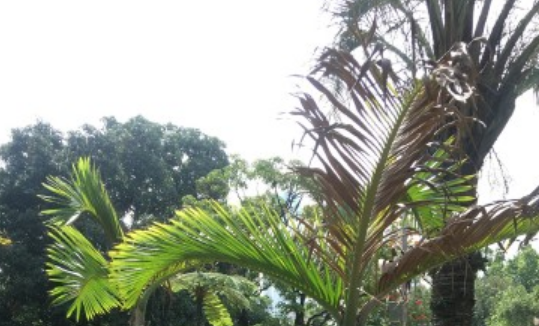
I. What are the cultivation methods and precautions for the Bottle Palm?
Temperature and Light
The Bottle Palm likes a growing environment with high temperatures and ample sunlight, and the overwintering temperature in winter must not fall below 10°C. The Bottle Palm grows relatively fast in a high-temperature, semi-shaded environment, and direct sunlight should be avoided; under blazing sun its leaf color will fade or turn yellow, and scorched leaves and black spots will appear, seriously reducing its ornamental value. It is fairly shade-tolerant; the shading level in summer and autumn is usually about 60%, while in winter and spring it should be given relatively bright scattered light.
Water
During the growing period, water it sparingly rather than heavily, keeping the potting soil moist at all times; soil that is too dry will cause the leaf tips to scorch, reducing its ornamental value. At the same time, avoid overwatering, otherwise it easily causes leaf rot and disease, leading to black spot disease, which causes the leaves to turn yellow or even die. In summer, water 2-3 times a day, and also frequently spray water around the plant with a sprayer to raise the air humidity of the growing environment, promote plant growth, and keep the leaf surface dark green and glossy. In winter, reduce the amount of watering appropriately to help it overwinter.
Fertilizing
During the growing period of the Bottle Palm, regular topdressing is needed; you can apply topdressing once a month, and in late autumn you should also apply an additional potassium fertilizer to improve the plant's cold resistance.
Soil
For the cultivation soil, it is suitable to choose loam or sandy loam that is rich in humus and has good drainage and aeration.
Precautions
The Bottle Palm grows slowly and dislikes transplanting, so when sowing it is suitable to use nutrient bags or flower pots with good aeration. After planting, it needs to be shaded and kept moist until new roots grow, after which it can be moved to full-sun normal management. During the vigorous growth period in summer and autumn, the soil needs to be kept moist.
During the plum rain season, the Bottle Palm is prone to red spider mite damage, which can be controlled by spraying with trichlorfon or dichlorvos.
II. How do you propagate it?
Propagation of the Bottle Palm by sowing
Select high-quality mother Bottle Palms for seed collection; pot sowing, box sowing and bed sowing can all be used. For large-scale sowing, the seedbed should preferably be sandy soil close to a water source on flat terrain, in a slightly shaded location.
Before sowing, the seeds should first be soaked to promote germination. The seeds can be soaked in warm water at about 30-35°C for about 2 days, then the waxy layer on the seed coat gently rubbed off; take out the seeds and wrap them in gauze, then soak them once more in warm water every morning and evening, keeping the seeds moist. When they begin to sprout, they can be sown. Because the seed coat of the Bottle Palm is relatively hard, you can also first use a sharp knife to shave off a small piece of the outer pericarp near the eye of the sprout before soaking the seeds in warm water; this makes it easier for the seeds to absorb water and germinate. For the culture soil, plain sand is suitable. When sowing, place the Bottle Palm seeds with the top end facing up, then arrange them at a slant on the seedbed. The depth of the covering soil is about one times the diameter of the seed. After sowing, place them indoors at a room temperature of about 25-30°C, semi-shaded, and keep the soil moist.
III. What effects and benefits does it have?
1. The ornamental value of the Bottle Palm
The Bottle Palm tree grows slowly but has a long lifespan, with a peculiar plant shape resembling a bottle, eye-catching, and is a precious ornamental palm plant. It can be used both as a potted ornamental and to decorate halls, clubs, large shopping malls, etc., or planted as a solitary specimen on lawns or in courtyards, all achieving good ornamental effects. In addition, the Bottle Palm can also be planted directly by the seaside, forming a beautiful scenic line.
2. The nutritional value of the Bottle Palm
Coconut is rich in protein as well as various vitamins and minerals. Fresh coconut and dried coconut meat powder contain extremely abundant fiber, three to four times more than ordinary vegetables and fruits, which helps promote the normal functioning of the digestive tract. Fresh coconut can be used both in cooking and eaten as a snack. Grinding the coconut meat and squeezing out the milky white juice produces coconut milk, which has no sweet taste. It can be drunk cold or hot, has a fairly good mouthfeel, or can be mixed into other drinks, and can also be used as a seasoning for dishes.
3. The economic value of the Bottle Palm
Coconut oil can be extracted from the Bottle Palm, with a relatively high oil content, and can undergo various processing to enter the market, having good economic uses. For example, coconut oil for edible cooking, coconut products, etc. In addition, coconut oil can also be applied directly to the skin and hair, having skin-care and hair-care effects; long-term use can make the skin and hair soft and smooth.