Magnolia grandiflora (Magnoliaceae): Why It Doesn't Bloom, Causes of Yellow Leaves, and Its Benefits and Uses
Magnolia grandiflora belongs to the Magnoliaceae family and is also known as the southern magnolia and lotus magnolia. So why doesn't Magnolia grandiflora bloom? What should you do when its leaves turn yellow? What benefits and uses does it have? According to the available information, Magnolia grandiflora grows best in bright light and tolerates slight shade when young. It prefers a warm, humid climate and has a certain degree of cold resistance. It is suited to high, dry, fertile, moist, well-drained slightly acidic or neutral soil; when planted in alkaline soil it tends to develop chlorosis. It dislikes waterlogging and poor drainage.
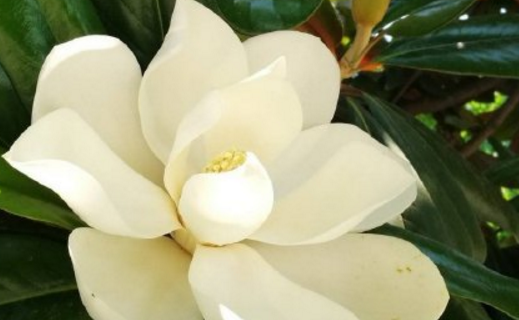
I. Why doesn't Magnolia grandiflora bloom?
1. Magnolia grandiflora doesn't bloom because it isn't old enough
Potted Magnolia grandiflora sometimes fails to bloom; this may be because the plant is a grafted seedling and the seedling is too young. Generally, grafted Magnolia grandiflora needs to be at least 3 years old before it can bloom.
So first find out how old the potted Magnolia grandiflora is. If it isn't old enough yet, it naturally won't bloom, and you can patiently wait for it to flower.
2. Magnolia grandiflora doesn't bloom because the pot is too small
When growing Magnolia grandiflora in a pot, various containers are used, but because the plant is relatively tall, a fairly large container is needed. If the chosen container is too small, the growth of Magnolia grandiflora will be restricted, the roots will struggle to extend, the plant will grow slowly, and it will be difficult for it to bloom.
So when potting Magnolia grandiflora, you first need to choose a somewhat larger pot so that the plant has room to grow.
3. Magnolia grandiflora doesn't bloom because of insufficient light
Magnolia grandiflora likes light and needs plenty of sunlight while growing. If the growing environment doesn't provide enough light, the leaves may still grow well, but it will be very difficult for the plant to bloom.
So when cultivating Magnolia grandiflora, make sure it gets sufficient light.
4. Magnolia grandiflora doesn't bloom because of improper watering and fertilizing
Magnolia grandiflora needs suitable water and fertilizer when being cultivated. Improper use of water and fertilizer may prevent blooming; for example, using too much nitrogen fertilizer and not enough phosphorus fertilizer will result in leaf growth only, with no flowers.
So when cultivating Magnolia grandiflora, keep water and fertilizer balanced to meet its nutrient needs.
II. What should you do when the leaves turn yellow?
1. Magnolia grandiflora leaves turn yellow because of insufficient light
When cultivating Magnolia grandiflora, it has a certain need for light. If there isn't enough light and the plant goes without light for a long time, its leaves will turn yellow. Potted Magnolia grandiflora is very prone to this situation.
When growing Magnolia grandiflora in a pot, you must meet its light requirements and give it sufficient light.
2. Magnolia grandiflora leaves turn yellow because the air humidity is too low
Magnolia grandiflora needs suitable humidity. If the air humidity is too low where it is grown, the air will be too dry, and this will also cause the leaves of Magnolia grandiflora to turn yellow.
If Magnolia grandiflora is grown in the northwest region of China, this phenomenon is likely to occur because the air there is relatively dry. When cultivating Magnolia grandiflora, to avoid yellowing leaves, it is best to maintain suitable air humidity.
3. Magnolia grandiflora leaves turn yellow because of overwatering
When cultivating Magnolia grandiflora, watering is also very important, because if it is watered too much, the soil becomes too moist or water accumulates, which causes the roots of Magnolia grandiflora to rot, preventing them from absorbing water and nutrients normally, and in turn causing the leaves to turn yellow.
So when cultivating Magnolia grandiflora, be sure to water in moderation and not too much.
4. Magnolia grandiflora leaves turn yellow because of fertilizing problems
When cultivating Magnolia grandiflora, fertilizing is also a very important step. If too little fertilizer is applied, or if the pot and soil haven't been changed for a long time, nutrients will be relatively lacking, causing the leaves to be very thin and yellow. So when cultivating Magnolia grandiflora, fertilize in a timely manner and change the potting soil regularly.
If too much fertilizer is applied, the new leaves of Magnolia grandiflora will become thick and plump, while the tips of the old leaves will dry out and turn yellow. At this point, stop fertilizing and increase watering.
III. What benefits and uses does it have?
Ornamental value of Magnolia grandiflora
The leaves of Magnolia grandiflora are relatively thick, and the flowers are large and fragrant. It is suitable for planting as a specimen, in groups, or in rows, and can be used as a landscape plant, street tree, or shade tree.
Greening role of Magnolia grandiflora
Magnolia grandiflora has a tall, graceful tree form and a certain degree of cold resistance, and it has strong resistance to toxic gases such as sulfur dioxide in factories and mines, so it can purify the air and protect the environment.
Medicinal value of Magnolia grandiflora
1. Blood pressure-lowering effect: the flower buds of Magnolia grandiflora have a slow blood pressure-lowering effect in both anesthetized and non-anesthetized subjects.
2. Ganglionic blocking and muscle-relaxing effects: magnoflorine in the bark of Magnolia grandiflora has a curare-like effect and a ganglionic blocking effect, and this effect can be antagonized by anticholinesterase drugs such as neostigmine bromide.
3. Antibacterial and antifungal effects: magnolol contained in the bark has an anti-ulcer effect.
Other values of Magnolia grandiflora
Every part of Magnolia grandiflora is useful; its leaves, flowers, and bark all have medicinal value, and it can also be used to extract essence. Traditional Chinese medicine holds that magnolia flowers are pungent and warm in nature and flavor, can eliminate phlegm, benefit the lungs, harmonize qi, and promote metabolism, and can also clear the nasal passages, improve headaches and runny nose, and relieve fatigue. Before magnolia flowers are used as medicine, they must first be sun-dried and ground into powder, and if magnolia flowers are used to make tea, it also has a certain beauty effect; many women also like to drink magnolia flower tea to maintain their appearance.