Is the Primula obconica (fairy primrose) poisonous? Detailed explanation of propagation methods and medicinal effects
The fairy primrose and other various primroses are important indoor potted flowers, so is the fairy primrose poisonous? How do you propagate it? What effects and uses does it have? According to information, the flowering room temperature for the fairy primrose is 10-15°C. Unlike other primroses, it does not require low temperatures, but appropriate low temperatures can make the plant grow robustly and compactly, and will also increase the number of flower stems. After entering the flowering period, appropriately increase the concentration of phosphorus and potassium fertilizer, generally using a 15-10-30 fertilizer at 200ppm. After the flowering period, pay attention to pruning the withered flower stems to prevent the occurrence of gray mold.
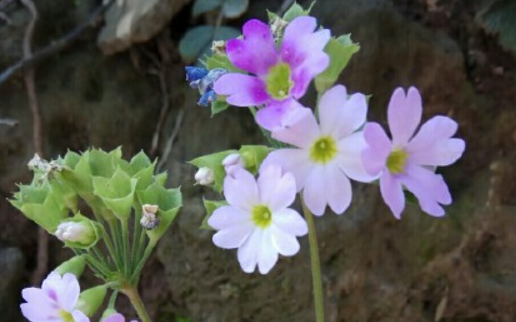
I. Is the fairy primrose poisonous?
1. Properties of the fairy primrose
The fairy primrose, also called xianhe lian, is a flower that likes light but fears direct strong light and cannot tolerate high temperatures. Its requirement for the soil environment is that slightly acidic fertile soil is most suitable for growth.
2. Effects and uses of the fairy primrose
The fairy primrose is not only an ornamental flower, widely planted in landscaping and home potting. Besides its extremely high garden value, the fairy primrose can also be used as medicine. Its main medicinal value is clearing heat from the human body and playing a detoxifying role. It is a flower whose entire plant can be decocted and taken as herbal medicine.
II. How do you propagate it?
The fairy primrose is usually propagated by sowing.
Seed sowing method
The seeds of the fairy primrose are best sown immediately after collection, because the seeds of the fairy primrose do not have a very long lifespan, generally not exceeding 6 months. Or store them under dry, low-temperature conditions. Sow in a seed box or shallow pot. Because the fairy primrose seeds are tiny, they do not need to be covered with soil after sowing.
Seed germination requires light and likes moisture. Therefore, it is necessary to cover with glass and place paper on top, and place it in a semi-shaded place. The suitable temperature for seed germination is 15-20°C. About 7-16 days after sowing the seeds, they can germinate. When the temperature is higher than 25°C, the germination rate will decrease significantly. Therefore, sowing should be avoided in the midsummer season, or the method of indoor sowing should be used.
Seed sowing time
The sowing period depends on the flowering period you want. If you want it to bloom in winter, you can sow in late spring. Sowing in early autumn can bloom in early spring.
Propagation of the fairy primrose by division
The fairy primrose can also be propagated by division. When the seedlings grow 2-3 true leaves, carry out the first transplanting. When they grow to 5-6 leaves, plant them in place or pot them. When planting in place, be careful not to plant too deep; the depth should be appropriate. Burying the root crown into the soil is best. Flowering period regulation: after the winter temperature drops, the base can sprout again, and at this time change the pot for cultivation.
After overwintering at a room temperature of 10-12°C in winter, it can bloom again the following spring. The seedlings are transplanted during seedling separation, then transplanted again, and then planted in place in a larger pot. When planting, do not bury the root crown into the soil.
Pot soil
The pot soil commonly uses equal amounts of leaf mold, garden soil, and rice husk ash mixed together, then adds an appropriate amount of fertilizer.
Shading
For early-sown seedlings sown in late June, attention should be paid to shading in summer. No shading is needed in winter, and a small amount of shading can be given in spring and autumn.
Fertilizing
During the growth period, apply fertilizer once every half month. In winter, the room temperature needs to be maintained at around 12°C. Around the Spring Festival, it can enter the full flowering period. Adding beauty to the festival.
III. What effects and uses does it have?
1. Ornamental effect of the fairy primrose
The fairy primrose has many varieties and bright colors, including blue, white, purple-red, carmine, light red, or light purple. It is often used for ornamentation and is very beautiful when placed at home. The fairy primrose corolla is red, and it can also be used as a cut flower for indoor cultivation.
2. Medicinal value of the fairy primrose
The fairy primrose not only has an ornamental effect, but also has medicinal effects. If the whole plant of the fairy primrose is used as medicine, it can also clear heat and detoxify. Therefore, the fairy primrose is a natural medicinal plant.
3. Garden uses of the fairy primrose
The fairy primrose can be used as a potted ornamental, and in spring the fairy primrose can also be used to arrange flower beds, flower borders, etc.
4. Other values of the fairy primrose
The flower language of the fairy primrose is first love, so the fairy primrose can also be given as a gift to express one's feelings. The beautiful fairy primrose can also delight the mood of the flower grower and help flower lovers maintain a good attitude.