Sowing Methods, Blooming Time, and Benefits of Milk Vetch (Astragalus Tribe) Seeds
Milk vetch, also known as qiaoyao, honghuacao, caOzi, ziyingyingzi, jilizi and so on. So how do you sow milk vetch seeds? When does it bloom? What benefits and effects does it have? According to available information, before sowing milk vetch seeds, you need to choose a sunny midday, sun the seeds for 4-5 hours, then add fine sand and rub the seeds to wipe off the waxy layer on the outer seed coat, so as to increase the germination rate of the seeds.
I. How do you sow milk vetch seeds?
Sowing methods for milk vetch
First, before sowing, the seeds need to be sunned and soaked. Before sowing milk vetch seeds, you need to choose a sunny midday, sun the seeds for 4-5 hours, then add fine sand and rub the seeds to wipe off the waxy layer on the outer seed coat, so as to increase the germination rate of the seeds.
Then rinse and select the seeds with salt water; empty seeds and diseased grains will be screened out. Put the selected seeds into diluted urine or a 0.1-0.2% potassium dihydrogen phosphate solution to soak, then dry the seeds in the sun, mix them with fertilizer, and they are ready to sow.
Choose the right time to sow. Sowing is generally carried out from September to October. If the seeds are sown too early, the seedlings will be thin and weak and may not be able to adapt to environmental changes or survive normally.
Points to note when sowing milk vetch
During the seedling-raising period, first do a good job of keeping warm to prevent the seedlings from being frostbitten in severe cold, and at the same time watch out for weeds around the seedlings. If there are weeds, remove them as soon as possible, and do a good job of preventing and controlling pests and diseases.
II. When does it bloom?
In fact, milk vetch blooming is concentrated from February to June, and after blooming it will bear fruit, with the fruiting period generally from March to July.
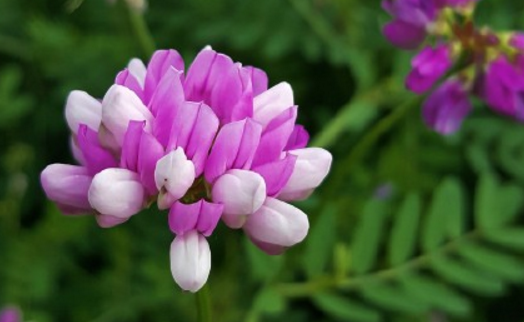
The flowers of milk vetch are actually quite plain, with umbel-like inflorescences, several small flowers clustered together, usually 8-10 of them. The flower color of milk vetch is mainly purple.
III. What benefits and effects does it have?
1. Ecological value of milk vetch
Milk vetch is an important green manure crop. It has strong nitrogen-fixing ability and high utilization efficiency, so when the plants decompose they can greatly release soil nitrogen. In this way, it plays an important role in maintaining the nitrogen cycle in farmland ecosystems.
2. Edible value of milk vetch
Milk vetch is one of the main nectar source plants in China, with a natural, fresh fragrance and a bright, clear sweetness. Milk vetch honey is made from nectar collected by bees from milk vetch flowers as the raw material, brewed and vacuum low-temperature concentrated, ensuring the nutrition and activity of the honey, pure natural, sweet, and rich in nutrients. In addition, milk vetch has auxiliary therapeutic effects on improving eyesight and reducing swelling, dispelling wind and promoting urination, and sore throat and cough, and is beneficial for improving anorexia, improving listlessness, and Qi and blood deficiency. It is an excellent health product.
3. Medicinal value of milk vetch
Milk vetch can be used as medicine, for symptoms such as sore throat and cough, and herpes bleeding. Its main effects are clearing heat and detoxifying, promoting urination and reducing swelling, activating blood and improving eyesight, and so on. Its medicinal value is extremely high.
4. Livestock value of milk vetch
Besides being a green manure crop, milk vetch is also a livestock feed. It has good palatability, all kinds of livestock like to eat it, and it is rich in nutrients. As a high-quality feed and protein supplement feed, milk vetch has excellent results. In addition, milk vetch can also be used both as green manure and as forage grass, with an extremely high usable rate, so its livestock value is very high. However, when using milk vetch in livestock husbandry, note that although it can be used as feed for animals such as cattle, horses, and sheep, it should not be used in excess, otherwise it may cause bloat.