Rosaceae suborder: Milk vetch (Astragalus) toxicity, cultivation methods and precautions, and differences from alfalfa
Milk vetch is a herbaceous plant with pinnately compound leaves that produces flowers, so is milk vetch toxic? What are its cultivation methods and precautions? What is the difference from alfalfa? According to the information, milk vetch prefers a warm and humid growing environment, can tolerate cold, and requires sufficient water during cultivation. When choosing soil, sandy soil or clay soil is generally selected, and it needs good drainage; its requirements for soil are not strict.
1. Is milk vetch toxic?
Milk vetch is divided into two types: non-toxic and toxic. Non-toxic milk vetch can be cooked and eaten, whether stir-fried or made into soup; toxic milk vetch can cause poisoning in various livestock, especially horses. Generally speaking, local livestock have the ability to distinguish it, but they may eat it if they are too hungry. If consumed in large amounts, it will cause acute poisoning; if consumed in small amounts over a long period, it will cause chronic poisoning.
Symptoms of milk vetch poisoning
Acute poisoning leads to death after a few days, and chronic poisoning leads to death after a few months. After poisoning, livestock will be listless, have no appetite, and feel weak all over, until their limbs become paralyzed and they cannot stand, or they run wildly until their limbs become paralyzed, and in the end they all die. For cattle poisoned by milk vetch, they mostly show extreme restlessness, and cows experience miscarriage. For sheep, it shows as blackened and loose teeth. In addition, if livestock eat moldy whole plants, they will develop "qiaoyao disease," with symptoms of hemorrhagic anemia, and they often ultimately die.
2. Cultivation methods and precautions?
Timely fertilization
Fertilization for milk vetch is mainly phosphorus fertilizer and potassium fertilizer, and nitrogen fertilizer can be added appropriately. Apply different fertilizers at different times. Generally, in late autumn, apply calcium phosphate and manure water to promote early root nodule formation and early seedling development; around the winter solstice, apply potassium fertilizer or plant ash to enhance cold tolerance; after the beginning of spring, apply urea to promote the growth of branches and leaves.
Timely green manuring
Milk vetch is generally green-manured during the flowering period, about ten-plus days before the rice transplanting period. For large-scale cultivation, apply an appropriate amount of lime evenly per mu to promote plant decomposition and neutralize acidity.
Timely watering
Milk vetch likes warm and humid environments, and especially needs sufficient water during the growing period, but care should also be taken to avoid waterlogging, so controlling the amount of watering is crucial. In addition, it is necessary to spray water frequently to keep the environment humid.
Precautions:
Sow at the right time and in the right amount
Because milk vetch likes cool conditions, it can be sown twenty-plus days after the harvest of late rice in late autumn. When sowing, note that the seeds need to be soaked, dried in the sun, and pregerminated; only in this way can the germination rate be improved.
Mix with rhizobia
When milk vetch seeds sprout and turn white during pregermination, mix with rhizobia, that is, use cold thin rice porridge soup mixed with the bacterial strain and then mix with the seeds.
Strengthen maintenance and management
For large-scale commercial cultivation of milk vetch, after the late rice harvest, ditches should be opened well, including field-surrounding ditches, bed ditches, and cross drainage ditches, to keep the soil moist while avoiding waterlogging. In addition, attention should be paid to the prevention and control of pests and diseases: for powdery mildew, use carbendazim or thiophanate; for aphids and the like, use dimethoate; for armyworms, use trichlorfon or rice vinegar and saccharin. In addition, care should be taken to avoid damage by livestock.
3. What is the difference from alfalfa?
1. Milk vetch and alfalfa have different lifespans
Alfalfa has a very long lifespan, generally around 5-7 years, and can even reach 25 years. Milk vetch is a biennial plant, flowering from February to June and fruiting from March to July.
2. Milk vetch and alfalfa differ in petals and leaves
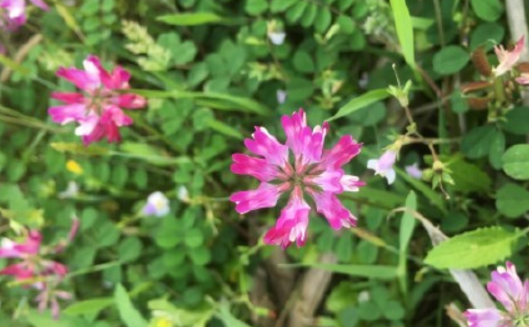
The petals of milk vetch form an umbel shape, the number of leaves is mostly odd, and the corolla is purplish red or orange-yellow. The corolla of alfalfa is a purple papilionaceous corolla, the leaves at the top have serrated edges, and each inflorescence has 15-30-plus small flowers.
3. Milk vetch and alfalfa have different flower stems
The flower stem of milk vetch is cylindrical and hollow, with fine hairs and relatively much sap inside the stem. The flower stem of alfalfa is upright, round or angular, mostly growing from the root, 1-1.5 m tall, with many branches on the stem.
4. Milk vetch and alfalfa have different growth habits
Milk vetch likes warm and humid conditions, has strict requirements for water, but does not have strict requirements for soil, has poor salt tolerance, and has a high hybridization rate. Alfalfa likes a semi-humid and semi-arid climate, can endure drought, has extremely strong cold resistance, and can endure severe cold of minus 30-40°C.