How to grow the commonly used Chinese herb mint? A detailed guide to planting time and methods
Mint is one of the commonly used traditional Chinese medicines. Its folk name is “Yindan grass”. It is a pungent, cooling diaphoretic and antipyretic medicine, used to treat influenza, headache, red eyes, fever, sore throat, swollen and painful gums, and other conditions. So how do you grow mint? When is the best time to plant it? What are the planting methods?
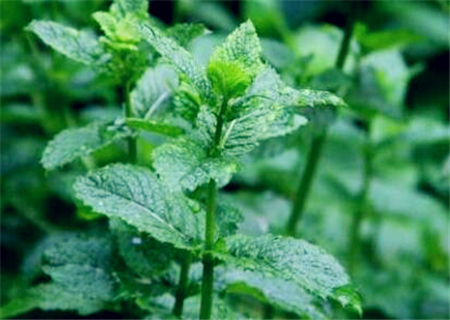
Mint planting time
The planting time of mint mainly depends on the climate conditions of each region. In Guangdong, Hainan and other provinces, it can be cultivated all year round. In the Jiangsu-Zhejiang area, it is around “Qingming”. When the temperature rises and there is often rain with high humidity, it is easy for the plants to survive after planting. In the Southwest region, it is best to plant after the rainy season begins. In North China and Northeast China, open-field cultivation and protected cultivation can be used together. One planting can allow continuous harvest for 2 to 3 years.
Mint planting methods
1. Choose good varieties. Among good mint varieties, Asia No. 39 and Fuyou No. 1 have vigorous growth, strong disease resistance, high menthol content, and pure aroma. Therefore, when raising seedlings, it is best to choose these two varieties. Good varieties are the prerequisite for obtaining high quality and high yield.
2. Land preparation and fertilization. Choose a field with high terrain, good drainage, deep soil layers, and loose fertility (sandy loam is best), and cultivate it carefully. Apply sufficient base fertilizer together with land preparation: apply 3000-5000 kg of farmyard manure per mu, and 50 kg of compound fertilizer containing 15% each of nitrogen, phosphorus, and potassium. Propagation method: cutting propagation. Use the stems of the first crop of mint, cut them into 30 cm long sections, and immediately plant them on the prepared beds at a row spacing of 30 cm × 15 cm.
3. Seedling raising and propagation techniques
1. Seedling raising time. It is generally after the first crop of mint grows into the flower bud stage. In the south, it is around June, and in the north, it is around July.
2. Rhizome propagation. After the first crop of mint is harvested, dig out the underground rhizomes and plant them on the prepared beds at a row spacing of 30 cm × 15 cm.
4. Field management
1. Watering. After mint is planted, soil moisture should be maintained and it should be watered frequently to help mint take root and emerge.
2. Weed control. Before mint emerges, use 100 g of field herbicide per mu mixed with 60 kg of water, and spray it evenly on the mint field, which can effectively control many kinds of weeds. After the mint seedlings are fully established, if there are individual weeds that have not been removed, they can be pulled out by hand to help the mint grow. 3. Spray mint yield-increasing agent. Use 100 g of mint yield-increasing agent per mu, prepare a 300-fold solution, and spray it evenly. Spray once every 10 days, for 3 consecutive sprays. Topdressing: when the mint seedlings are 10 cm tall, topdress once. Apply 10 kg of urea and 5 kg of monopotassium phosphate per mu.
4. Pest and disease control: the main diseases of mint include leaf spot and rust, which can be controlled by conventional methods in the early stage of onset.
5. Harvest. When mint grows to around late October, it can be harvested. First cut off the aboveground stems and leaves, then dig out the underground seed stems for expanded propagation and planting. The seed stems from one mu can be expanded to plant 10 mu.
Notes on growing mint on a balcony
(1) Mint needs sufficient sunlight. If you grow mint, be sure to place it in a sunny place. Do not worry even if the summer sun is strong. If there is insufficient sunlight, mint tends to grow leggy, the leaves do not grow large, and it also becomes especially thin and weak.
(2) Growing mint requires sufficient water. Hydroponics is also possible, but soil culture will grow better. If it has not been watered for a few days and the flower pot is extremely dry, even the leaves have dried up and withered, do not worry. As long as the roots are still alive, water it again and it will quickly recover its former vitality.
(3) If the flower pot is too small, or there is too little soil, and the nutrients cannot keep up, it will grow very slowly. So use soil with strong air and water permeability and high fertility. Ordinary garden soil, leaf mold soil. Add a little chicken manure fertilizer, and it will be quite good. It is not picky about soil.
(4) In spring or autumn. Change to a larger pot and make the soil more fertile, and it can grow faster, because it is like spider plant, and its root system even develops faster than that of spider plant, and it can quickly occupy the entire flower pot.
(5) Usually place it indoors in a sunny and ventilated place, which is beneficial to its photosynthesis and reduces leggy growth and yellow leaves. Loosening the pot soil properly in January-February is beneficial to root growth.