How to grow Moluccella laevis (shell flower) from the Lamiaceae family? Sowing methods, precautions and uses
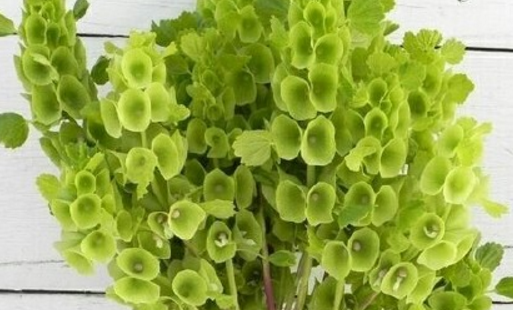
Moluccella laevis is a herbaceous plant with a relatively tall growth habit, and its most unusual feature is its flowers. So what are the cultivation methods and precautions for Moluccella laevis? How do you sow it? What is it used for? According to available information, Moluccella laevis prefers light and requires relatively warm temperatures, with an ideal growing temperature between 15°C——25°C, and the soil is generally best if it is loose, fertile and well-draining.
I. What are the cultivation methods and precautions for Moluccella laevis?
Pot and soil selection
To grow Moluccella laevis, the size of the pot needs to be determined according to the condition of the plant. Generally, for sowing, 10 to 15 seeds can be planted in a pot with a diameter of 15cm. The soil needs to be fertile, well-draining potting soil, and not too sticky, otherwise it will affect the growth of the plant. Garden soil with good drainage is sufficient.
Light and temperature
Moluccella laevis likes sunlight and prefers a warm living environment. During care, it needs to maintain sufficient light, but in summer do not expose it to blazing sun to avoid scorching. The suitable growing temperature is between 15°C——30°C.
Watering and fertilizing
In terms of water and fertilizer management, Moluccella laevis needs reasonable handling. During seed germination, it can be watered frequently. After the seedlings have emerged and survived, normal watering and fertilizing can begin. Watering should be based on whether Moluccella laevis is short of water; if the soil is relatively moist, there is no need to water, and when watering, water thoroughly; fertilizing can be done once or twice a month, and fertilizing should stop after flowering.
Propagation methods
Moluccella laevis is mostly propagated by sowing, which can be done in spring, summer or autumn. With a suitable temperature, it will germinate relatively quickly, and it can be transplanted once it has grown 6 leaves. When transplanting, it is best to transplant with the soil ball. To achieve a good ornamental effect, planting can be done in batches.
Precautions:
Pinching
During the growth of Moluccella laevis, pinching is needed, with the aim of encouraging more branching and shaping a certain form.
Pests and diseases
Moluccella laevis is relatively robust by nature and has relatively few pests and diseases, but sometimes it can be harmed by leaf miners. The growth of the plant needs to be observed frequently so that symptoms can be discovered in time and controlled.
II. How do you sow it?
1. Sowing characteristics of Moluccella laevis
Everyone knows that “know yourself and know your enemy, and you will never be defeated in a hundred battles.” Applied to flowers, this roughly means that only by understanding the characteristics of a flower can you grow an excellent seedling. Moluccella laevis first of all likes sunlight and likes a humid environment, but it is not tolerant of waterlogging, and it likes fertile, loose soil. So based on these characteristics, flower lovers can more or less figure out the key points for sowing Moluccella laevis.
2. Choice of soil for sowing Moluccella laevis
Moluccella laevis has relatively strong vitality, so generally speaking, no matter where the seeds are sown, it can survive. However, if you want Moluccella laevis to grow beautifully, it is still better to choose fertile soil. Before sowing, sterilize and disinfect the soil. On the one hand, this can eliminate weed seeds, and on the other hand it removes some insect eggs, reducing the risk of Moluccella laevis being infected by pests and diseases. Finally, the soil should also be kept moist.
3. Choice of seeds for sowing Moluccella laevis
The seeds of Moluccella laevis are also very beautiful in appearance, looking just like small stones, showing a graceful triangular shape. Generally speaking, as long as the seeds are mature, they can be used for sowing and can grow into a beautiful Moluccella laevis. If you want to strive for perfection and select the very best, you can choose seeds with no scratches on the surface, bright color and plump grains, and sow them in already prepared soil.
4. Sowing steps for Moluccella laevis
After selecting the seeds and preparing the soil, the preparations are basically complete. At this point, evenly scatter the selected seeds into the potting soil, then cover them with a thin layer of soil and water thoroughly. In the subsequent care, generally water once every one to two days. Under normal conditions, within one week Moluccella laevis will sprout new shoots, and in three months it will grow into a fresh and elegant Moluccella laevis.
III. What is it used for?
1. Ornamental value of Moluccella laevis
First of all, the shape of the stems of Moluccella laevis makes many flower lovers adore it. A 50 to 60 cm Moluccella laevis has stems showing a unique four-angled shape, saying goodbye to the common cylindrical form, unconsciously giving people a fresh and elegant feeling; secondly, let us talk about its leaves, which are heart-shaped, giving people a feeling full of love, and the edges of the leaves also have some small serrations. The flowers are pure white, and in this way an artistic feeling arises spontaneously. Whether used as the main flower color or as a matching flower, it gives people an unexpectedly fresh feeling. From this it can be seen that the ornamental value of Moluccella laevis really should not be underestimated.
2. Air-purifying effect of Moluccella laevis
Generally, as long as they are plants, they all have a certain air-purifying effect. Here, the air-purifying effect of Moluccella laevis is listed separately. Everyone may already have thought of the reason: Moluccella laevis has a much stronger air-purifying ability than ordinary plants. On average, a small Moluccella laevis can absorb more than 150 grams of carbon dioxide within a year, while releasing more than 56 grams of oxygen. The green and environmentally friendly effect of Moluccella laevis is evident from this.
3. Giving Moluccella laevis as a gift
In addition to the above-mentioned ornamental and air-purifying effects, Moluccella laevis is also often used in bouquets given as gifts, representing that this person is very charming and lovely in your heart. In addition, young couples can also give Moluccella laevis on Valentine's Day, representing, in this life, you are my only love.