Can lemon balm be grown hydroponically? Differences from mint and solutions for leaf drop
Lemon balm, also known as balm, bee balm, melissa, lemon balm, and so on. So can lemon balm be grown hydroponically? What are the differences from mint? What should you do if it drops leaves? According to available information, lemon balm is cold-resistant, shade-tolerant and drought-tolerant, and its suitable growing temperature is between 10°C——20°C. In winter it can tolerate 0°C, and in summer the temperature should preferably not exceed 30°C. Lemon balm also tolerates pruning relatively well.
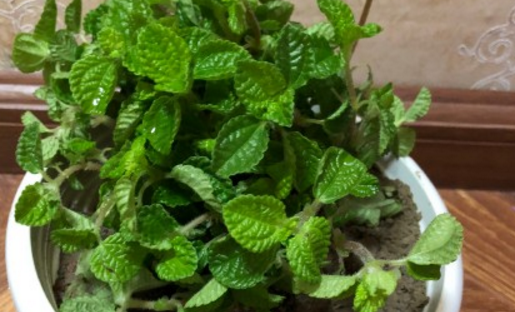
1. Can lemon balm be grown hydroponically?
The answer is very definitely yes. Compared with the usual soil cultivation, hydroponics is cleaner, simpler, and easier to operate and manage. In daily life you just need to keep the light adequate, the temperature suitable, and the water clean. One thing to note is that if your lemon balm is being transferred from potting soil into water, it needs to be disinfected beforehand to ensure the plant's health.
How to grow lemon balm hydroponically
Container
The container generally chosen for hydroponic plants is transparent; glass or plastic materials are both fine. This not only makes it convenient to observe the growth of the roots and stems, but also allows you to keep track of the water level in good time.
Water
The water source suitable for growing lemon balm in water can generally be tap water from home, which is enough to meet its needs, or purified water will also do. A medium-sized flowerpot is sufficient. Keep the water in the pot at about 60& full; never too full or too much. About 30% of the plant's root system should be exposed to the air. Then pay attention to protecting the roots and stems; do not let them become tangled, and keep the root system as smooth as possible.
Management
After placing the lemon balm into the hydroponic container, the next step is daily management. First, according to the habits of lemon balm, place it in an environment that receives partial light. Change the culture water once every 15 days. If it is summer, it is recommended to change the water more frequently.
2. What are the differences from mint?
1. Difference between lemon balm and mint: scent
Lemon balm has a fresh scent, fairly close to the fragrance of lemon, crisp, sweet and fragrant; whereas if you rub mint leaves, you will smell the familiar strong mint fragrance, with a rather pungent coolness.
2. Difference between lemon balm and mint: flowers
The flowers of lemon balm mostly grow at the top. Mint flowers, however, are axillary flowers, opening in the axils of the leaves and branches. Mint also has many more varieties, around 30 or more.
3. Difference between lemon balm and mint: leaves
The leaf shape of lemon balm is a bit rounder, the leaf color is a bit darker, the leaf veins are also more obvious, and the leaves have distinct wrinkles; by contrast, mint's leaf color is a bit lighter, the leaf shape is also rather pointed, and the leaf veins are shallower and thinner.
4. Difference between lemon balm and mint: composition
Both lemon balm and mint are plants of the genus Mentha. The main component of mint is menthol, which can be used as medicine and can also be eaten directly; lemon balm, however, does not contain menthol, so it cannot be used as medicine, nor can it be eaten directly.
5. Difference between lemon balm and mint: main effects
Placing lemon balm indoors can effectively absorb harmful gases such as formaldehyde from the air and play a role in purifying the environment; mint's main value lies in its medicinal use, with effects of dispersing wind-heat and clearing heat and detoxifying.
3. What should you do if it drops leaves?
Reasons why lemon balm drops leaves
Lemon balm dropping leaves may be because there are too many toxins around it. Although lemon balm has the effect of absorbing toxins, this is actually very limited. Once there are too many toxins in the environment, it is bound to have a negative impact on the growth of lemon balm and cause it to drop leaves.
The next cause is poor light. When growing lemon balm, it needs suitable light. Be careful not to keep it in shade for a long time, as this will cause lemon balm's growth to weaken and its leaves to drop.
It is also possible that there is too much dust on the leaves, causing them to be infected by pathogens.
The last point is water and fertilizer. Generally, concentrated fertilizer should not be used, as it easily causes leaf drop.
What should you do if lemon balm grows leaves
First, when growing lemon balm, do not simply rely on lemon balm to absorb toxins and let it come into contact with large amounts of toxic substances.
Second, maintain appropriate light. The light should be sufficient. When grown indoors, it should be able to get sunlight, and there should be ventilation around it.
Also, prune appropriately, because lemon balm grows very fast, so it needs frequent pruning, which helps it grow new leaves. Some problem leaves can also be cut off during pruning.
Another point is water and fertilizer. If you find it lacks water, replenish the water, and replenish nutrients in good time, but remember not to apply too much fertilizer.