What are the uses and value of pokeweed? How to propagate it and control common pests and diseases
Pokeweed (Phytolacca acinosa Roxb.) is a perennial robust herbaceous plant of the Phytolaccaceae family and the genus Phytolacca. So what are the uses and value of pokeweed? How to propagate it? How to control common pests and diseases? According to available information, pokeweed used as green manure for fertilizing fields is very rich in nitrogen, phosphorus and potassium, with very notable fertilizing effect. Production practice has proven that the fertilizing effect of pokeweed is better than that of other green grasses and green leaves. This is partly because pokeweed itself contains more nutrients, and partly because the stems and leaves of pokeweed are tender and easily decomposed, making them easy for crops to absorb and use.
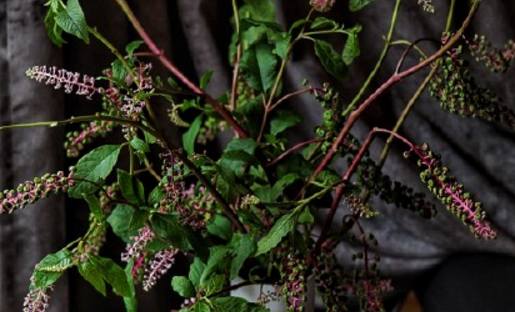
I. What are the uses and value of pokeweed?
1. The green manure value of pokeweed
Pokeweed used as green manure for fertilizing fields is very rich in nitrogen, phosphorus and potassium, with very notable fertilizing effect. Production practice has proven that the fertilizing effect of pokeweed is better than that of other green grasses and green leaves. This is partly because pokeweed itself contains more nutrients, and partly because the stems and leaves of pokeweed are tender and easily decomposed, making them easy for crops to absorb and use.
2. The manganese-accumulating value of pokeweed
Soil heavy metals have been a hot topic of concern in recent years. Heavy metal pollution has a major impact on the environment and human health, and manganese is one of the important subjects of study. Once manganese accumulates in soil, it cannot be degraded, making remediation more difficult. Current investigations have proven that pokeweed has a clear enrichment effect on manganese and can effectively reduce the manganese content in soil.
3. The biological pesticide value of pokeweed
According to reports, drying pokeweed fruit and grinding it into a dry powder, then sprinkling it into water, can kill the snails that carry schistosomes. Its efficacy is not easily affected by external environmental interference, and its toxicity to mammals is also very low, making it a very safe biological pesticide.
4. The edible value of pokeweed
There are currently two species of pokeweed distributed in our country. One has a purplish-red stem, and this pokeweed is toxic and cannot be eaten. The other has a green stem, and the seedlings of this pokeweed can be eaten. It is a high-quality wild vegetable, and the tender shoots that sprout in the spring of the second year can be eaten.
5. The ecological value of pokeweed
The roots of pokeweed are thick and fleshy, and the root system is deep and wide, giving it a very notable soil-stabilizing effect. The aboveground part of pokeweed grows quickly and reproduces rapidly, giving it a strong ability to conserve water and soil.
II. How to propagate it?
The propagation methods of pokeweed are divided into seed propagation and fleshy root planting. And the propagation methods are very simple.
Seed propagation
The sowing time can be set in February each year. Because it has the effect of conserving water and soil, you can dig a shallow small trench on the wall of a terraced field for planting, placing eight to ten seeds in each shallow trench. Then cover with a layer of soil. Some also say that covering with burned mud ash gives a better effect. When the seedlings emerge one after another, among each cluster of seedlings, keep the robustly growing seedlings and pull out the rest. After the seedlings grow to 10 cm, choose a cloudy day or a time when the sunlight is not very strong for transplanting.
Fleshy root planting
For the propagation method of fleshy root planting, the best time is mid-November to mid-December. Choose a position on the root where there are buds and cut the skin, then smear on plant ash and sow, finally covering with a 3-4 cm layer of soil, and then applying high-quality agricultural fertilizer. Be careful to water appropriately.
III. How to control common pests and diseases?
1. Pokeweed aphids and their control
Aphids, commonly known as “greasy bugs”, are insects that like to suck sap from the tender parts of plants and also like to “dine together”. Aphids come in many colors, but the most common one we see is green. Leaves of plants damaged by aphids tend to turn yellow and are easily accompanied by sooty mold.
Control measures for pokeweed aphids
If aphids break out in large numbers, you can use Ke Ya Xing and Pirimicarb diluted 1000 times, spraying once every other week. If there are fewer aphids, you can use a writing brush to sweep away the small insects.
2. Pokeweed fungus gnats and their control
Commonly known as “little black flies”, plants damaged by them become listless, have reduced immunity, and are even prone to fungal infection, with other diseases such as red spot disease following closely after.
Control measures for pokeweed fungus gnats
During pokeweed cultivation, ensure the growing medium is as permeable as possible. You can mix in gravel and add less peat or soil. Normally try to keep the soil in a dry state, and do not let it stay moist for a long time.
3. Pokeweed root rot and its control
Root rot, as the name implies, is rotting of the roots caused by infection with pathogenic bacteria. The plant's ability to absorb water and nutrients weakens, the aboveground part of the affected plant withers and appears wilted, and finally the entire plant dies.
Control measures for pokeweed root rot
Choose a plot with good drainage for planting; drain promptly during the rainy season; if necessary, use pentachloronitrobenzene to disinfect the soil.