How to grow Nemesia (Scrophulariaceae)? Propagation methods and uses
Nemesia, also known as pouch-spur flower, Nemesia, and nemesia, so what are the cultivation methods for Nemesia? How is it propagated? What uses does it have? According to available information, Nemesia is a plant that relatively prefers warm climates with ample light; when growing Nemesia, it is relatively afraid of high temperatures, so attention should be paid to cooling it down in summer. When choosing soil, Nemesia generally prefers loose, fertile, well-drained soil rich in humus.
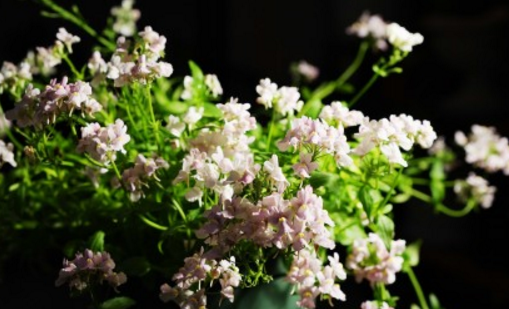
I. What are the cultivation methods for Nemesia?
1. Water and fertilizer management for Nemesia
When growing Nemesia, watering and fertilizing are relatively important.
Watering generally follows the principle of watering when dry and keeping moist; water after the soil dries out, and be careful to strike a balance. In winter, because the plant's growth slows down, watering should be reduced, keeping the soil on the dry side.
As for fertilizing, generally during the vigorous growth period, fertility should be kept sufficient, but if the plant becomes leggy, fertilization should be controlled. Generally, nitrogen fertilizer is applied in the early stage, some phosphorus and potassium fertilizer during the growth period, and some compound fertilizer during the flowering period.
2. Pinching of Nemesia
When growing Nemesia, attention should be paid to pinching; generally, pinching should be carried out multiple times during the growth period. Through pinching, it can be encouraged to branch more, and the plant shape becomes fuller.
3. Winter management of Nemesia
Nemesia is relatively cold-tolerant and can withstand low temperatures in winter, but attention should be paid to doing a good job of insulation measures.
In autumn and winter, move it indoors in time according to temperature changes, keep the temperature at a relatively high level, and pay attention to light, which should not be too weak.
4. Pests and diseases of Nemesia and their control
When growing Nemesia, some diseases sometimes appear, mainly gray mold and sclerotinia; these mainly rely on prevention. Good management should be done during cultivation to avoid Nemesia becoming infected with diseases. If diseases are found on the plant, timely control should be carried out; some disinfecting and sterilizing agents can be sprayed, or some agents targeting the disease.
II. How is it propagated?
Sowing time
Nemesia can be sown between late August and early September, and the suitable temperature for germination is 20-25°C.
Seedling-raising precautions
The seedbed should be watered thoroughly both before and after sowing; after sowing, watering should be done with a fine mist or by spraying through a shade net.
Before the seeds emerge, keep the seedbed moist; a net can be placed above the seedbed for shading, and after emergence, full-light management should be carried out.
During the seedling stage, fertilize two to three times to supplement the nutrients needed for growth.
Fertilizing
Nemesia's demand for fertilizer is average; according to the plant's growth conditions, sufficient fertilizer and water should be ensured during the vigorous season, but when the plant becomes leggy, the amount of water and fertilizer applied should be appropriately controlled.
Watering
Nemesia has relatively good drought tolerance, and watering should overall be moderate and on the dry side. When watering, do not pour it in the middle of the plant; pour it in from the edge of the plant. It should be arranged on a sunny afternoon, maintaining appropriate ventilation.
Dividing seedlings
When the plant grows three to four pairs of true leaves, the seedlings can be divided; at this time, thin and weak seedlings and leggy seedlings should be removed. When the plant grows six to seven pairs of leaves, pinching can be carried out once, removing the pair of large leaves that have not unfolded or have just unfolded and the growing point.
Plant shape adjustment
When the plant's branches fill the pot, it can be potted up for cultivation; at this time, pinching can be carried out again, which can promote branch growth and improve the plant's shape.
III. What uses does it have?
Nemesia's flowers are delicate; in fact, its main use is ornamental.
With its unusual and unique flowers, if it is a tall variety, it can be used as a cut flower for ornamental purposes. Dwarf varieties are more suitable for pot cultivation, or for growing in flower beds; all are quite ornamental.