How to Grow a Dancing Grass Bonsai? Pest and Disease Control and Price Explained
Dancing grass, a grass that can dance, dances like a butterfly gently fluttering its wings in flight, and also like a dancer on stage gently stretching out graceful arms. So do you know how to grow a dancing grass bonsai? What are the common pests and diseases and their control methods? How much is a pot? At the Yunnan flower market we learned that there are many varieties of dancing grass and prices vary by variety; the current market price is roughly 20-40 yuan per pot, and different regions also affect the price, so it is best to ask at the flower market.
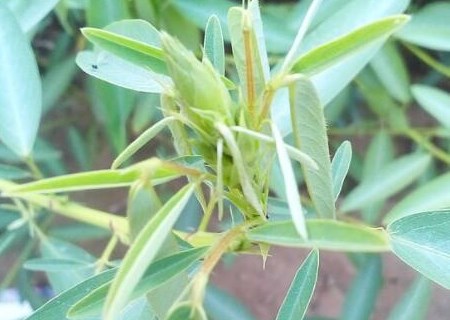
I. How to Grow a Dancing Grass Bonsai
1. Soil for a dancing grass bonsai
Dancing grass likes loose, fertile, well-drained soil; it can be fertile sandy soil or humus soil, with leaf mold being the best.
2. Light for a dancing grass bonsai
Dancing grass likes light. If it lacks light, the plant tends to grow leggy, becoming thin, long, weak and prone to lodging. Be sure to increase light; if the weather is not very good, you can often turn the pot so that all angles of the branches and leaves receive sunlight, allowing the dancing grass to grow fully.
3. Watering and fertilizing a dancing grass bonsai
During the budding stage of dancing grass, keep the potting soil moist; after budding, the potting soil should be dry on the outside and moist on the inside, somewhat on the dry side. Watering is generally done in the morning, and if tap water is used, it needs to be treated first before watering. When watering, note that the roots should be watered sparingly, and it is best not to splash the leaves and stems.
Dancing grass has a low demand for fertilizer, and the number of fertilizer applications is not great. Generally, fertilizer needs to be applied once during the growing period, and during the flowering period, fertilizer also needs to be applied to supplement nutrients.
4. Pest and disease prevention for a dancing grass bonsai
Dancing grass is prone to diseases such as powdery mildew, anthracnose, leaf spot and root rot. When disease occurs, promptly prune the diseased branches and destroy them. In addition, dancing grass is also easily threatened by pests such as cutworms, mealybugs, thrips and mites, which need to be controlled promptly.
II. Common Pests and Diseases of Dancing Grass and Their Control Methods
Pests of dancing grass:
Pests
Dancing grass has fewer pests; the main pests include cutworms, mealybugs, thrips, mites and armyworms.
Control methods
Pay more attention and observe the growth of dancing grass more during routine care, and you can carry out manual pest removal, chemical control, etc. Once a problem occurs, you can choose the corresponding pesticide for control.
Diseases of dancing grass:
Common diseases
Although dancing grass has very few pests, it has relatively many diseases. The main diseases of dancing grass are root rot, powdery mildew, anthracnose, leaf spot and phytophthora blight.
Control methods
When disease occurs, promptly destroy the diseased leaves to avoid the spread of the disease. Use the corresponding chemical agents when necessary. For example, spray 50% carbendazim wettable powder at 500 times dilution, or thiophanate wettable powder at 500 times dilution; generally it can be sprayed once every 10-14 days, and after about 3 or 4 times it can be cured.
In addition, using Bordeaux mixture, or alternating thiram with Bordeaux mixture for 3 or 4 sprays, gives a relatively good treatment effect for leaf spot. Zineb at 500 times dilution helps prevent phytophthora blight. Also, because continuous cropping for many years promotes the spread of disease, it is best to rotate crops once every 4—5 years.