Why Does the Dancing Grass (Telegraph Plant) Move? Care Methods and Uses Explained
Dancing grass is extremely sensitive to sound waves. When stimulated by sound waves, it continuously sways up and down, like a butterfly gently fluttering its wings in flight, or like a young girl gracefully stretching her jade-like arms on stage, and that is how it got its name. So do you know why dancing grass moves? How should it be cared for? What uses does it have?
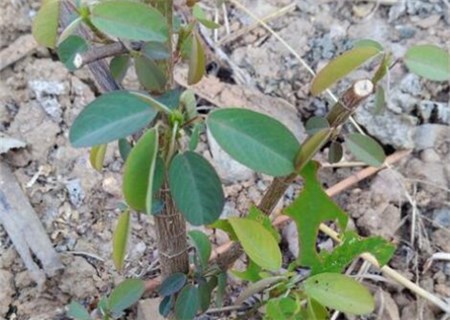
I. Why dancing grass moves
Dancing grass dances in relation to temperature, sunlight and sound waves.
The small leaflets on both sides of dancing grass move because the spongy tissue at the base of the leaflet stalks is sensitive to light. In an environment of normal temperature, strong light and no wind or rain, the linear leaflets on both sides of the dancing grass leaves sway constantly, and each leaflet can complete one elliptical movement within half a minute, rotating 180 degrees and then returning to its original position, before continuing to rotate again.
When the sun shines, the temperature begins to rise, the water inside the plant evaporates faster, the spongy tissue expands, and the leaflets sway left and right. The stronger the light, the faster the movement, until at night all the leaves droop, close and go to sleep. When the sun sets and the light dims, the leaves droop, closing tightly and pressing against the branches and stem.
When it is vibrated by a song at 35-40 decibels, the spongy tissue also contracts, driving the leaves to sway.
II. How to care for dancing grass
1. Light
Dancing grass loves light. If it lacks light, the plant tends to grow leggy, becoming thin, long, weak and prone to lodging. Be sure to increase the light. If the weather is not very good, you can often turn the flower pot so that every angle of the branches and leaves receives sunlight, allowing the dancing grass to grow fully.
2. Temperature
The dancing grass plant has fairly strong cold resistance. Under the natural winter temperature conditions of Kunming, some varieties can overwinter outdoors. For most varieties, as long as the root system has grown fully before winter, even if all the leaves of the above-ground part die, the perennial root will still sprout and bloom in the following spring.
However, flowering in dancing grass is extremely sensitive to low temperatures. Only when the daytime temperature reaches above 20°C and the nighttime temperature is not lower than 10°C can the flower branches grow and bloom. Otherwise, even flower branches that have already emerged cannot bloom at low temperatures or will bloom poorly, or may even turn yellow and die. Special attention should be paid to keeping it warm in autumn and winter.
3. Watering
During the budding stage of dancing grass, keep the potting soil moist. After budding, the potting soil should be dry on the outside and moist on the inside. It should be kept somewhat dry. Watering is generally done in the morning. If tap water is used when watering, avoid the sunlight, and it is best to let the water sit for 4—6 minutes first to dissipate the chlorine in the tap water. When watering, it is best to use a fine-spout watering can, starting from a place far from the plant and gradually moving closer to the plant, watering more around the edges.
4. Fertilizing
Dancing grass has a low demand for fertilizer, so it does not need to be fertilized often. When the plant has grown for more than one month, apply fertilizer for the first time. During the flowering period of the plant, that is, when the plant has grown for 2~3 months, apply fertilizer for the second time.
III. What uses does dancing grass have
1. The ornamental value of dancing grass
There are many linear leaflets on both sides of the dancing grass leaves, so it is very sensitive to sound waves and easily sways its branches and leaves continuously up and down under the stimulation of sound waves, like a graceful young girl dancing lightly. Hence its name, and it has high ornamental value. Very different from ordinary ornamental plants, we can appreciate its beautiful form dancing freely as the environment changes, which has a unique charm. It is now widely used in garden design, and is also an excellent choice for bonsai making.
2. The medicinal benefits of dancing grass
Dancing grass not only has extremely high ornamental value, but also has medicinal and health-care value. The whole plant can be used as medicine, so it can be said that every part is a treasure. "Compendium of Materia Medica" clearly records this, mentioning the wide range of effects and uses of dancing grass: it can remove blood stasis and promote new tissue growth, relax the muscles and stimulate the circulation of blood, treat fractures, or be soaked in wine and taken to strengthen the muscles and bones and treat rheumatic pain. In addition, soaking fresh leaves in water and then washing the face with it can make the skin fair and delicate, achieving a beauty effect.
3. The scientific research value of dancing grass
Dancing grass is the only plant in nature that responds to sound. This rare characteristic has of course attracted widespread attention from scientists. According to scientific research, the dancing of dancing grass is affected by temperature, sunlight, and sound wave induction under a certain rhythm, cadence and intensity. However, the exact reason why dancing grass dances is still an unsolved mystery and remains to be further studied and explored.