Rhododendron molle (Yangzhizhu) Growing Techniques, Medicinal Benefits and Price per Jin Explained
Rhododendron molle, also known as Yangzhizhu, has numerous small seeds; it flowers from April to May and fruits from June to July. Its flowers or inflorescences are used as medicine. It is commonly found on hillsides, in rock crevices and in thickets. So, do you know what growing techniques Rhododendron molle requires? What benefits and effects does it have? How much does it cost per jin? From the flower market we have learned that, because of low output, the market price of Rhododendron molle has been steadily rising; the current market price is 360 yuan, and merchants believe there is still room for further increases, so it is worth continuing to watch.
I. What growing techniques does Rhododendron molle require?
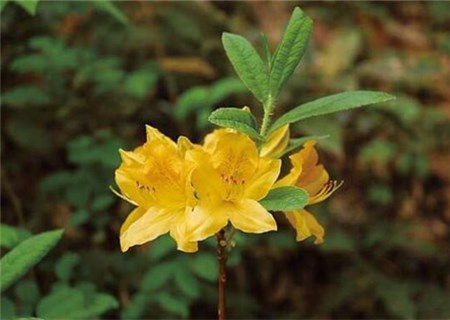
The flowers of Rhododendron molle are mostly shrunken, sometimes with pedicels; the calyx is small, 5-lobed, with fairly long fine hairs along the edges; the corolla grows up to 3 cm, 5-lobed, with the lobes nearly as long as the tube; the stamens are relatively long, with filaments curved and protruding beyond the corolla, and the anthers are brownish-yellow. It tastes slightly bitter. Harvest on a sunny day when the flowers open, between April and May.
Rhododendron molle likes strong light, dry conditions and a well-ventilated environment, and can tolerate low temperatures of -20°C; it prefers well-drained soil and tolerates poor, dry conditions, but dislikes waterlogging. The plant is vigorous and requires little care. Rhododendrons mostly grow in mountainous areas; in the hills of Jiangnan one can see deciduous rhododendrons such as the red azalea and the yellow Yangzhizhu. When they bloom, it is just as Yang Wanli wrote: “Why seek a famous garden to enjoy the spring breeze? The mountain flowers along the way do not fail you; day after day the Jin River shows brocade-like hues, and the clear stream reflects the red azaleas upside down.” On Mount Lu and Jinggangshan, one can see slopes covered in flowers, red as flames, dyeing the whole mountain red. Yet many more beautiful rhododendrons “live in seclusion” deep in the mountains. In Yunnan, at altitudes of 2800—4000 m among towering ridges, snow-mountain meadows and alpine glacial lakes, rhododendron thickets spread across the land like brocade; at 4000—4500 m one can even see prostrate types growing flat against the ground.
Within one month after cutting, the focus is on shading and spraying water so that the cuttings stay fresh throughout. During heavy rain, avoid the impact of rainwater; during consecutive rainy days, pay attention to drainage, and spray 1/1000 thiophanate to prevent black spot disease. In the hot season, increase water spraying on the ground and leaves, and pay attention to ventilation and cooling. After about 1 month, once roots have grown, the top will sprout; if flower buds form, they should be removed. After September, reduce shading so the young seedlings gradually become sturdier, and in October a light fertilizer may be applied. In the latter part of the month they can be potted up. If an electronic-leaf automatic misting system is installed on the cutting bed, and vermiculite or perlite is used as the medium, then shading is unnecessary. Under full sun, roots form in just over 20 days, with a survival rate of over 95%, and they can be transplanted in 2 months.
II. What benefits and effects does Rhododendron molle have?
Rhododendron molle has the effects of dispelling wind and dampness, relieving pain and killing parasites. Rhododendron molle is also known as yellow rhododendron, Yangzhizhu flower, Zhizhu flower, Jingyang flower, tiger flower, Shitang flower, yellow trumpet flower, water orchid, crow flower, leopard-dog flower, yellow snake-leopard flower, Sanqiansan, Yibeidao, Yibeizui, Huangguniu flower, stone chrysanthemum, Miao rhododendron, Mentou flower, camellia, yellow flower, Leigong flower, yellow flower maiden and hairy tiger. Rhododendron molle is toxic and should not be taken in large doses or over a long period; those with a weak constitution should avoid taking it.
Efficacy classification: external-use medicine, wind-dispelling medicine.
Aliases: yellow rhododendron, Yangzhizhu flower, Zhizhu flower, Jingyang flower, tiger flower, Shitang flower, yellow trumpet flower, water orchid, crow flower, leopard-dog flower, yellow snake-leopard flower, Sanqiansan, Yibeidao, Yibeizui, Huangguniu flower, stone chrysanthemum, Miao rhododendron, Mentou flower, camellia, yellow flower, Leigong flower, yellow flower maiden, hairy tiger.
Nature and flavor: pungent; warm in nature; toxic.
Meridian entry: liver meridian.
Efficacy: dispels wind and dampness; relieves pain; kills parasites.
Indications: rheumatic arthralgia; migraine and general headache; swelling and pain from falls and blows; toothache from caries; stubborn skin ringworm; scabies.
Usage and dosage: internal use: ground into powder, 0.3-0.6 g; decocted in water, 0.3-0.6 g; or made into pills or powders; or steeped in liquor. External use: appropriate amount, ground into powder and applied as a paste, or fresh material pounded and applied.