Is the Cattleya of the tribe Epidendreae suitable for growing in China? Detailed explanation of yellow leaf causes and propagation methods
Cattleya is also known as Guadalupelia orchid, Cattleya orchid, Cattleya orchid, and Cattleya orchid. So is Cattleya suitable for growing in China? What is the reason for the leaves turning yellow? How to propagate? According to information, Cattleya is a flower native to subtropical and tropical regions, suitable for growing in warm and humid environments, and requires sufficient scattered light. Cattleya is drought-tolerant, intolerant of saline-alkaline soil, afraid of waterlogging, not cold-tolerant, not suitable for direct sunlight, and sensitive to dry winds.
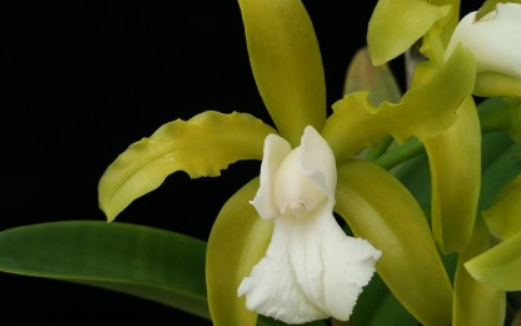
I. Is Cattleya suitable for growing in China?
Reasons why Cattleya is suitable for growing in China:
Cattleya has strong survival ability and can grow in our country, or can be planted in many places where a small environment can be created. It belongs to the genus Cattleya and is a perennial herb.
Cattleya likes to be in a warm and humid environment all year round. To protect Cattleya's normal overwintering, the temperature needs to be maintained at 20-25°C during the day and around 15°C at night. The growing environment of Cattleya should have a large temperature difference between day and night, and a constant temperature should not be maintained, let alone a night temperature higher than the daytime temperature.
Cattleya growth requires a semi-shady and humid environment. In seasons other than winter, 50-60% of the light for Cattleya growth should be blocked to reduce its photosynthesis.
In a warm and humid environment, its leaves and pseudobulbs are dark green, growing full of vitality and luster, with beautiful flower colors. New roots and shoots are vigorous and sturdy.
A temperature of around 10°C will delay the flowering period and make it shorter, and the flowers cannot fully open; if the temperature is around 5°C, the leaves will appear dark yellow and lifeless, the flower buds cannot become tall and sturdy, the flower sheath turns brown, and its growth is severely hindered.
When the temperature drops to 1-2°C, the leaves will become withered and yellow and fall off quickly, causing the flower buds to completely die. If the nighttime temperature is higher than 20°C, the flowering period will be too short.
When cultivated in a greenhouse, the temperature difference between day and night should be large, and the daytime temperature needs to be 5-10°C higher than at night. During its growing season, it requires higher moisture and higher air humidity. It must not be dry and lack water, otherwise it will affect the growth and survival of Cattleya; in winter, Cattleya almost stops growing and is in a relative dormant season, which is exactly a good time for sprouting. At this time, good air humidity should be maintained, the room temperature should be suitable, and it must not be allowed to dry out.
II. What is the reason for the leaves turning yellow?
Water-yellow
Because of excessive watering, the soil becomes waterlogged and wet for a long time, aeration is relatively poor, and even some fibrous roots become rotten. It shows many young leaves turning dark yellow without luster, and new shoots shrinking.
Fertilizer-yellow
Usually refers to excessive fertilization, shown as old leaf tips turning yellow and falling off. Although new leaves are relatively thick and look glossy, they generally appear uneven and not stretched out. If it is a valuable flower, a layer of bok choy or radish seeds can be sown, and after the seedlings emerge for a few days they can be pulled out, so as to consume nutrients.
Drought-yellow
Because the water has not penetrated thoroughly for a long time or there is dehydration, although the leaf color of the new leaves is relatively normal, the lower leaves gradually turn dry yellow and fall off from bottom to top, becoming aged.
Alkaline-yellow
This mainly occurs in some acidic soils in the south, while in the north the water quality is alkaline, causing leaves to gradually fade, turn yellow, and even fall off. The simplest method is to water with fermented rice-washing water or rainwater.
III. How to propagate?
1. Division propagation of Cattleya
The division method is relatively simple to operate and can generally be used by households. It is suitable to choose the spring and autumn rainy seasons for division work. Use a sharp cutting tool to cut down between the bases of two "orchid heads", carefully cut open the rhizome at the base, and disinfect the cut. Each clump needs at least 2 pseudobulbs with new shoots.
2. Aseptic sowing and tissue culture of Cattleya
The early stage is mainly liquid culture, promoting rapid seed germination, after which the protocorms can be directly inoculated onto the culture medium to achieve one-step seedling formation. The specific steps are as follows:
Materials
At flowering time, select healthy growing Cattleya mother plants for self-pollination and cross-pollination. About 120-150 days after pollination is completed, the fruit can basically mature.
Aseptic sowing
Select mature fruit, soak the fruit in 75% alcohol for half a minute, then carry out disinfection treatment. Place the fruit into a 0.1% mercuric chloride solution, soak for 20 minutes, then rinse with sterile water 4 or 5 times, cut open the fruit, inoculate the white powdery seeds into the seed germination liquid medium, and culture with shaking on a 150 rpm shaker. After one week the embryos germinate, and after 20 days green protocorms with a diameter of 1-2 mm form.
Seedling formation culture
Inoculate the formed protocorms onto the seedling formation medium with a pipette for culture. After one month, complete small plantlets can form. Continuing culture for 45 days allows them to grow into sturdy large seedlings.
Transplanting of test-tube plantlets
When the test-tube plantlets can grow to 3 or 4 cm tall, transfer them to natural light for hardening for 1-2 weeks, and observe that the plants form a relatively good cuticle. After taking them out of the glass bottle, wash the culture medium off the roots, transplant them into a mixed substrate of pond stone and carbonized bark, maintain appropriate humidity, and ensure good ventilation.