How to grow Amaranth tricolor (edible amaranth) from seed? Why it turns red when cooked and its benefits
Amaranth is an indispensable ingredient on the summer dining table. Its delicious taste and red color greatly stimulate the appetite, and as market demand continues to grow, more and more farmers are growing amaranth. So do you know what the methods are for growing amaranth from seed? Why does it turn red when cooked? What benefits does it have?
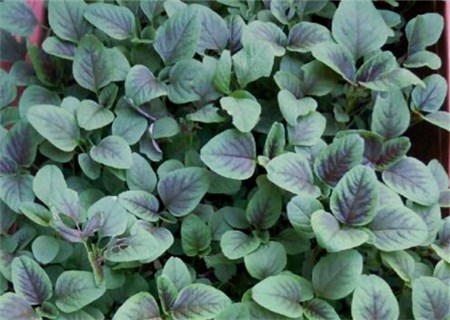
I. Methods for growing amaranth from seed
1. Land preparation and fertilization
Amaranth is not strict about soil requirements, but slightly alkaline soil is preferable. Although it has a certain drought resistance, it grows poorly in fields with poor drainage. Choose a plot with flat terrain, convenient drainage and irrigation, and few weeds, and make flat beds. Amaranth seeds are very small, so the soil must be prepared carefully, with level ground and fine soil, to favor seedling emergence. Amaranth likes fertilizer. Before land preparation, apply 1500 kg of high-quality decomposed human manure and urine per 667 sq m, then make ridges or beds. The sowing rate varies with the sowing date: the earlier the sowing date, the more seed is used. For early spring sowing, the seeding rate is 4~5 kg/667 sq m, which can be broadcast or drilled in rows, and after sowing cover with soil 0.5-1 cm deep.
2. Topdressing and watering
When sown in early spring, seedlings emerge relatively late, requiring 7~12 d. The first topdressing can be done at the 3~5 leaf stage, applying 10 kg of urea per 667 sq m; the second topdressing after 12 d; the third topdressing after the first harvest; and thereafter one topdressing after each harvest, each time with a thin liquid fertilizer based mainly on nitrogen fertilizer. If quick-acting nitrogen fertilizer is applied, it can be combined with watering, but less watering should be done for spring sowing.
3. Cultivation and pruning
During seedling growth, cultivate and weed in time to prevent weeds from affecting the growth of amaranth seedlings. For amaranth harvested multiple times, pruning is also needed: after harvesting the main branch, leave 2-3 nodes at the base to promote the sprouting of side branches and increase yield.
4. Pest and disease control
Amaranth has strong disease resistance. The main disease is white rust, which can be controlled with triadimefon or mancozeb. The main pest is aphids, which can be controlled by spraying with imidacloprid or pirimicarb.
5. Timely harvesting
Amaranth is sown once and harvested in batches. The first harvest is mostly combined with thinning; generally 40~45 d after sowing, when the seedlings are 10-12 cm tall and have 5-6 leaves, plants are thinned and harvested successively, following the principle of harvesting the large and keeping the small and keeping the remaining seedlings even, to increase later yield. After harvesting, topdress in time. Amaranth is mainly eaten for its tender leaves, so harvesting must be timely; otherwise the fiber increases and the quality decreases. Generally, the yield per 667 sq m can reach 1000~1500 kg.
II. Why amaranth turns red when cooked
Amaranth contains a natural pigment called amaranth red, which exists in the cell vacuoles. The chloroplasts in the cells are green, and because their content is high, the green covers the red, so the raw amaranth you see appears dark green. As mentioned above, heat destroys the cell membrane and wall, breaks down the chloroplasts, destroys the structure of chlorophyll, and also causes the red color in the vacuoles to seep out.
III. What benefits does eating amaranth have
1. Clearing heat and detoxifying, improving eyesight and soothing the throat. Amaranth is sweet and cool in nature and taste, and is good at clearing damp-heat, clearing the liver and detoxifying, cooling the blood and dissipating stasis. It has a certain auxiliary therapeutic effect on red and white dysentery caused by damp-heat and on red eyes, eye pain, and red and swollen throat caused by liver fire flaring upward.
2. Rich in nutrients, strengthening the body. Amaranth is rich in protein, fat, carbohydrates, and various vitamins and minerals. The protein it contains is more fully absorbed by the human body than milk, and the carotene it contains is more than 2 times higher than that of solanaceous fruits. It can provide the human body with abundant nutrients, help strengthen the body and improve immunity, and is known as the "longevity vegetable."
3. Promoting children's growth and development. The iron content of amaranth is 1 times that of spinach, and the calcium content is 3 times, making it outstanding among fresh vegetables. More importantly, amaranth does not contain oxalic acid, so the calcium and iron it contains are easily absorbed and used after entering the human body. Therefore, amaranth can promote the growth and development of children and has a certain dietary therapeutic value for the healing of fractures.