How to care for Lewisia (Portulacaceae) in winter? Detailed guide to repotting and fertilizing
Lewisia grows best in humid climates and prefers full sun. So how do you care for Lewisia in winter? How do you repot it? How do you fertilize it? According to available information, Lewisia is best planted in deep, loose, gravelly soil with good drainage. It dislikes drought and cannot tolerate intense heat. Lewisia's blooming period runs from early spring to summer, and during blooming it needs plenty of sunlight and appropriate moisture.
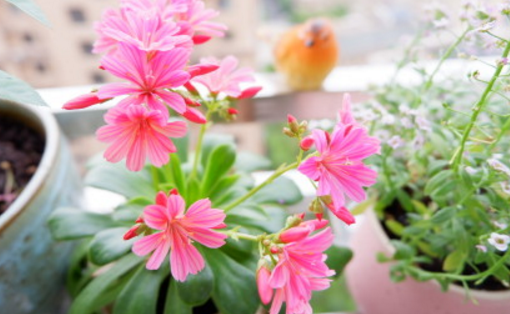
I. How to care for Lewisia in winter?
1. Winter care for Lewisia: freeze protection and warmth
In late autumn, once temperatures drop, move the plant indoors promptly and place it in a sunny, warm spot. Keep the indoor temperature above 5°C, keep the potting soil on the dry side, and avoid root rot. Note that you should not place the plant by a window at night, to avoid cold drafts.
2. Winter care for Lewisia: appropriate watering
In winter, the potting soil temperature is relatively low, so you can reduce watering appropriately. Water around midday when temperatures are higher, and the water temperature should not be too low -- matching the ambient temperature is fine.
Also, when watering, do not wet the leaves at the base of the Lewisia, as low temperatures and water that does not evaporate for a long time can cause root rot.
3. Winter care for Lewisia: pruning diseased branches
Pruning Lewisia in winter is an important step in promoting healthy growth. In winter, Lewisia grows slowly or even stops growing, so this is the time to promptly cut off diseased branches, insect-infested branches, and overly long branches.
It is best to prune on a sunny day so the wounds dry quickly and avoid infection after pruning.
4. Winter care for Lewisia: pest and disease control
Winter temperatures are low, and many pests and diseases basically enter overwintering status, reducing the harm they cause, making this a good season for control. If the plant was not repotted that year, you can bury an appropriate amount of granular pesticide in the soil at the start of winter to kill insect eggs.
In winter you should also loosen the soil, using a small trowel to poke back and forth through the soil.
II. How to repot?
1. Repotting Lewisia: knocking the plant out of its pot
Method for knocking the plant out of its pot
Knocking the plant out of its pot means removing the seedling from the original pot without damaging the plant. Before doing this, note that you should not water; keep the potting soil appropriately dry so the root ball can come out intact.
Specific method: support the pot with one hand, and with the other hand form a fist and gently tap the pot so a gap forms between the soil and the pot wall and it comes loose naturally. If the pot is large, wait until the soil loosens, then support it with your hand and take it out.
Treating the root ball
Peel away part of the root ball around the roots, cut off overly long, damaged, or diseased roots, then pot it up. If the outside of the root ball is full of new white roots, then no pruning is necessary -- just pot it up directly.
2. Repotting Lewisia: potting up
Preparing the location
Before potting up, find a relatively high place, such as setting up a small table, which can improve efficiency. Also prepare all kinds of materials: flower pots, soil, and various gardening tools.
Potting-up method
Pot drainage: find a few broken tile pieces and place them over the drainage hole with the concave side facing down; this blocks the drainage hole while keeping soil from leaking out.
Potting up: add a small amount of coarse sand to the pot, then with one hand hold the seedling upright in the pot. With the other hand, add soil to the pot until it is full. Then gently shake the pot so the soil fits tightly against the pot. After potting up, water thoroughly, and once the water is absorbed, water once more. After potting up, the plant needs a recovery period of 3-7 days.
III. How to fertilize?
Plenty of nutrients
Before growing Lewisia, you must understand that it is a plant that loves fertilizer and needs relatively abundant nutrients, otherwise it easily grows poorly. With insufficient nutrients, forget about blooming -- even the leaves will be droopy.
Fertilizing frequency
Lewisia enters its growing season in May, and from then on should be fertilized once every half month. Before blooming, use mainly nitrogen fertilizer; after blooming, add more phosphorus and potassium fertilizer. Choose diluted liquid fertilizer and avoid fertilizing too heavily. Overly heavy fertilizing will cause weeds to flourish and will also cause Lewisia to grow only leaves without blooming.
Soil improvement
The natural nutrients in the soil are what Lewisia needs most, but after growing for a period of time, the nutrients in the soil are mostly used up, so at this point you need to improve the soil. The usual approach is to add nitrogen, phosphorus, and potassium fertilizer to the soil at a ratio of 5:10:10, or add a small amount of organic matter, such as weed-free straw, grass clippings, or decomposed compost.
After improving the soil, it not only increases the nutrients in the soil but also changes the soil structure to a certain extent, making it more favorable for plant growth.