Fig Cultivation: Investment Cost for 20 Mu, Yield per Mu and the Best Varieties
The fig is a flowering plant, a subtropical deciduous small tree. About eight hundred varieties are currently known, the vast majority of which are evergreen varieties, and only those growing in temperate regions are deciduous varieties. So which variety is best to grow? How much does it cost to invest in growing 20 mu of figs? What is the yield per mu?
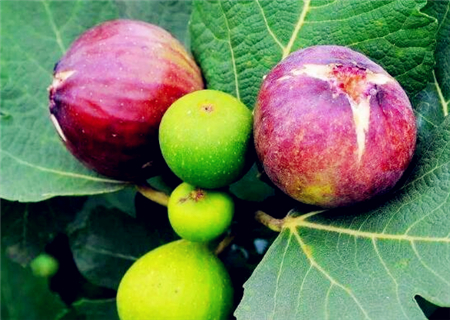
Investment per mu for open-field fig cultivation:
Investment in the first year: 1. Land rent; 2. Cost of seedlings; 3. Land preparation and planting costs; 4. Fertilizer; 5. Drainage and irrigation; 6. Loosening the soil and weeding (intercropping is generally possible); 7. Other. The last four items generally total about 1,000 yuan.
Investment in each subsequent year: 1. Land rent; 2. Fertilizer; 3. Drainage and irrigation; 4. Tending and weeding; 5. Other. The last four items generally total about 1,000 yuan. If cold protection is needed, depending on the region, about 500 yuan more must be added.
What is the yield of figs per mu?
Figs bear fruit early and have high yields, with good economic returns. Fig seedlings can also bear a large amount of fruit in the nursery in the same year, making them one of the earliest fruiting fruit trees, which is very rare among fruit trees. In the year of planting, the yield per mu can reach 300 kg. The investment can be recovered in two years. From the 3rd to the 5th year they enter the full-bearing period, with a yield of about 3,000 kg per mu and an output value of 10,000-30,000 yuan per mu.
Which fig variety is the best?
1. **Zaohuang
**Zaohuang is a variety unique to southern **. It is a dual-purpose variety for summer and autumn figs. In its place of origin, **Atushi, the summer figs begin to ripen in early July, and the autumn figs ripen in mid-to-late August. This variety is not suitable for cultivation outside the southern ** region.
The fruit is large, oblate, flat at both ends, with an average fruit weight of 53.3 grams and a maximum fruit weight of 69 grams. When fully ripe, the skin is yellow with white oval fruit dots. The flesh is pale yellow, soft in texture, sweet in taste, and of above-average quality.
2. Qingpi
This variety has medium-sized fruit, excellent quality and strong productivity, and is an excellent variety for fresh eating and processing.
Its quality for both fresh eating and processing is excellent, and the fruit is flat and obovate-conical in shape.
The fruit is green before ripening and yellow-green after ripening; the flesh is light purple; the eye of the fruit is small and open; the fruit surface is smooth and does not crack; the fruit ribs are obvious; the skin has relatively strong toughness; the juice content is relatively high; the sugar content is high; and it bears fruit in both summer and autumn.
3. Brunswick, a French variety
The top of the fruit does not crack, the fruit is hollow, and the flesh is light pink. The sugar content is high, reaching 18%——20%, the flesh is fine, the taste is sweet, and the quality is excellent.
4. Jin'aofen (A212)
It is a dual-purpose variety for summer and autumn figs, mainly autumn figs.
The skin is golden and glossy, as if coated with wax. The flesh is pale and dense, with an excellent flavor for fresh eating and top-grade quality.
The ripening period is from late July to late October, and under suitable conditions it can be extended to December. This variety is the best for fresh eating, and the fruit and leaves can also be used for processing.
5. Meiliya (A134)
The fruit is dual-purpose for summer and autumn, oval or obovate-conical
In Zhengzhou, Henan, it begins to ripen in early August; when ripe, the skin is golden, thin and glossy. The flesh is brownish-yellow or pale, slightly hollow, juicy, sweet, with a good flavor and excellent quality.
6. Bojihong (A132)
The fruit is dual-purpose for summer and autumn, mainly autumn figs, and the fruit is long oval or long conical
The flesh is slightly hollow, light red or red, sweet and juicy, with excellent quality.
7. Japanese Purple Fig
It is currently the highest-priced and most popular excellent red fig variety in Japan.
The fruit is dual-purpose for summer and autumn, mainly autumn figs. The ripe skin is deep purplish-red and thin, and tends to ooze sugar liquid.
The flesh is bright red, dense, juicy, and moderately sweet and sour. The trace element selenium contained in the fruit and leaves is the highest among all excellent varieties. The quality is excellent, and it is currently the most popular both at home and abroad, with very broad market sales prospects, as an excellent dual-purpose variety for fresh eating and processing.
8. Zhongnonghong (B110)
A dual-purpose variety for summer and autumn figs.
The flesh is red, juicy and sweet, with excellent quality.
9. Masui Dauphine
Masui Dauphine (also known as Masui Dauphine) originated in California, USA, and was introduced to China from Japan.
Spring figs take 50-60 days from fruit set to maturity, the fruit is long oval, and the single fruit weight is 100-150 grams, with a maximum of 200 grams; summer figs take 60-70 days from fruit set to maturity, and autumn figs take 70-90 days; the fruit neck is short, and the shape is obovate-conical or oblate, with a single fruit weight of 60-120 grams. The skin is thin but tough, purplish-red to brown in color, the flesh is peach-red, the texture is coarse and crisp, the sugar content is high, and the quality is above average.
For this variety, in mature trees at the full-bearing stage, about 70% of the fruit ripens concentrated in August-September.
10. Zhongnong Hanyou (A1213)
The skin is thin, the surface is delicate, yellow-green or glossy, and the appearance is attractive.
The flesh is bright peach-red, juicy and sweet, with excellent quality.