Chinese Plum Yew sells for 120,000 US dollars per jin - when is the best time for farmers to plant it and how does it differ from yew
At present, when there are no more special treatments for cancer, the Chinese Plum Yew is all the more precious, and its price on the international market has already reached 240,000 US dollars per kilogram. So how do farmers plant it? When is the best time to plant? And how does it differ from yew?
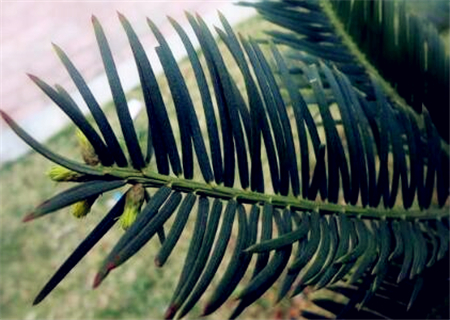
When is the best time to plant Chinese Plum Yew
1. Seedbed site selection: For Chinese Plum Yew seedling cultivation, it is best to choose soil that is deep, loose in structure, rich in humus and well drained. It can also be interplanted in coniferous or broadleaf mixed forest land. Chinese Plum Yew seeds number about 800 per jin, and 80 jin are sown per mu, with a germination rate of 90%.
2. Land preparation and fertilization: Newly reclaimed land is relatively fertile and does not need fertilizer. Old land must be well prepared, usually by deep plowing 20—25cm, making beds 15—20cm high and 1.2cm wide, with no limit on length. Apply an appropriate amount of decomposed base fertilizer, then per mu apply 1.5 kg of phoxim and an appropriate amount of ferrous sulfate to eliminate underground pests and adjust soil pH. Two weeks before sowing, use 0.3% potassium permanganate or formalin solution to irrigate and disinfect the seedbed. Soak thoroughly to 20—30 cm, then seal tightly with plastic film after watering, uncover after one week, and sow after airing for 5 days. Both drilling and dibbling are acceptable.
3. Seed germination promotion: (1) Germination promotion and sowing method for fresh seeds: Before sowing, first disinfect the seeds with 1%—2% copper sulfate solution for 5 minutes, then rinse clean with water, then soak the seeds in 50-degree baijiu and 40-degree warm water (1:1) for 20—30 minutes, then remove and soak in 0.05% gibberellin for 24 hours to induce the production of hydrolases, break seed dormancy, and promote earlier germination. (2) Alternate-year burial germination promotion method: Soak the seeds in warm water (about 45℃) for 3—4 days. When the kernel turns milky white, take them out and disinfect with 1%—2% copper sulfate solution, then mix evenly with three times their volume of wet sand (fine sand at 60% moisture) and put into straw bags or wooden boxes, then place into an underground pit. The pit should be chosen in a section with high terrain and good drainage, with a depth of about 1.5m, and strictly prevent mice from entering. In addition, check the pit temperature frequently; in summer the temperature must not exceed 20℃. When the temperature is high, set up a shade shed over the window or open the window at night to lower the temperature. With this method, seeds are generally stored in the pit in autumn, buried throughout the second year, taken out in the third spring, spread out to dry for 2—4 days, and can be sown when 20%—30% of the seeds have germinated radicles. (3) Chinese Plum Yew seeds emerge slowly and require 2-4 months. At present, technical difficulties such as long seed dormancy and rooting of cutting seedlings have been overcome, and high-quality Chinese Plum Yew saplings have been selected. (4) Overwintering burial germination promotion method: This method is suitable for sowing seeds as soon as they are collected, that is, in autumn of the same year, remove the seed coat from fresh seeds, then soak and disinfect them, then bury them mixed with sand (basically the same method as alternate-year burial). 20—30 days before sowing the next spring, take the seeds out and spread them to dry on a shady slope facing away from the wind, cover with plastic film to raise the temperature, and pay attention to watering to keep them moist. When part of the seed shells have cracked, they can be used for sowing.
4. Seedling stage management: (1) Arch-film seedling protection: If using flat film for dense sowing and seedling cultivation, frequently spot-check the seeds. When radicles appear white, remove the covering and change the flat film to an arch film to retain moisture and promote germination. After changing to an arch film, regulate temperature and humidity. On sunny days, open the agricultural film at both ends of the shed to cool and ventilate, and cover flat at night. Spray the seedlings with water once every 3—4 days to maintain 55%—60% humidity in the seedbed. Strictly prevent mouse damage. After the seedlings have 2 leaves and 1 heart, the film should be removed to harden the seedlings. (2) Thinning and sparse planting: The amount of seed used for Chinese Plum Yew seedling cultivation is generally about 200 seeds per square meter. If sowing is too dense, after the small seedlings have 3—4 leaves and 1 heart, thin and transplant them at a spacing of 15 cm × 20cm cm. (3) Weeding and topdressing: Carry out intertillage and weeding 2—3 times. Along with each intertillage, apply 5—10 kg of urea and 3—5 kg of potassium chloride per mu, applied with water or broadcast on rainy days. Foliar spraying of 0.25% urea and potassium dihydrogen phosphate can also be used. (4) Pest and disease control: Chinese Plum Yew has strong insect resistance and few pests and diseases. Occasionally spiders or aphids occur, which can be controlled by spraying pesticides such as dichlorvos and dimethoate. (5) 2-year-old retained bed seedlings: Apply decomposed dilute animal manure and urine 3—5 times and ammonium sulfate 1—2 times. After spraying, rinse the seedlings promptly with clean water to avoid phytotoxicity. In June—July, apply potassium fertilizer again to increase the degree of lignification of the seedlings. In addition, strengthen field management such as weeding and loosening the soil.
What is the difference between Chinese Plum Yew and yew?
1. Leaf distinction:
1. Chinese Plum Yew leaves are spirally arranged, with the base twisted into two ranks, nearly horizontally spread, lanceolate-linear, often slightly curved, about 5—8 cm long and 3—4 mm wide, gradually narrowing upward from about the middle, with a tapering long tip at the apex, wedge-shaped at the base, bright green above with a raised midrib, and with white stomatal bands beneath and an obvious midrib.
2. Yew leaves are spirally alternate, with the base twisted into two ranks, linear and slightly curved, 1-2.5cm long and 2-2.5mm wide, with slightly recurved leaf margins, tapering leaf tips, 2 broad yellow-green or gray-green stomatal bands on the leaf underside, densely covered with small raised dots on the midrib, and a very narrow green band along the leaf margin.
2. Fruit distinction:
1. Chinese Plum Yew fruit is elliptical-ovate, 2—3 cm long, green when unripe and covered with white powder, turning purple or purplish red when ripe.
2. Yew fruit is flat-ovate, with 2 ridges, the seed is ovate, and the aril is cup-shaped and red.
3. Branch distinction:
1. The winter buds at the branch tips of Chinese Plum Yew are arranged in threes, and in spring the branchlets grow in three forks, hence the name Chinese Plum Yew.
2. Yew bark is reddish brown or grayish red, thin, and split into flakes. Branches are densely grown and reddish brown; one-year-old branches are dark green and turn light reddish brown after autumn. Leaves on the main branches are arranged spirally, while on side branches the leaf petiole bases twist and arrange to the left and right in irregular two ranks.