What is the market price per jin of the climbing plant He Shou Wu (Polygonum multiflorum), and what are the profit prospects for planting one mu?
He Shou Wu (Polygonum multiflorum), also known as multiflorum knotweed, purple vine, and Ye Jiao Teng, is a common Chinese medicinal herb found in Yunnan, Guizhou, Sichuan, East China and other regions, and is widely consumed for its effects in delaying aging and boosting brain power. So how much does He Shou Wu cost per jin on the market? How much can you earn from planting one mu? What are the market prospects? How do you grow it?
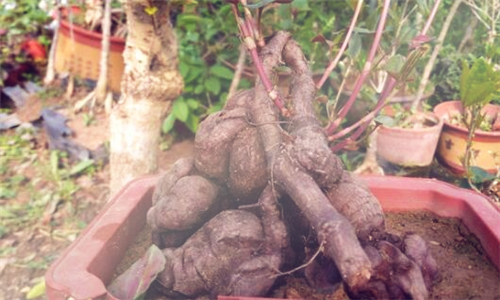
Latest market prices:
The market price of wild He Shou Wu is basically 20 to 25 yuan per jin, while the price of cultivated He Shou Wu is slightly cheaper, generally around 17 to 18 yuan. Before 2005, the price of He Shou Wu was basically stable at around 10 yuan. From 2005 to 2011, the price of He Shou Wu rose noticeably, generally stabilizing at around 20-something yuan, and up until 2018 there was no obvious fluctuation in the price of He Shou Wu during this period, generally only a difference of one or two yuan, so the price of He Shou Wu is basically at this level.
Planting benefit analysis:
Bai Shou Wu generally yields 1100—1500 kg of fresh roots per 1 mu. Calculated at the current minimum purchase price of 10 yuan per kg, the minimum output value per mu can reach 11000 yuan. After deducting 800 yuan for seedlings, 700 yuan for farmyard manure, and 200 yuan for pesticides, the economic benefit income can reach 9000 yuan.
Market prospect analysis:
Judging from market prices, although the price is not as expensive as medicinal herbs such as ginseng, this price is still quite good for an ordinary medicinal herb. Secondly, looking at the situation of market demand and market resources, artificial cultivation is very necessary and has very broad planting prospects. Finally, the profits from planting are still decent. Although it cannot make you rich overnight like other medicinal herbs, more work brings more reward and it can likewise help you escape poverty and become wealthy.
Planting techniques:
1. Site selection and land preparation
For Bai Shou Wu, it is advisable to choose sandy soil with deep soil layers and good drainage. Hillside land and areas in front of and behind houses can all be used for planting. Before land preparation, apply 3500 kg of farmyard manure, 65 kg of phosphate fertilizer, and 15 kg of potassium fertilizer per 1 mu. Then plow deeply to more than 30 cm. Make raised beds 110—155 cm wide.
2. Planting
Bai Shou Wu is mainly propagated by roots. Generally from early March to mid-April, cut the roots of Bai Shou Wu into 4 to 6 cm sections, let them dry for about 2 hours, then on the prepared bed surface, open shallow furrows 3 to 5 cm deep at a row spacing of 35-45 cm and a plant spacing of 20-25 cm, place 1 to 2 sections of seed root in each hole, cover with soil by hand and level it, and water promptly.
3. Field management
Seedlings emerge 15-20 days after sowing. After emergence, loosen the soil while weeding. Entering mid-July, apply 20 kg of nitrogen fertilizer and 10 kg of potassium fertilizer per 1 mu, and water promptly after application.
4. Pest and disease prevention
Bai Shou Wu usually has few pests and diseases. Once pests or diseases such as powdery mildew or aphids occur, conventional methods can be used for control.
5. Harvesting and processing
Bai Shou Wu can be harvested in the same year after planting. In October—November, cut off the stems and vines above ground, dig out the underground tuberous roots, and remove the soil, and it is ready for medicinal use.