What Are the Common Lily Varieties, Plus Indoor Toxicity, Blooming Frequency, and Propagation Methods
Lily is also known as Qiangqu, Fanjiu, Shandan, Daoxian, and Baihesuan. Its stem stands tall and graceful, making it a prized new cut flower. So what are the common lily varieties? Is it toxic indoors? How many times does it bloom a year and how long is the flowering period? How is it propagated? According to Liliaceae information, lilies naturally bloom only once a year, but with human intervention, lilies can be made to bloom twice a year, with a flowering period from July to October. Friends who love lilies should not miss the flowering season!
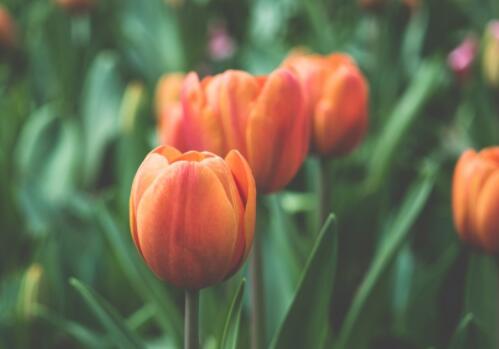
What are the common lily varieties?
1. Common lilies for potted cultivation include the Asiatic potted series:
Super Cambas, plant height 45 cm, flowers golden orange, 4-6 buds per stem
Xiangqing, plant height 40 cm, flowers dark yellow, 8-10 buds per stem;
Partner, plant height 40 cm, flowers dark red, 6-8 buds per stem
Dream, plant height 45 cm, flowers yellow, 4-6 buds per stem
Chameleon, plant height 45 cm, flowers golden yellow, 6-8 buds per stem
Xinbo, plant height 40 cm, flowers pure white, 7-9 buds per stem
Black Bird, plant height 30 cm, flowers dark red, 4-6 buds per stem
Horizon, plant height 35 cm, flowers orange, 6-8 buds per stem.
2. Common varieties:
Lilium lancifolium
Lilium lancifolium is also called Juandan, Tiangai Lily, Daochuilian, Tiger Lily, Yellow Lily, and Pearl Flower. Because its petals have purplish-black markings that closely resemble the patterns on a tiger's back, it is also known as “Tiger Lily”. The Lilium lancifolium plant is relatively tall and can be called the champion among lilies. Its bulb is plump and can be eaten as food or used medicinally. Its flowers are orange or brick yellow, with long petals that curl outward, and purplish-black spots distributed on the petals.
Lilium pumilum
Lilium pumilum, also known as Shandan Dan, Shandan Flower, Xianye Lily, Coral Lily, and Fine-leaved Lily, is named because its leaves are relatively thin and numerous, and its corolla resembles coral. During the flowering period, the flowers droop, the petals curl outward, and the color is bright red with a glossy, beautiful sheen. The leaves are relatively scattered, mostly concentrated in the middle of the stem, linear in shape, and the leaf margins have papillary protrusions. The perianth is strongly recurved, bright red, without spots, and the filaments are red. The flowering period of Lilium speciosum is July and August, and the fruit ripening period is September and October.
Lilium pumilum
Lilium speciosum is also known as Lulz Lily and Yanhong Lily. Its leaves are broad and sparse, opposite in arrangement, so it is also called Large-leaved Lily. Its petals curl outward, and the flower color is white or pale red, with rose-colored patterns and spots distributed on the petals, much like the patterns on a fawn, hence the name Lulz Lily.
Lilium longiflorum
Lilium longiflorum, also known as Easter Lily and Trumpet Lily, is a representative variety of floral lilies, with pure white, flawless flowers that open horizontally.
Is it toxic to keep lilies indoors?
Lilies belong to the Amaryllidaceae family. At night they release carbon dioxide, affecting indoor air, and when blooming they produce toxic substances that can cause dizziness and headaches, so it is best not to place them in the bedroom.
How are lilies propagated?
At present, lily propagation mainly relies on asexual reproduction. In production, there are mainly three types: scale propagation, bulblet propagation, and bulbils propagation.
1. Scale propagation
In autumn, when the leaves begin to turn yellow and wither, select healthy, disease-free plants and dig up the bulbs. Remove the poor-quality and shriveled scales on the surface of the bulb. After peeling off the inner scales, select plump scales and soak them in a 1:500 dilution of 50% carbendazim or captan aqueous solution for 30 minutes. After removing, dry them, then insert them with the base facing down into a seedbed filled with fertile soil. Insert two-thirds of the scale, with a spacing of 3-6 cm. After inserting, cover with grass to help shade and retain moisture.
2. Bulblet propagation
At harvest time, collect the bulblets from healthy plants and disinfect them according to the scale propagation method. Then sow them at a plant spacing of 15 cm and a row spacing of 16 cm. After one year of cultivation, some can reach seed bulb standard (individual weight 10 g) and can be used as seed. Smaller ones should continue to be cultivated for 2 more years before being used as seed.
3. Bulbil propagation
In summer, after the bulbils mature, harvest them, and after harvesting store them in damp sand in a ventilated place. In September-October of the same year, open shallow furrows 4 cm deep on the seedbed at a row spacing of 15 cm, sow 1 bulbil every 6 cm in the furrow, then cover with about 3 cm of fine soil after sowing, and cover with grass and water. When seedlings emerge the following year, remove the grass and apply additional fertilizer. After the aboveground parts wither in autumn, dig up the bulbs, and immediately sow them again in the seedbed at a row spacing of 20×10 cm. By the third autumn at harvest time, some bulbs can reach seed bulb standard for use as seed, and the smaller ones are planted for another year.