What varieties of mint (Yindancao) are good to grow? When to plant? When to harvest? How to grow?
Mint, also known as Yindancao and Yexixiang, is a common plant of the Lamiaceae family in the region south of the Yangtze River, widely cultivated because it can be used both as food and as medicine. So what varieties of mint are good to grow? When to plant? When to harvest? How to grow?
I. Variety selection:
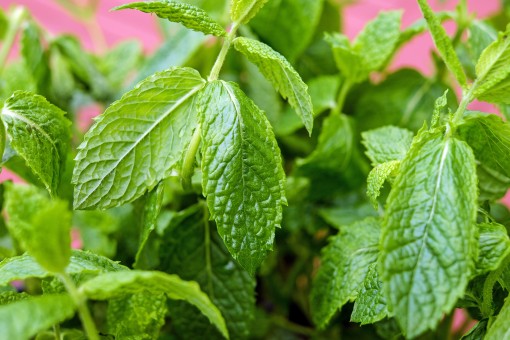
The most common cultivated mint varieties are two: the green-stem type and the purple-stem purple-vein type. The upper part of the stem of the green-stem plant is green, the leaves are short, ovate and glossy, the plant is short with many branches, and its high-yield characteristic is the most obvious. In the purple-stem purple-vein variety, the stem is dark purple, the leaves are oblong with dense pointed serrations, there are fewer branches, and the yield is lower than that of the green-stem type, but the menthol content of the oil is 2%-5% higher than that of the green-stem type. Under normal circumstances, the green-stem variety is the main one used in mint cultivation.
II. Cultivation techniques:
1. Selection of the cultivation site
Mint is not very strict about soil requirements. Apart from excessively sandy, excessively clayey, strongly acidic or alkaline soils, and low-lying poorly drained soils, it can generally be cultivated in ordinary soil, with sandy loam and alluvial soil being best. A soil pH of 6.0-7.5 is suitable. Choose scattered plots with irrigation and drainage conditions and sufficient sunlight, such as beside ponds, houses and water channels, with fertile soil and flat terrain being best; sandy soil, and land with insufficient sunlight that is drought-prone and easily waterlogged, are not suitable for planting. Land that has been planted with mint must lie fallow for about 3 years before it can be planted again.
2. Land preparation and fertilization
Deep ploughing in early spring, with a ploughing depth of no less than 25 cm. Before ploughing, apply per mu 50-75 kg of potassium sulfate compound fertilizer (15-15-15), 100 kg of 12% superphosphate, 4000-5000 kg of farmyard manure fully decomposed and sun-dried for more than 7 days, and 150-200 kg of lignin bacterial fertilizer (where conditions permit, mix the farmyard manure and lignin bacterial fertilizer evenly and ferment them for 30 days in an environment without direct light before application). All the above fertilizers are applied by broadcasting. Spray 45-50 kg, or spray 38% rare earth nitrate diluted in 50 kg of water. At the early stage of melon swelling, spray 75 mL of rare earth plant and animal treasure per mu diluted in 60 kg of water.
3. Seedling selection
Mint seedlings are generally propagated in 3 ways: by rhizome, by division, and by cuttings; for large-area planting, the cutting propagation method is mostly used. In the Shandong region, cutting propagation is generally carried out in May-June. The nursery bed is set up on a sandy loam plot with convenient transportation and easy drainage and irrigation. Apply per mu 30-35 kg of ternary compound fertilizer (15-15-15) and 100 kg of lignin bacterial fertilizer as base fertilizer. After ploughing fine and raking level, make flat beds 1.2 m wide, with the bed ridge no less than 8 cm wide and the bed ridge 12 cm high. Cut healthy, pest- and disease-free above-ground stems and branches into 10 cm-long cuttings, and carry out cutting propagation at a row spacing of 7 cm × 3 cm, keeping the soil moist. In late June, when the mint seedlings are 10-15 cm tall, pull out wild and mixed mint plants together with their roots, and thin and fill in the seedlings at a plant spacing of 10-15 cm.
4. Planting
In the southwestern Shandong region, mint is generally planted from early October to early November. Before planting, rake the planting field level and fine, make beds 2-3 m wide, with bed ridges 15-20 cm high, and adopt the furrow planting method, digging furrows at a row spacing of 30-40 cm, with a furrow depth of 6-10 cm and a planting spacing of 15-20 cm. Place the mint seedling roots evenly in the planting furrows, then cover with soil and press lightly. About 200 kg of seed roots are generally needed per mu.
5. Management after planting
(1) Intertillage and weeding
To ensure the quality and growth vigor of the mint product, the use of any herbicide is not advocated throughout the entire growth and development period. From March, adopt shallow intertillage to control weeds, and carry out another shallow intertillage after the first harvest. Generally, 2-3 intertillages are carried out from planting to harvest.
(2) Watering and topdressing
Apply topdressing reasonably to ensure the plants are strong but not over-luxuriant. Before the first harvest of mint, excessive nitrogen fertilizer should not be applied, otherwise the plants grow too luxuriantly, the stems become thin and weak, and lodging is likely to occur in the middle and late growth stages. When the seedlings are 10-15 cm tall, open furrows and apply topdressing, generally applying per mu 8-10 kg of urea with a nitrogen content of 46%, and 40 kg of traditional Chinese medicine-type lignin bacterial fertilizer. After the plants close the rows, spray the leaves with 150 times diluted biological fermentation bacterial liquid, once every 10 days, for 2-3 consecutive sprays.
Mint has a relatively high water requirement in the early and middle stages of growth and development. If the weather is dry after planting, water once every 15 days; after the plants close the rows, water lightly in moderation to prevent excessive vegetative growth of stems and leaves, lodging and shedding of lower leaves, and reduced yield. Stop watering 20-25 days before harvest.
(3) Plant adjustment
From May, the mint plants enter a vigorous growth period. Remove the terminal buds in time to promote the growth of side branches, stems and leaves (this can increase yield by more than 10%); remove the lower dead leaves in time, and destroy them at a distance or bury them deep on site.
6. Pest and disease control
(1) Common diseases
① Rust. It mainly damages the leaves and stems of mint. In the early stage of the disease, round to spindle-shaped yellow spots form on the leaf surface; the spots gradually expand, and rust-colored aeciospores form inside. When the damage is severe, the diseased part becomes thickened and deformed.
② Leaf spot. Also called white star disease, it is a fungal disease that mainly damages mint leaves. In the early stage of the disease, round to irregular dark green spots 2-3 mm in size appear on the leaf surface, later turning brown, with the center fading to gray and a faded margin around it; small black granules, namely the pathogen's pycnidia, form on the spots. On severely affected leaves, the tissue around the spots turns yellow, causing early defoliation or localized death of the leaves.
③ Black shank. It mainly occurs at the seedling stage, causing the base of the mint stem to contract and become sunken, turn black and rot, and causing the plants to lodge and wilt, seriously affecting the growth of mint.
④ Comprehensive control measures.
A. Strengthen field management; during the mint growth period, pull out diseased plants in time and take them away from the planting field;
B. Plant at a reasonable density to maintain ventilation and light penetration in the field; drain water in time after heavy rain; after the previous mint crop is harvested, remove diseased and residual plant material in time, and destroy it at a distance or bury it deep nearby.
C. Chemical control: For rust, use 25% triadimefon 1000-1500 times diluted solution for foliar spraying. For leaf spot, the commonly used control agent is 70% thiophanate-methyl wettable powder 1000-1500 times diluted solution, sprayed on the foliage, once every 7-10 days, for 2-3 consecutive sprays. Use 65% zineb wettable powder 500 times diluted solution, sprayed once every 7 days, for 3 consecutive sprays, to control the damage of black shank to mint. When using chemical control, be sure to stop applying the chemicals 20 days before harvest.
(2) Common insect pests
① Cutworm. Also known as soil silkworm and root-cutting worm. It mainly damages mint at the seedling stage, biting off young roots, causing plant death and causing missing seedlings and broken rows in the field.
② Bridge worm. This insect mainly damages mint leaves, flowers, buds, fruits and tender branches, seriously affecting plant growth.
③ Control measures.
A. In combination with land preparation and bed making, use 10-15 g of 3% phoxim granules per sq m, or apply Beauveria bassiana in furrows at planting, at 20-25 kg per sq m, to control the damage of cutworm to mint roots.
B. Chemical control: For bridge worm control, physical control measures are the main method. From the Beginning of Summer to the Grain in Ear, use black light lamps to trap and kill adults, generally with the light source positioned 30-40 cm above the mint plants; use the adults' attraction to sugar-vinegar to trap and kill them, setting up 1 sugar-vinegar liquid box per mu, placed higher than the mint plants, covered during the day and uncovered in the evening; at the peak of egg hatching, use Bacillus thuringiensis emulsion 100 times diluted solution, or 10 billion viable spores/g Bacillus thuringiensis wettable powder 500-1000 times diluted solution for spray control.
7. Harvest
For mint grown in the southwestern Shandong area, there are two harvests each year. The first is from late June to early July, no later than mid-July; the second harvest is in early October. Where conditions permit, mechanical harvesting is adopted. After harvesting, spread the mint on the ground away from direct light to dry in the shade until 70%-80% dry, then tie it into small bundles and place them in a cool, ventilated place to continue drying.