A single nine-color fragrant water lily sells for 10 yuan, what are the prospects for growing it?
Friends who love flowers must know the variety of fragrant water lily, also known as the “nine-color fragrant water lily,” because it can produce flowers in nine major color series including gold, yellow, purple, blue, red, tea, green, red, and white, and the lotus is also often called a sacred object. So how much does a fragrant water lily cost per flower? What are the prospects for growing it?
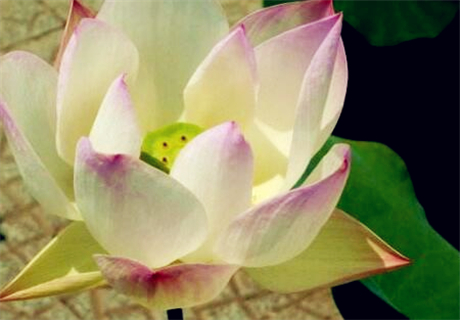
I. Introduction to the fragrant water lily
1. The fragrant water lily is a large water lily with a delicate fragrance and a long flowering period. It blooms in all four seasons of spring, summer, autumn, and winter, and can be enjoyed year-round; the flowering time is 5 to 7 days in summer and about 7 to 20 days in winter.
2. Fragrance: The fragrances of different nine-color fragrant water lilies range from light and fresh to rich and aromatic.
3. Flower shape: The greatest feature of the fragrant water lily is its round, broad, and substantial petals, which represent harmony in the human world, completeness, and solidity.
4. Petals: The petals of the fragrant water lily can reach 45-60 in number, arranged clearly and neatly in multiple whorls.
5. Flowering period: At night the flowers do not close, so they can be viewed at any time.
6. Growing environment: The fragrant water lily is an aquatic plant, suitable for tropical to temperate climates, and is cultivated in pots as well as in gardens and courtyard landscaping.
II. How much does a fragrant water lily cost per flower
On an agricultural wealth-building program, there was an old farmer who was a veteran. He started out growing lotus roots, then gradually began raising loaches, crayfish, and so on. His most profitable treasure was called the fragrant water lily. According to him, each flower can sell for 10 yuan, and one mu can bring in 120,000 yuan.
III. Prospects for growing the fragrant water lily
The fragrant water lily was a gift from Taiwan, China to Hangzhou in 2006. The fragrant water lily is rich in components needed by the human body such as flavonoids, polysaccharides, polyphenols, and 5α-reductase inhibitors. There are as many as 15 kinds of amino acids, including 8 essential amino acids for the human body. The fragrant water lily has numerous nutrients and extremely high content of them. It can be used as an auxiliary treatment for preventing and treating high blood pressure and arteriosclerosis, has an obvious coronary vasodilating effect, lowers blood lipids and cholesterol, reduces the degree of liver steatosis, and has a strong liver-protecting effect. Therefore, the prospects for growing it are considerable.
IV. How to grow the fragrant water lily
1. Planting
Cold-tolerant fragrant water lilies are mainly propagated by dividing the underground stems. In early March, dig up the underground tubers with buds from pots or mud ponds for transplanting. When planting them in the soil, slightly expose the terminal bud. At the initial planting stage, the water level should be shallow; about 10 cm of water is enough for pot cultivation, while the water level for pond planting should be 30 cm, and the water level can then be gradually deepened.
2. Water management
The lotus is an aquatic plant and cannot do without water at any time during its growing period. In the early growth stage, the water layer should be controlled at about 3 cm; water that is too deep is not conducive to raising the soil temperature. If using tap water, it is best to store it in another container and let it sit in the sun for one or two days before use. Summer is the peak growth period for the lotus, and the pot must never lack water. After winter begins, the pot soil should also be kept moist to prevent the seed lotus from drying out due to lack of water.
3. Fertilizing
The fertilizer for the lotus is mainly phosphorus and potassium fertilizer, supplemented by nitrogen fertilizer. If the soil is relatively fertile, then no fertilizing may be needed all year. Decomposed cake fertilizer and chicken, duck, and goose manure are the ideal fertilizers. For a small pot, applying half a liang is enough; for a large pot, at most only 1—2 liang can be applied, and it must not be applied in excess, and it must be fully mixed with the soil. During the peak growth period, if the leaves are found to be yellow and thin and weak, 0·5 g of urea per box can be mixed into the mud, rolled into small balls of about 10 g, and one ball applied per pot, placed in the soil at the center of the pot, with results seen in 7 days.
4. Pest and disease control
The lotus mainly suffers from rot disease and leaf blight, but neither is very serious. If found, a 50% thiophanate-methyl wettable powder 1000-fold solution can be sprayed for treatment. The insect pests of the lotus include slug moths, aphids, snails, and so on, which can be removed by hand or controlled with pesticides such as trichlorfon, dimethoate, and fenvalerate. For growing a small amount of lotus at home, pesticides such as Quanwudi can be sprayed to kill the pests.
5. Wintering management
Cold-tolerant fragrant water lilies can overwinter naturally in ponds. However, they must not be dehydrated throughout the winter, and a certain water layer must be maintained. If potted fragrant water lilies are placed outdoors, when the lowest winter temperature is below —8℃, they should be covered with weeds or agricultural film to prevent the tubers from freezing, and they can overwinter safely if placed indoors. Tropical water lilies should be moved into a greenhouse at no less than 15℃ for storage. They can be moved out for cultivation again in May of the following year.