Jujube Tree Sapling Prices, Varieties and Planting Benefits from 2018-2020
Winter jujube, also known as apple jujube or yanlaihong, is a fruit that ripens and comes to market in October on the Gregorian calendar. It is deeply loved by people for its sweet, delicious taste and rich nutritional value. It is now grown in most regions, but to grow winter jujube well, you must choose good saplings. So how much does a winter jujube sapling cost? Which varieties are good to plant from 2018-2020? How can you grow them for high returns?
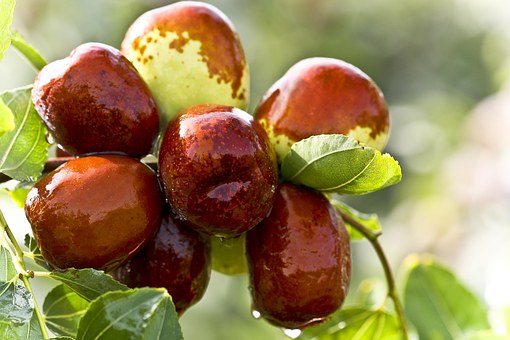
I. How much does a winter jujube sapling cost?
The price of winter jujube saplings varies to some extent depending on variety, place of origin, specifications and market. Generally, one winter jujube sapling costs about 8-10 yuan, but for specifics you still need to check the local market.
II. Which varieties of winter jujube saplings are good to plant?
There are many varieties of winter jujube, but in general the ones planted more often are Chengwu winter jujube, Zhanhua winter jujube and Xuecheng winter jujube.
1. Chengwu winter jujube: Chengwu winter jujube is a superior plant selected from Chengwu County, Shandong. The fruit produced by this type of plant is relatively large; generally one fruit can weigh up to 25.8 grams, and the largest can reach 32 grams. It is not only sweet with crisp, fragrant flesh, but also deep red on the outside, looking very enticing.
2. Zhanhua winter jujube: Zhanhua winter jujube is a superior variety selected from Zhanhua District, Binzhou, Shandong. The fruit produced by this type of plant is medium to large; on average one fruit can weigh up to 14-16 grams, and the largest can reach 23.2 grams. Its flesh is not only thin and crisp, but also sweet, fragrant and juicy, and is deeply loved by the public.
3. Xuecheng winter jujube: Xuecheng winter jujube is a superior variety selected from Xuecheng, Shandong. The fruit produced by this type is relatively large; generally one fruit weighs up to 22 grams, and large ones can exceed 40 grams. Its flesh is not only crisp and loose, but also rich in juice, though the fruit quality is not very good.
III. How do you plant winter jujube saplings?
1. Orchard site selection: Winter jujube likes to grow in environments with good water quality, flat terrain and fertility, so when choosing an orchard, try to choose a place with fertile soil, good drainage and sufficient sunlight.
2. Reasonable planting: Winter jujube is drought-tolerant and highly adaptable, so it does not have high requirements for fertilizer or water. Generally, close planting can be used, and when planting, about 56-111 seedlings can be planted per mu.
3. Fertilizing: Although winter jujube does not have high requirements for water and fertilizer, in order to promote plant growth it is best to appropriately apply a small amount of organic fertilizer, nitrogen fertilizer or calcium fertilizer, etc. Generally, apply chemical fertilizer once each in late May, from late June to early July, and early August, and in autumn apply 50-70 kg of farmyard manure and 0.5-1 kg of nitrogen and phosphorus fertilizer.
4. Watering: Winter jujube does not have high water requirements. Generally, water thoroughly once each during the young fruit swelling stage, before the tree sprouts, and before overwintering. If drought weather occurs, you can water more appropriately; if rainy weather occurs, then take good drainage measures to prevent root rot.
5. Flower and fruit management: During the growth period, winter jujube needs to be pinched back twice. Generally, when it has just fully bloomed, just leave 3-5 secondary branches.
6. Pruning and shaping: The purpose of pruning and shaping winter jujube trees is to promote the growth of all branches, so it is necessary to prune vigorous water sprouts, thin weak branches, dense branches, etc., so as to help nutrients be distributed evenly among the branches.
7. Harvesting: Because the ripening period of jujube trees of the same plant differs, they can be harvested according to the actual situation. When harvesting, try to store them in cold storage to preserve the taste.