High-Yield Cultivation Methods and Prospect Analysis for Cowpea, with Yield Exceeding 4000 jin per mu
Cowpea, commonly known as asparagus bean, ginger bean, yardlong bean, or hanging bean. Generally, June to September is the best season for eating cowpea. So how many jin can be produced per mu when growing cowpea? How is it cultivated? What are the prospects for growing it?
I. Main Varieties of Cowpea
Cowpea can be divided by stem growth habit into climbing and bush types.
1. Climbing type: both the main vine and side vines have indeterminate growth, with the main vine reaching 3-5 m and showing left-handed twining; support stakes are needed during cultivation. Side branches and flower clusters can emerge from the leaf axils, flowering and podding successively, with a long growing period and high yield.
2. Bush type: after 4-8 nodes, the main stem is topped by a flower bud, the stem is upright, and the plant is short, with a height of 40-50 cm and relatively many branches. The growing period is short, maturity is early, and the harvest period is short and concentrated, with relatively lower yield.
II. How Is Cowpea Cultivated?
1. Cowpea is first raised as seedlings in the early stage
Cowpea sprouts easily and generally does not need seed soaking or pregermination. The seedbed subsoil for raising seedlings should be firm; it is best to spread a 6 cm layer of loam to prevent the main root from penetrating deep into the soil and to encourage fibrous roots, since root damage during transplanting would be severe. Therefore, when the seedling has one pair of true leaves, it can be transplanted with soil; large seedlings should not be transplanted. If conditions permit, nutrient pots or plug trays can be used for seedling raising, with two or three seedlings per pot.
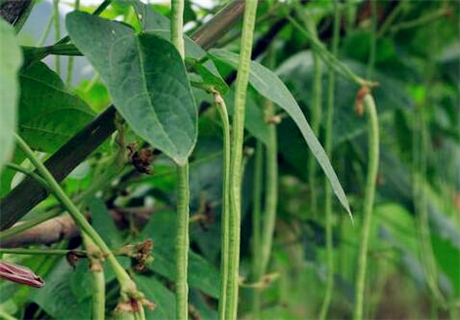
2. Cowpea is best planted by transplanting
Transplant after the last frost, when the seedlings are 20-25 days old. The transplanting field should be given plenty of decomposed organic fertilizer, 3000-5000 kg per mu, 25-30 kg calcium superphosphate, 50-100 kg plant ash or 10-20 kg potassium sulfate. The transplanting density is 66 cm between rows and 10-20 cm between holes, with 3000-3500 holes per mu and two or three plants per hole (the two- or three-plant seedling method can be used during seedling raising to facilitate later transplanting). After transplanting, water to help the seedlings recover, then cultivate deeply and restrain growth for 5-8 days to promote a well-developed root system.
3. Cowpea Sowing Methods
Sow in the open field after the last frost. For climbing varieties, the density is 66-70 cm between rows and 20-25 cm between plants, with 4-5 seeds per hole and 2-3 seedlings retained. For bush varieties, the row spacing is 50-60 cm and the plant spacing is 25-30 cm. After sowing, press the soil firm with the foot so the soil and seeds are in full contact and absorb enough water to aid sprouting. When 70% of the sprouts have emerged through the soil, water lightly once to ensure full emergence. After watering, cultivate deeply in time to preserve soil moisture, raise temperature, and restrain growth, promoting root development.
4. Later Field Management Methods for Cowpea
(4.1) Checking and replanting seedlings: when the first pair of primary leaves appears, go into the field and check each bed for missing plants and replant them. For replanting, it is best to use paper pots and sow 3-4 days earlier in a greenhouse to raise good seedlings. If raising seedlings for transplanting, replant after the seedlings have recovered.
(4.2) Cultivating and loosening the soil: for direct sowing, after the seedlings emerge fully, or after transplanting and seedling recovery, cultivate once every 7-10 days to loosen the soil, preserve moisture, restrain growth, and promote rooting; stop cultivation after the vines begin to spread.
(4.3) Watering and topdressing: cowpea should not be given much fertilizer in the early stage, to prevent excessive fertilizer and water from causing excessive vegetative growth. Generally, after the plants are established, apply one round of manure water. During flower bud appearance, flowering, and the beginning of harvest, fertilizer and water supply should be strengthened, generally topdressing 2-3 times, each time applying 750-1000 kg of human and livestock manure and urine per mu.
5. Cowpea Disease Control
The most important disease of cowpea is rust. In the early stage of the disease, promptly pick or cut off the affected parts and destroy them. For pesticide control, 50% carbendazim 500-fold solution can be used. Cowpea pests include cowpea pod borer and aphids. For the pod borer, use fenitrothion; for aphids, dimethoate can be used. Spray according to the labeled usage and dosage, once a week.
III. What Are the Prospects for Cowpea Cultivation?
Many farmers also choose to grow cowpea to increase income and become better off. There are many cowpea varieties, such as Fengchan No. 2 and Xiabao, with average yields of more than 4000 jin per mu. Therefore, the prospects for cultivation are good.