Early Crisp Red Pear Price per Jin, Ripening and Market Season, and Planting Prospects
Early Crisp Red Pear is a new bud-sport variety of the Early Crisp Pear, and it is now grown as a high-yield cash crop. Its core is relatively small, so its edible rate is fairly high, and it was snapped up as soon as it hit the market. So how much does Early Crisp Red Pear cost per jin? When does it generally ripen and go on the market? And what are its planting prospects?
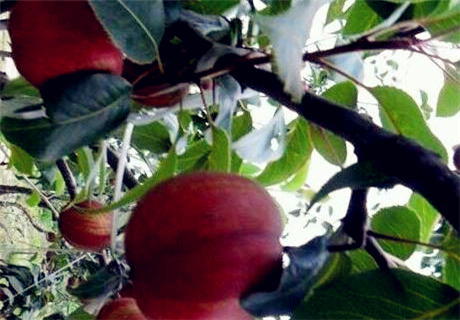
I. How much does Early Crisp Red Pear cost per jin?
1. The price of Early Crisp Red Pear is around 15 to 23 yuan per jin, which is relatively high among pears. If you buy directly from farmers, the price should be somewhat cheaper, but some cheap Early Crisp Red Pears have now appeared on the market, and they are probably not authentic, so buyers need to be careful when purchasing.
2. Early Crisp Red Pear seedlings 50 cm tall cost about 2 yuan, those 80 cm tall cost about 5 yuan, and those over 1 m tall cost about 6 yuan. The price of Early Crisp Red Pear seedlings also differs from region to region, and if the quantity purchased at one time is relatively large, merchants will give a correspondingly much bigger discount.
II. When does Early Crisp Red Pear generally ripen and go on the market?
Early Crisp Red Pear usually begins bearing fruit 3 years after planting, mainly fruiting on short fruit spurs, and it ripens and goes on the market in late July.
III. What are the planting prospects for Early Crisp Red Pear?
The planting prospects for Early Crisp Red Pear are good, and the integration of agriculture and tourism brings many pleasant surprises.
Cangxi Snow Pear Mountain is an important base of the Cangxi Snow Pear Research Institute. Through top grafting to change varieties, a total of 8 Early Crisp Red Pear trees were grafted here. With such a new member that "stuns all the other flowers," the Cangxi Snow Pear Research Institute takes extra care of them. Zhong Qingshan is not idle either, going to check on them every so often. Under careful management, the Early Crisp Red Pears at the 3 trial planting sites are growing well, and the relevant traits are stable.
In March this year, all the trial-planted Early Crisp Red Pears flowered and set fruit, and to date, the Early Crisp Red Pear trees have set more than 30 fruits in total. "The young fruits are all red, especially beautiful," said Qiu Morong, director of the institute. The pear orchard on Snow Pear Mountain is relatively open, and citizens may enter the orchard to a reasonable extent for sightseeing and touring. Perhaps it was precisely because the Early Crisp Red Pear is so unusually red that something regrettable happened.
Qiu Morong, director of the institute, said that in early July, as the fruits neared maturity, they found that more than 20 were missing, "so we used wire mesh to fence off and protect the tree that bore the most fruit."
IV. High-yield cultivation techniques for Early Crisp Red Pear
1. Key points for establishing an Early Crisp Red Pear orchard: the planting density is a plant and row spacing of 2×3 or 3×4 m; although Early Crisp Red Pear can self-pollinate, pollinizer trees can also be arranged at 6:1, with pollinizer varieties including: Suli Pear, Xuehua Pear and other varieties with similar flowering periods.
Early Crisp Red Pear has wide adaptability, and except in cold regions, it is cultivated in all provinces nationwide, but on mountainous thin soil and coarse sandy soil, the fruit often shows nutrient deficiency symptoms, so the soil should be improved at planting time and soil fertility built up to make the trees strong and high-yielding. It can reach full production in 4 years
2. Orchard management for Early Crisp Red Pear: management under the tree mainly consists of mulching the tree dish with grass during the growing season, loosening the soil, and hoeing weeds, combined with deep digging and soil loosening when applying organic fertilizer in late autumn, so as to favor the growth and development of the root system; apply nitrogen fertilizer + compound fertilizer once before bud break and once after petal fall, and apply compound fertilizer + trace elements in early June. Management in the tree canopy should be combined with pest and disease control, and throughout the growing season, spray the leaves every 15-20 days with 0.3% urea + 0.2% potassium dihydrogen phosphate to supplement the tree's nutrients and strengthen tree vigor. The principle of irrigation is to promote early and control late, carried out in conjunction with each fertilization, and pay attention to watering the freeze-up water, and in years with heavy rainfall pay attention to drainage. Pay attention to the use of boron fertilizer.
3. Early Crisp Red Pear flowers easily and has a high fruit-setting rate, so flowers and fruits should be thinned in time, and some excess flower buds removed in conjunction with winter pruning; begin flower thinning after the flower buds separate, leaving 2 side flowers per cluster. After fruit set, set the fruit, leaving 1 fruit per 25—30 leaves for young and vigorous trees, and leaving only 1 single fruit per inflorescence.
4. Bag the fruit after thinning to increase the rate of high-quality fruit, reduce pest and disease damage, and prevent direct pesticide contamination. The tree shape can be a double-layer open-center form or a spindle form. For the double-layer open-center form, the trunk branching point is 60—70 cm high, the first layer keeps 3—5 main branches, the second layer keeps 2—3 main branches, the layer spacing is 70 cm, no side branches are kept, and fruit-bearing branch groups are borne directly on the main branches, with large, medium and small branch groups arranged in a staggered way, and the tree height is about 2.5 m; for the spindle form, the trunk branching point is 60 cm high, and one main branch is kept every 20 cm, with the main branches rising in a spiral to form a tree body that is wide at the bottom and narrow at the top, shaped like a spindle, with a tree height of 2.5 m. When pruning, pay attention to opening the branch angle, leave slanted growing branches unpruned, and on upright long branches make a ring cut from the base upward about every 20 cm, continuing the ring cuts to the tip, so that the following year 3—7 medium and short branches and many leaf cluster branches sprout. Early Crisp Red Pear has somewhat poor renewal and rejuvenation ability, so pay attention to keeping the load light to maintain strong trees, and keep more cut branches.
V. Is the yield of Early Crisp Red Pear high?
The yield of Early Crisp Red Pear is high. The average single fruit weight is 200-250 g, and large ones 350 g. Early Crisp Red Pear shows vigorous growth, strong resistance, early fruiting, a tall-shaped fruit, large size, early maturity and high-quality character.
Early Crisp Red Pear flowers easily and has a high fruit-setting rate, so flowers and fruits should be thinned in time, and some excess flower buds removed in conjunction with winter pruning; begin flower thinning after the flower buds separate, leaving 2 side flowers per cluster. After fruit set, set the fruit, leaving 1 fruit per 25-30 leaves for young and vigorous trees, and leaving only 1 single fruit per inflorescence.
VI. The benefits of eating Early Crisp Red Pear
1. Eaten raw, Early Crisp Red Pear can relieve yin-deficiency symptoms such as dry, itchy and painful throat, dry cough, thirst and tidal fever caused by upper respiratory tract infection. Therefore, teachers, announcers and singers often eat pears to protect their voices and prevent throat cancer, lung cancer and nasopharyngeal cancer.
2. Early Crisp Red Pear has a certain therapeutic effect on enteritis, enlarged thyroid, constipation, anorexia, indigestion, anemia, red and swollen urethra, urethral stones, gout, and diseases caused by vitamin A deficiency.
3. The carbohydrates contained in pears include fructose and glucose, which have the effect of protecting the liver, aiding digestion and promoting appetite, and can be used as an auxiliary dietary therapy for patients with hepatitis and cirrhosis.
4. People suffering from vitamin deficiency should also eat more Early Crisp Red Pear. People who look pale due to anemia can make their complexion rosy by eating more pears. Pears can also purify the kidneys and clean the intestines. For patients with enlarged thyroid, the iodine rich in Early Crisp Red Pear can have a certain therapeutic effect.