Xinjiang accounts for 80% of the country's cotton planting area, so how does it achieve high yields?
**Xinjiang's total cotton output has ranked first in the country for more than 20 consecutive years. A reporter learned from the ** Academy of Agricultural Sciences that the cotton planting area in ** reached more than 37 million mu in 2018, accounting for 80% of the country's cotton planting area. In northern Xinjiang, the average cotton yield is about 400 kg per mu, while in southern Xinjiang the average cotton yield is about 500 kg per mu, and machine-picked cotton accounts for more than 80% in northern Xinjiang.
In Manas County, mechanical harvesting of 830,000 mu of cotton reaches 96%
There was once a time when, every cotton harvest season, the cotton fields around Changji, Shihezi and Kuitun in northern Xinjiang were full of armies of cotton pickers. In recent years, machine-picked cotton planting has been rapidly promoted in northern Xinjiang. A reporter learned from the Manas County Agriculture Bureau that this year the county planted 830,000 mu of high-quality cotton, and mechanical harvesting will reach 96%.
In the cotton field of Cheng Zhengjiang, a cotton farmer in Sanchakou Village, Beiwucha Town, Manas County, 6 cotton pickers shuttle back and forth, stepping up operations. Cheng Zhengjiang planted more than 300 mu of cotton in 2018. Thanks to scientific planting, the cotton grew better in 2018 than in previous years, “the yield per mu is estimated to be around 400 kg, and the good ones can reach 500 kg. In 2018 we all adopted machine picking here. Compared with manual picking, machine picking saves about 650 yuan per mu”.
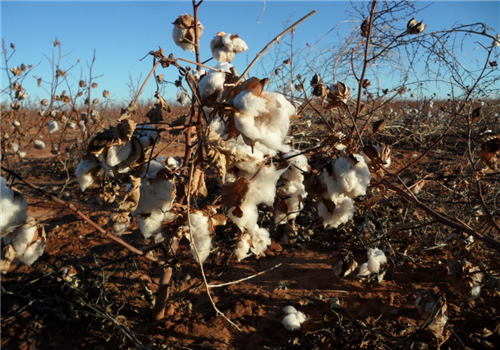
It is reported that Beiwucha Town in Manas County has fully achieved machine-picked cotton. To promote machine-picked cotton on a large scale, in recent years Manas County has launched a structural reform of the agricultural supply side, adjusted planting varieties, reduced the original more than 20 varieties to 3 planted varieties, planted efficient and high-quality machine-picked cotton, guided cotton growers to establish cooperatives, made unified purchases, unified harvesting, and saved planting costs.
Li Xueming, a cotton grower in Beiwucha Town, Manas County, has planted cotton for 17 years. “In the past, whenever the cotton-picking season came, in order to recruit cotton pickers, we would squat all day at railway stations and long-distance bus stations, holding signs and asking around.”
In the past, cotton pickers were hard to recruit and their pay rose year after year. Li Xueming still remembers that in 2001 the price for picking cotton was only 5 jiao per kg, and by 2015 it had risen to as high as 2.2 yuan per kg. “If it kept rising like that, we really could not bear it. In 2016 I switched entirely to machine-picked cotton. Now cotton planting is almost fully mechanized. Our family planted 200 mu of cotton, and managing it is easy.” Li Xueming said.
It is reported that in recent years Manas County has been guiding cotton farmers onto the path of intensive planting, scientific planting and scientific management. “We need to integrate and apply precision sowing technology, chemical topping technology and mechanical harvesting technology for cotton into cotton production, and achieve full mechanization.” said Bao Yuqin, chief agricultural adviser of Manas County.
The machine-picked cotton planting area in northern Xinjiang has already accounted for more than 80%
A reporter learned from the ** Academy of Agricultural Sciences that in recent years machine-picked cotton has been rapidly promoted in northern Xinjiang, the machine-picked cotton planting area has already accounted for more than 80%, and in some counties and cities it has exceeded 90%.
Shawan County planted 1.8 million mu of cotton in 2018. At present the cotton is maturing one after another and mechanical harvesting has begun. In a cotton field in Songshenggong Village, Jingou Town, Shawan County, a John Deere CP690 self-propelled round module picker of the Shawan County Agricultural Machinery Cooperative shuttles back and forth in the cotton field. According to Mu Jianzhong, director of the Hongji Agricultural Machinery Cooperative in Shawan County, since cotton picking began on September 22, 4 John Deere CP690 self-propelled round module pickers have been deployed to serve the area around Shawan County, with a daily operating volume of more than 500 mu.
As soon as the round module picker drove into the cotton field, cotton bolls were quickly grabbed into the machine's “belly”, then compressed in the “belly”, and a large cylindrical cotton module was discharged from the rear of the machine. Compared with the more traditional basket-type cotton picker, the round module picker achieves full mechanization of cotton harvesting and baling, can effectively prevent cotton from being contaminated by impurities during transfer, and greatly improves cotton quality.
A reporter learned from ** Tianshan Nongxin Agricultural Machinery Co., Ltd. that ** began selling round module pickers in 2012. The first-generation 7760 was priced at 4.6 million yuan, and by 2015 the second-generation CP690 sold for 5.3 million yuan. “Now southern Xinjiang has seventy or eighty round module pickers, mainly purchased by Shaya County, Yuli County and Regiment 2 of the First Division of the XPCC, while northern Xinjiang has nearly 200, mainly operating in the areas of Regiment 125, Regiment 121, Regiment 127, Wusu, Kuitun and Shihezi. One round module picker operating continuously for a day and a night can harvest 680 mu of cotton, or a conservative 500 mu. One machine doing a day's work is equivalent to 2,000 laborers doing a day's work.” said Fu Quanwei, sales department manager of ** Tianshan Nongxin Agricultural Machinery Co., Ltd.
Comparing planting benefits: growing machine-picked cotton brings higher income
It is reported that ** the earliest promotion of machine-picked cotton was in the XPCC. As early as the late 1990s, machine-picked cotton had already appeared in the First Division of the XPCC, and afterward machine-picked cotton began to be promoted in the Eighth Division of the XPCC. But at that time manual cotton picking was cheap, so machine-picked cotton was not promoted very quickly.
By 2012, machine-picked cotton had been rapidly promoted in northern Xinjiang. “1.5 yuan/kg for cotton is a break-even point. Once manual cotton picking exceeds this price, it no longer has much advantage. Now the price for picking cotton has risen to 2.5 yuan/kg, and the returns from planting machine-picked cotton already hold an absolute advantage.” Fu Quanwei said.
According to estimates, in northern Xinjiang, after machine-picked cotton is sold, the income per kg is about 9 jiao higher than for manually picked cotton, and each mu brings about 360 yuan more income; in southern Xinjiang, each mu brings about 450 yuan more income.
It is reported that in 2018 ** cotton picking began in early September, large-scale cotton picking in southern Xinjiang began in mid-September, and large-scale cotton picking in northern Xinjiang began in late September. ** The cotton picking period can last about 50 days, and northern Xinjiang will finish harvesting at the latest in late October. At present this is the busiest time for cotton harvesting.