When is the best month to graft bayberry (Morella rubra)? Master the method to improve the survival rate
The bayberry tree is vigorous, has a long economic life, and its production cost is noticeably lower than that of other fruits. Therefore, it is hailed as a “green enterprise” and a “money tree.” Grafting bayberry is one of the tasks often carried out during bayberry cultivation, and it has a great impact on increasing bayberry yield. So, how is bayberry grafted? Which month is best for grafting? How can the survival rate be improved?
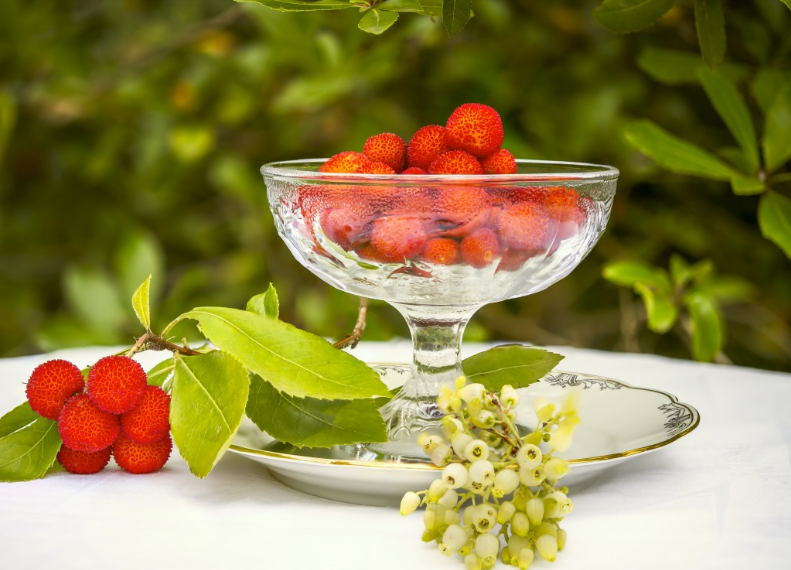
I. How is bayberry grafted?
1. Sowing. Harvest fully mature fruit from vigorously growing adult seedling trees. After harvest, pile the fruit for 3-5 d. Once the flesh has rotted, wash it clean and remove the shriveled, undersized seeds that float to the surface. After drying slightly, stratify the seeds in sand and sow. The seed germination rate is 40%-70%. The sowing site should be chosen as sandy red-yellow soil with good drainage and loose texture. After sowing, press the seeds into the soil with a wooden board so they are level with the bed surface, cover with a layer of fine soil, and then cover with rice straw to prevent the soil surface from crusting. Generally, seedlings emerge about one month after sowing.
2. Rootstock management. After the seedlings emerge, manage them frequently, replenish water in time, and promote the growth of young shoots. To make the seedlings sturdy, begin applying dilute liquid fertilizer (rotted human and animal manure and urine) when the seedlings are 3 cm tall, applying once a month, and carry out weeding and pest and disease prevention well. When the base of the seedling begins to lignify and the seedling is about 6-10 cm tall, it can be transplanted.
3. Selection of rootstock and scion. Cultivate strong, healthy rootstock; a rootstock diameter of about 1 cm is most suitable. Identify good mother trees, and from superior individual trees in full bearing age select the middle section of last year's spring shoot (free of pests and diseases, with plump buds) as the scion. It is best to collect and graft immediately; if grafting cannot be finished the same day, wrap the scions in wet cloth or store them in sand to keep them fresh.
4. Grafting methods:
① Grafting in place, cutting the root system. This is often used for 2-3 year old rootstock. After grafting, cut deeply on both sides of the rootstock planting bed to sever part of the main and lateral roots.
② Grafting at a different site. Before grafting, dig up the rootstock, prune away part of the main and lateral branches, replant it elsewhere, and then graft.
③ Indoor grafting. Dig up the rootstock and graft indoors. This is used for 2-3 year old rootstock, or for large 3-4 year old rootstock dug from the wild. After grafting, heel it in or plant it directly at the final planting site.
④ Grafting with a retained branch. First plant the rootstock, then graft in place. This is used more often for large rootstock. That is, graft on the main branch and leave another branch as a "water-drawing branch" to attract water flow toward that branch, slow the growth vigor of the grafted part, and thereby increase the grafting survival rate.
5. Post-grafting management. New shoots sprouting below the graft union should be removed promptly. For tender shoots sprouting from the scion, keep the strong and remove the weak, leaving 2-3 buds to grow and removing the rest. When the new shoots lignify, apply rotted human manure and urine once, then apply again after one month, applying thin fertilizer frequently. During the new shoot growth period, control pests and diseases in time, and use 70% thiophanate-methyl 800 times solution and omethoate 800 times solution as appropriate to control anthracnose, yellow caterpillar, and other damage.
II. Which month is best for grafting bayberry?
The suitable grafting time is a period with mild temperature, neither low nor high, generally carried out in February-March, and at the latest it must not go beyond Qingming Festival; otherwise, the higher air humidity will cause excessive bleeding and grafting failure. Moreover, by this time the bayberry has already begun to sprout, and the bark and woody tissues have also taken shape and become hard and brittle. In warmer regions of the south, it may be appropriately advanced to January-February.
III. How can the survival rate of bayberry grafting be improved?
1. Choose rootstock and scion with strong compatibility
Compatibility refers to the ability of the rootstock and scion to heal after grafting. In general, the closer the genetic relationship, the stronger the compatibility, and the higher the grafting survival rate.
2. Choose the best grafting timing
Generally, branch grafting should be done in early spring before the fruit tree sprouts, because at this time the rootstock and scion tissues are plump, and the temperature and humidity are also favorable for vigorous division of the cambium, speeding up wound healing. Bud grafting, however, should be done during the slow growth period, so that it survives grafting this year and sprouts into a seedling next spring.
3. Use plant hormones to promote healing
Before grafting, treat the scion with plant hormones, such as soaking in 200-300 PPM naphthaleneacetic acid for 6-8 hours, which can promote cambium activity, thereby promoting wound healing and increasing the grafting survival rate.
4. Two aspects play a decisive role in the grafting survival rate. First, one side of the scion and rootstock must have close contact between the bark surfaces, so that the two can transmit water and nutrients. Second, the wrapping must be tight and secure, and absolutely must not leak air. Otherwise, moisture will escape and the grafting will certainly fail.