Seven Key Elements and Detailed Techniques for High-Yield Mint Cultivation
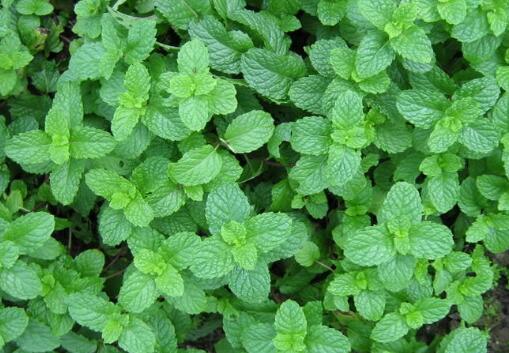
Everyone knows mint: it is cooling in nature and can be used to treat symptoms such as sore throat. Mint cultivation techniques are also quite simple, and the market prospects are relatively good. Mint has a strong ability to adapt to environmental conditions. How can mint be cultivated for high yield? Its cultivation techniques mainly include the following aspects.
I. Variety selection
Generally speaking, the two most common varieties of mint are green-stem and purple-stem purple-vein.
II. Selection of cultivation site
Mint is a long-day plant and likes sunlight. The most suitable temperature for growth is 25-30°C. It can be cultivated in general soils, with sandy loam and alluvial soil being preferable. The suitable soil pH is 6.0-7.5. Choose scattered plots with irrigation and drainage conditions and sufficient light, such as beside ponds, houses and water channels, preferably with fertile soil and flat terrain; sandy soil, land with insufficient light, and land that is dry and prone to water accumulation are not suitable for planting. Land where mint has been grown must rest for about 3 years before it can be planted again.
III. Land preparation and fertilization
Mint is a perennial crop. For large-scale planting, the land must be leveled to facilitate irrigation in the dry season and drainage in the rainy season. Deep plow in early spring, with a plowing depth of no less than 25 cm. Before plowing, apply per mu 50-75 kg of potassium sulfate compound fertilizer (15-15-15), 100 kg of 12% calcium superphosphate, 4,000-5,000 kg of farmyard manure fully decomposed and sun-dried for more than 7 days, and 150-200 kg of lignin bacterial fertilizer (where conditions permit, mix the farmyard manure and lignin bacterial fertilizer evenly and ferment for 30 days under conditions without direct light before application). All the above fertilizers are applied by broadcasting. Spray 45-50 kg, or spray 38% nitric acid rare earth diluted in 50 kg water. In the early stage of melon expansion, 75 ml of rare earth animal and plant treasure can be sprayed per mu diluted in 60 kg water.
IV. Seedling selection
Mint seedlings are generally propagated in 3 ways: rhizomes, division, and cuttings. For large-scale planting, cutting propagation is mostly used. In Shandong, cutting propagation is generally carried out in May-June. The seedling bed is set up in a sandy loam plot with convenient transportation and convenient irrigation and drainage. Apply per mu 30-35 kg of ternary compound fertilizer (15-15-15) and 100 kg of lignin bacterial fertilizer as base fertilizer. After fine plowing and leveling, make flat beds 1.2 m wide, with bed ridges no less than 8 cm wide and 12 cm high. Cut robust, pest- and disease-free aboveground stems and branches into 10 cm long cuttings, and carry out cutting propagation at a row spacing of 7 cm × 3 cm, keeping the soil moist. In late June, when mint seedlings are 10-15 cm tall, pull out wild and mixed mint plants together with their roots, and thin and fill in seedlings at a plant spacing of 10-15 cm.
V. Field management
1. Checking seedlings and filling gaps. After transplanting in early April, when seedlings are 10 cm tall, maintain a plant spacing of about 15 cm, that is, keep 20,000-30,000 plants per mu.
2. Cultivation and weeding. From March to April, carry out timely intertillage, once every 10 days, for 2-3 times in succession. Because the mint root system is concentrated at a soil depth of 15 cm and the underground rhizomes are concentrated at a soil depth of 10 cm, intertillage should be shallow rather than deep to prevent damaging roots and breaking stems.
3. Pinching and topping. In May, when the plants grow vigorously, promptly remove the terminal buds to promote the growth of side branches, stems and leaves.
4. Fertilizer and water management. Generally, when seedlings emerge in February, apply 1000-1500 kg of manure water per mu as topdressing. When seedlings are 20-25 cm tall, apply 20-30 kg of urea per mu, applied deeply in furrows between rows, and cover with soil after application. After the first harvest of mint, when the second crop seedlings are 10 cm tall, apply 1000-1400 kg of diluted human manure and urine per mu, and 50 kg of diammonium phosphate. After the second harvest, cover with high-quality organic fertilizer to lay the foundation for early and rapid growth the next year. During plant growth, keep the soil surface moist. In drought, irrigate promptly, preferably with small amounts of water frequently; in summer and autumn, drain promptly after heavy rain.
VI. Pest and disease control
The main pests and diseases include spot blight, rust, and silver-marked noctuid moth, etc. Spot blight often occurs from May to October. When it occurs, it mainly damages the leaves. Promptly remove diseased plants and burn them. Spray 70% mancozeb or 75% chlorothalonil at 500-700 times dilution, or spray 40% carbendazim suspension concentrate at 800 times dilution. Rust mainly damages leaves and stems, and is likely to occur during continuous rainy weather in May-June or when it is too dry. When the disease is severe, leaves wither and fall off, and even the whole plant dies. In the early stage of the disease, use 20% triadimefon emulsifiable concentrate at 1000-1500 times dilution or use ferrous dimethyldithiocarbamate at 300 times dilution for control. Stop using chemicals 20 days before harvest. When silver-marked noctuid moth occurs, spray 90% trichlorfon at 1000 times dilution or 20% fenvalerate at 1500 times dilution.
VII. Timely harvest
Generally, one planting can allow continuous harvest for 2-3 years. When the main stem is 20 cm tall, tender stems and leaves can begin to be harvested for consumption, harvesting once every 15-20 days. For medicinal use, choose around noon on a sunny day, cut the plants close to the ground with a sickle, spread them out to dry for 2 days, taking care to turn them. When they are 70-80 percent dry, tie them into small bundles, then dry until completely dry, and they can be sold as medicinal material. In southern regions, it can be planted year-round. In northern regions, cultivation with protective facilities in winter can also achieve year-round supply.