Solutions for Yellowing and Wilting Begonia Leaves and How to Grow Them
Every year, April and May are the season when begonias bloom in full glory. They are widely cultivated in Hebei, Shandong, Jiangsu and Zhejiang, Yunnan and other parts of China, and are also planted in parks, along sidewalks and in home courtyards across the country. So what should you do if the begonia leaves at home turn yellow and wilt? What exactly are the methods for growing them?
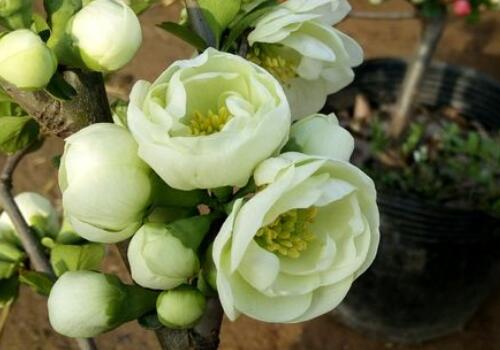
I. What should you do if the begonia leaves at home turn yellow and wilt?
Begonia leaves wilt for a variety of reasons, so to treat the problem you must first understand what is causing the wilting and yellowing. Below is a summary of some common causes of begonia wilting along with the corresponding solutions. Friends who grow begonias at home may want to save this for reference.
1. Yellowing and wilting of begonia leaves caused by pathogens and pests due to improper care: Plants, like people, need to be looked after. Improper care makes it easy for pests to attack the leaves and flowers, causing the leaves to wilt and yellow and the flowers to die and wither.
Solution: Spray the leaves affected by pests with a fungicide and insecticide to control the further spread and infestation of pathogens and pests.
2. Yellowing and wilting of begonia leaves caused by overwatering or underwatering: Many things suffer when taken to excess, and watering begonias is no exception. If you water too much, the soil becomes too wet, which leads to a lack of oxygen in the soil and root rot, causing the leaves to turn yellow and dry up or even die; if you water too little, the soil becomes dry and hard and cannot supply the plant with nutrients in time, causing the leaves to yellow and wilt.
Solution: If you have watered too much but the waterlogging is not severe, you can raise the pot so the excess water drains out through the ventilation holes at the bottom, and keep it well ventilated so the soil dries out; if the waterlogging is very serious, you will have to repot it with fresh soil. If you have watered too little, simply water the potted plant in time.
3. Yellowing and wilting of begonia leaves caused by insufficient fertilizing: Some people neglect to care for their begonias, and too little or insufficient fertilizer leaves the begonia poorly nourished as it grows, causing the leaves to yellow and dry up.
Solution: Cut off the poorly nourished branches and leaves, give the begonia enough nutrients, and care for it attentively so it gradually recovers. Remember the correct fertilizing method: fertilize about once a week in spring and autumn; in summer and winter you can skip fertilizing, but you should water appropriately.
4. Yellowing and wilting of begonia leaves caused by insufficient light or too much direct sun: Plants need photosynthesis to grow, but they should not be exposed to too much harsh sun either.
Solution: If there is not enough light, move the begonia into the sunlight. In spring, autumn and winter it can be sunned normally; in summer, when the sun is too intense, be careful to shade it.
5. Yellowing and wilting of begonia leaves caused by poor ventilation and oxygen deprivation of the plant: People die without oxygen, and plants are the same. Poor ventilation and oxygen deprivation easily cause the leaves to yellow, wilt and die.
Solution: Place the begonia in a well-ventilated environment, and do not block the ventilation holes in the pot.
6. Soil that is too alkaline or too acidic can also cause begonia leaves to yellow and wilt: Flowers and plants each have their own pH requirements for growth, so pay attention to the plant's pH needs.
II. What exactly are the methods for growing begonias?
Growing a good pot of begonias takes some thought. Do not assume that a begonia under rough, extensive management will still grow well. So let us now go through how to grow begonias correctly.
(1) How should the soil for growing begonias be managed?
1. If you are not buying a whole potted plant from the market but planting it yourself, first choose loose, fertile soil that also drains well.
2. The soil can be bought ready-made from the market or online, or you can mix it yourself using leaf mold, river sand and well-rotted fertilizer.
(2) How should begonias be watered?
1. The begonia is a plant that tolerates drought and fears waterlogging, so under normal circumstances simply keeping the soil moist is enough. Of course, it should not be too wet or too dry either.
2. Water begonias once every three to five days in spring; about once every two days in summer; about once every three to five days in autumn; and at longer intervals in winter, about once every ten days to half a month.
(3) How should begonias be fertilized?
Begonias grown in the ground need organic fertilizer applied after each year's flowering season in addition to a base fertilizer. Potted begonias just need to be fertilized according to the season (how to fertilize is mentioned above).
(4) How should begonias be pruned?
Begonias should be pruned at different stages, which helps them grow better.
1. Prune when begonias put out new buds in spring: Growing new buds in spring requires a lot of nutrients, so at this time cutting off dead branches, diseased branches and old, weak branches, among others, benefits growth.
2. After the begonia's flowering period, about two weeks after the flowers fade, prune away crowded and protruding branches to ensure the growth of short branches.
3. Begonias can also be pruned after leaf fall, cutting off superfluous branches as well as dry, dead and pest-infested branches.
III. What are the flower language and feng shui significance of begonias?
1. Since ancient times, the begonia has symbolized nobility and has long been known as the "imperial concubine among flowers" and the "immortal among flowers," so it is often used as a metaphor for a beauty.
2. The begonia also carries the meaning of a traveler away from home missing their hometown and the sorrow of parting.
3. The flower language of the begonia includes gentleness, beauty and happiness; in addition, the begonia (qiuhaitang) also symbolizes bitter love.
4. The begonia is a flower appreciated by both refined and popular tastes, elegant yet noble, so in feng shui it has the role of a flower of wealth and honor.