How to Grow Sichuan Pepper Trees and How Much Does a Sapling Cost
Sichuan pepper is one of the seasonings we commonly use in daily life, and it has a long history of cultivation in China. It is a widely distributed spice and oilseed tree species with great economic value. So what are the methods for growing Sichuan pepper trees? How much does a Sichuan pepper sapling cost?
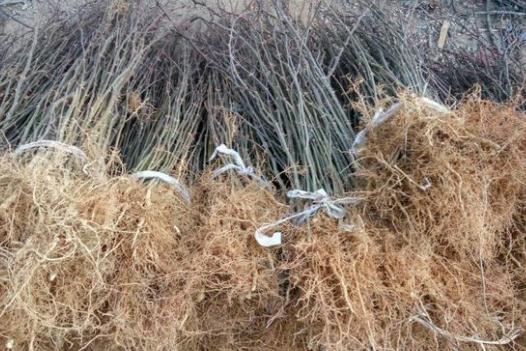
I. Methods for growing Sichuan pepper trees
1. Planting time: The planting time for Sichuan pepper trees varies with the region. In the north, it is generally better to choose March; too early affects germination, and too late affects later growth. In the warmer regions of the south, planting in autumn and winter is generally sufficient.
2. Site selection: Sichuan pepper trees are relatively small, with shallow root distribution and strong adaptability, and they are not strict about soil. They can generally be planted on barren hills, wasteland, roadsides, field edges, in front of and behind houses, and other idle land. They are not suitable for planting on hilltops, low-lying areas, wind gaps, places with thin soil layers, exposed rock, or heavy clay.
3. Land preparation: Before planting Sichuan pepper trees, the land needs to be prepared, and sufficient base fertilizer should be applied at the same time. When preparing land on hilly terrain, soil and water conservation work must be consistently carried out.
4. Planting density: Sichuan pepper should be planted sparsely rather than densely. Before planting, determine the planting points according to plan, and dig holes with a row spacing of 2.2 m and a plant spacing of 1.5 m. Generally, 200 Sichuan pepper seedlings are planted per mu. The depth of the holes depends on the seedlings. When planting, first fill the bottom of the hole with deep soil mixed with farmyard manure and tread it firm, then place the seedling into the hole and cover the roots with soil.
5. Fertilization management: Topdressing before the flowering period (to supplement when the amount of base fertilizer applied is small and the tree has insufficient stored nutrients), topdressing during the young fruit stage (to ensure the needs of fruit growth and development, a small amount of quick-acting nitrogen fertilizer can be applied, and phosphorus and potassium fertilizer should also be applied), topdressing before flower bud differentiation (topdressing should mainly be nitrogen and phosphorus fertilizer, together with an appropriate amount of potassium fertilizer, to promote flower bud differentiation), autumn topdressing (from mid-to-late August to early September, in addition to nitrogen fertilizer, potassium fertilizer should be increased, mainly to increase yield and improve quality)
6. Watering: During the year, Sichuan pepper should be watered once each before germination, after fruit set, and after leaf fall.
7. Pruning: Every year, the tips of the main branches and side branches should be shortened, and weak branches and diseased and pest-damaged branches should be removed. In the end, 5-7 main branches should be retained per plant. Pruning is generally done after harvest until before germination in early spring of the following year, and the pepper-picking season is best.
8. Harvesting and processing: Harvest when the Sichuan pepper fruits have completely turned bright red and show a glossy, oily sheen, the suture line of the pericarp is raised, a small amount has split, and a rich numbing aroma can be smelled. The mature period is generally around the Beginning of Autumn to the End of Heat. After harvesting, place them under strong sunlight to dry for 2-3 hours. When the fruits have all split, gently pat them so the seeds separate from the pericarp, then use a sieve to separate the seeds from the pericarp.
II. How much does a Sichuan pepper sapling cost?
The market price of Sichuan pepper seedlings varies according to variety and specification, generally 0.2-4 yuan/plant. See the table below for specific prices:
| Name | Diameter at breast height (cm) | Height (cm) | Crown width (cm) | Ground diameter (cm) | Price |
| Sichuan pepper seedling | 6 | 120 | 5 | 5 | 3.5 yuan/plant |
| Sichuan pepper seedling | 5 | 35 | 5 | 5 | 2.3 yuan/plant |
| Sichuan pepper seedling | 5 | 100 | 3 | 8 | 3.5 yuan/plant |
| Sichuan pepper seedling | - | 120 | 30 | 0.8 | 0.35 yuan/yuan/plant |
| Sichuan pepper seedling | - | 50 | - | 0.5 | 0.3 yuan/plant |
| Dahongpao Sichuan pepper seedling | - | 0.8 | 0.3 | 0.6 | 0.25 yuan/plant |
| Sichuan pepper seedling | - | 60 | - | 0.5 | 0.3 yuan/plant |
| Dahongpao Sichuan pepper seedling | - | 120 | 30 | 0.6 | 0.28 yuan/yuan/plant |
| Sichuan pepper seedling | - | 120 | 30 | 0.7 | 0.28 yuan/plant |
III. How many years does it take for a Sichuan pepper tree to bear fruit?
According to Mr. Ma, a Sichuan pepper grower in Hunan, Sichuan pepper trees generally begin to bear fruit 2 years after planting, produce returns at 3 years, and bear more fruit later. They enter the full fruiting period at 5-7 years, and the full fruiting period lasts 10-15 years, with the longest reaching 20 years.