How to Grow Purple Peanuts for High Yield? A Detailed Guide to Scientific Cultivation Techniques
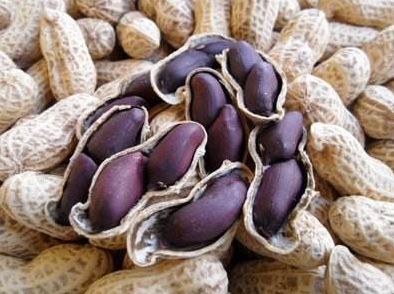
Purple peanut is black peanut, a new peanut variety with very high nutritional value and excellent prospects for cultivation. So how do you grow purple peanuts for high yield? What are the scientific high-yield cultivation techniques for purple peanuts?
I. Soil Selection and Treatment
Choose a plot where the air, soil and water sources are free from pollution. Purple peanut is not strict about soil requirements; it is suitable for various soils with a pH of 5.5-7.2, but it grows best in soil that is deep, has an active plow layer, and is level with good drainage. Sandy loam with a loose cultivated layer and a deep active soil layer is most suitable.
The plot for planting purple peanuts should be deep-plowed 25-30 cm, and combined with winter plowing, apply 2500-3000 kg of farmyard manure per mu. In the Spring Equinox period of the following year, begin shallow plowing 10-13 cm. Plowing should be followed immediately by harrowing to preserve soil moisture. Sowing can begin when the soil temperature at a depth of 5 cm stabilizes above 15°C. Before sowing, treat the seed with chemicals: 100 g of 50% phoxim mixed with 50 kg of seed can prevent underground pests; 150-250 g of 40%-50% carbendazim mixed with 50 kg of seed can prevent stem rot and seedling damping-off. Combined with land preparation, apply 2000 kg of fermented high-quality organic fertilizer per mu, 20-25 kg of diammonium phosphate, 10 kg of urea, 12.5-15 kg of potassium chloride, 0.5 kg of boron fertilizer, and 1.0 kg of zinc fertilizer.
II. Cultivation Methods and Seed Treatment
1. Ridge planting
Ridge spacing 30-40 cm, ridge surface width 55-60 cm, ridge height 10-15 cm, double-row planting, row spacing 25 cm, hole spacing 15 cm, sowing depth 5 cm, sowing density 8500-10000 holes per mu, 2 seeds per hole. Ridge planting can deepen the active soil layer, allow light exposure on three sides, raise soil temperature, and facilitate drainage and irrigation as well as peg penetration into the soil and pod growth and development.
2. Plastic film mulching
In our township, sowing is done in early to mid-April, and a ridge height of 10-12 cm is appropriate. If too high, the ridge surface is not easy to keep wide, and when mulching, the lower edge of the ridge slope cannot be pressed with soil firmly and solidly, so the plastic film is easily blown up by wind; if too low, it is not conducive to drainage.
3. Seed treatment
Select double-seed pods, sun-dry them with shells for 2-3 d before shelling, and after shelling screen first-grade healthy kernels as seed. It is recommended to treat seeds with rare earth or seed coating agent; 1 kg of seed treated with 2 g of borax plus 2 g of rare earth can significantly improve peanut yield and quality.
III. How Can Purple Peanuts Be Grown for High Yield?
1. Pest, disease and weed control
After sowing purple peanuts, while the soil is moist, promptly spray herbicides to carry out soil-closed weeding. Generally, agents such as 50% dinitramine and acetochlor are used. The spray should be uniform and thorough. Purple peanut has strong resistance and fewer pests and diseases. Attention should be paid to the occurrence of pests such as aphids, cotton bollworms and red spiders. For diseases, prevention should be the main approach. Spray fungicides such as carbendazim and mancozeb 1-2 times a month to prevent common peanut diseases such as leaf spot, black spot, powdery mildew and stem rot. If disease occurs, at the early stage of onset, use 20% triadimefon 1500-2000 times dilution, 70% thiophanate-methyl 1200 times dilution, 65% mancozeb 600 times dilution, or agricultural antibiotic 120 at 200-300 times dilution for control, at intervals of 10-15 d.
2. Fine management
(1) Timely replanting
During the sowing period, poor seed quality, insufficient soil moisture, improper land preparation and fertilization, pest and disease damage, and adverse low-temperature weather often cause seed sprouts to die, resulting in missing seedlings and broken rows. Therefore, 10-15 d after sowing, after the peanuts emerge, promptly germinate and replant to ensure a full stand.
(2) Punching holes and breaking the film
After film-mulched peanuts emerge, promptly punch holes and break the film to release the seedlings. When releasing seedlings, this should be done after the first true leaf has grown, turned green and unfolded, before 10:00 a.m. and after 14:00 p.m., punching holes of about 5 cm and gently peeling out the leaves by hand. Then lightly cover with soil and press the plastic film firmly, otherwise the seedlings are easily burned.
(3) Watering in case of drought
If drought occurs during the pegging stage, pod-setting stage and pod-swelling stage, be sure to fight drought and water in time. For drought relief watering, sprinkler irrigation is best, and the sprinkler irrigation time should be appropriately extended and the amount of water appropriately increased so that a suitable amount of water remains in the furrow, which helps moisture rise from the furrow into the ridge, but strictly prevent large amounts of water from flowing over the ridge surface. After watering, when the moisture is suitable, cultivate the furrow once to prevent soil compaction and weed growth in the furrow, ensuring timely peg penetration into the soil and pod swelling and filling. But in case of waterlogging, drain promptly and strictly prevent pod rot.
3. Foliar fertilization
(1) The role of foliar fertilization. Foliar fertilization of purple peanut has the characteristics of high fertilizer absorption and utilization rate, saving fertilizer, and significant yield increase. When nitrogen fertilizer is applied to the leaves, the absorption and utilization rate by peanut plants reaches more than 55.5%, the number of filled pods increases significantly, and the economic coefficient improves markedly; when phosphorus fertilizer is applied to the leaves, yield can generally increase by 7%-10%; when microfertilizers such as molybdenum, boron, manganese and iron are applied to the leaves, yield can generally increase by 8%-10%. Macronutrients such as nitrogen, phosphorus, potassium and calcium, as well as trace elements such as molybdenum, boron, manganese and iron, can all be applied to the leaves.
(2) Fertilization methods:
① Nitrogen fertilizer: weigh 0.5 kg of urea and fully stir and dissolve it in 50 kg of clean water to make a 1% urea aqueous solution. If purple peanuts show signs of fertilizer deficiency in the middle and late growth stages, or if there is continuous rainfall during the peanut growth period, soil waterlogging, and difficulty for roots to absorb nutrients, then spray it.
② Phosphorus fertilizer: purple peanut has a relatively strong ability to absorb phosphorus. Spraying a 2%-3% superphosphate aqueous solution on the leaves during the middle and late growth stages can increase the rate at which photosynthetic products are transported to the pods and raise pod yield. The specific method is to place 1-1.5 kg of superphosphate in 50 kg of clean water, stir and soak it, and after 1 day and night take the upper clear liquid for application, generally spraying once every 7-10 d, for 2-3 consecutive sprays, about 600 kg per mu each time. Be careful to completely remove the residue to avoid damaging the leaves.
③ Mixed application of nitrogen and phosphorus: in peanut fields lacking both phosphorus and nitrogen, a mixed solution of 1% urea and 2% superphosphate can be sprayed, which saves labor and gives good results. The preparation method of the mixed solution is to add 0.5 kg of urea to 50 kg of 2% superphosphate aqueous solution.
④ Potassium fertilizer: generally prepared with plant ash. The preparation method is to take 2.5-5 kg of plant ash that has not been rained on, add 50 kg of water, stir thoroughly, soak for 12-14 h, and take the clear liquid, which is a 5%-10% plant ash extract, spraying about 60 kg per mu each time. A potassium sulfate or potassium chloride aqueous solution can also be used. The preparation method is to add 1 kg of potassium sulfate or potassium chloride to 50 kg of clean water, stir until dissolved to make a 2% potassium sulfate or potassium chloride aqueous solution, spraying 60 kg per mu each time.
⑤ Combined use of phosphorus and potassium: take 2.5 kg of dry plant ash, add 20-25 kg of water and soak, and at the same time take 1 kg of superphosphate and sprinkle it into the soaking liquid, stir thoroughly, and after half a day filter out the clear liquid, then add 10 kg of water to the remainder, soak and filter, then combine the two filtrates and add water to 50 kg. This is homemade potassium dihydrogen phosphate. Spray 60 kg per mu each time; 2 sprays show an obvious yield-increasing effect.
4. Controlling excessive growth
From the pegging stage to the pod-setting stage of film-mulched purple peanuts, with the arrival of high temperature and high humidity, excessive growth is likely to occur. To control excessive growth, from the late pegging stage to the early pod-setting stage, use about 20 g of Zhuangfeng'an per mu, diluted with 40 kg of water, and spray on the leaves 1-2 times. Zhuangfeng'an can dwarf plant height, promote leaf photosynthesis, improve the distribution of photosynthetic products, increase pod weight, and stably increase yield by more than 10%.
5. Increasing foliar fertilizer application
Purple peanuts have a relatively large fertilizer requirement in the middle and late stages. Starting from the flowering stage, strengthen the application of foliar fertilizer, spraying once every 7-10 d for 3-5 consecutive sprays. Commonly used foliar fertilizers include: 2% superphosphate extract, 0.3% potassium dihydrogen phosphate solution, 0.1%-0.2% calcium molybdate, and 1%-2% urea. Especially 30-40 d before harvest, add one spray of 1% urea + 0.3% potassium dihydrogen phosphate, which helps prevent premature aging, promote nutrient accumulation, increase yield, and improve pod quality.
6. Timely harvest
Purple peanuts have relatively high water content at pod maturity, slow dehydration, and a short after-ripening period, so they should be harvested at the proper time to prevent sprouting and pod rot. Harvest in time when the middle and lower leaves of the plant fall normally, the leaves on the upper fruiting branches turn yellow, the pod shell network is clear, and the seed kernels are black, bright and glossy. Harvesting too early results in unfilled pods and reduced yield; harvesting too late makes pods easy to shed. The growth period of purple peanut is about 125 d.
The above is about scientific cultivation techniques for high-yield purple peanuts. Purple peanuts have a high market price and are a new variety with very good cultivation prospects. If you want to develop the planting industry, you might as well try growing purple peanuts.