Geranium (Pelargonium) Cultivation Methods, Causes of Yellow Leaves, and Whether It Is a Begonia
Geranium (Pelargonium), also known as zonal geranium, fish geranium, mosquito-repellent plant, and butterfly geranium, is a shrubby flowering plant in the family Geraniaceae. Its flower colors include red, orange-red, pink, and white, with vivid hues. With proper care, it can bloom continuously throughout the year. So, what are the cultivation methods for geraniums? Is it a begonia? What causes yellow leaves?
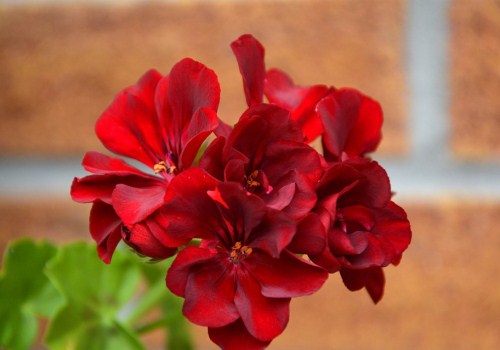
I. What are the cultivation methods for geraniums?
1. Soil and propagation: Geraniums are suitable for growing in sandy soil. A mix of leaf mold, garden soil, river sand, and organic fertilizer can be used, or a mix of fine sandy soil, leaf mold, perlite, and organic fertilizer. Geraniums can be propagated by seed or by cuttings. Seed propagation can be done in spring or autumn, with an optimal germination temperature of 20-25°C. After sowing, cover the seeds with only a shallow layer of soil; germination occurs in about 2-5 days. Cuttings can be taken at any time except in summer when high temperatures put the plant in a semi-dormant state. After cutting, let the cut end dry for several days before inserting into the growing medium. After insertion, place in a semi-shaded spot and maintain a room temperature of 13-18°C; rooting occurs in about 14-21 days.
2. Temperature and weather: The optimal growing temperature for geraniums is 10-20°C. Too high a temperature will cause them to enter a semi-dormant state, while too low a temperature makes them susceptible to cold damage. In spring and autumn, they need plenty of sunlight. In summer, when it is too hot, they should not be exposed to direct sunlight and can be placed in a cool spot. In winter, when it is too cold, the plant can suffer frost damage, so attention should be paid to keeping it warm. Avoid windy and rainy weather: strong winds can snap the geraniums, and heavy rain can cause waterlogging of the roots, leading to root rot.
3. Watering and fertilizing: In spring and autumn, water geraniums once every two or three days, keeping the soil moist but not waterlogged. In summer, water sparingly; on overcast and rainy days, watering can be skipped. In winter, water sparingly when room temperature is low, and more when room temperature is high. During the growing period, apply liquid fertilizer once every 10-15 days; during the peak growing season, apply liquid fertilizer once every 7-10 days. Apply nitrogen fertilizer before buds form, and phosphorus-potassium fertilizer after buds form. If winter room temperature is relatively high, fertilize; in summer when temperatures are high, stop fertilizing. Fertilization should be moderate.
4. Pruning and shaping: To make the geranium plant full and compact in shape, pinch off the growing tips when the seedlings reach 10 cm tall to encourage new branches. After new branches grow, pinch again 1-2 times. After each flowering, promptly remove spent flowers and prune to encourage continuous new growth and blooming. After the flowers fade, remove the spent blooms, and also thin out branches and shape the plant as needed.
II. Is a geranium a begonia?
A geranium is not a begonia, because:
1. Different species and genera: The geranium is a perennial herb in the order Geraniales, family Geraniaceae, genus Pelargonium, growing 30-60 cm tall. It is very popular in Africa and Europe and is the national flower of Hungary. The begonia is a tree in the order Rosales, family Rosaceae, genus Malus, reaching up to 8 m tall. It has long been known as the "fairy among flowers," the "imperial consort of flowers," and the "noble flower," carrying the imagery of "jade hall wealth and honor."
2. Different habits: The optimal growing temperature for geraniums is 15-20°C; too high a temperature puts the plant in a semi-dormant state, and too low a temperature causes cold damage. The begonia is extremely cold-hardy and can grow well even at minus 15°C.
3. Different stems and leaves: The geranium has upright stems with distinct nodes, densely covered with short soft hairs. The petioles are 3-10 cm long, with fine soft hairs and glandular hairs. The leaves are round or kidney-shaped, with rounded teeth along the margins, and both sides of the leaf have transparent short soft hairs. The begonia has sturdy branchlets, with short soft hairs when young and hairless when old. The petioles are 1.5-3 cm long, with short soft hairs. The leaf blades are elliptical to oblong-elliptical, with closely appressed fine serrations along the margins, and old leaves are hairless.
4. Different flowers: The geranium's flowers are umbel-like inflorescences borne in the leaf axils, with broadly obovate petals, in colors of red, orange-red, pink, or white. The begonia's flowers are borne in nearly umbel-like inflorescences, with ovate petals, in colors of white or pink.
III. What causes yellow leaves in geraniums?
Causes of yellow leaves in geraniums include improper watering, improper fertilizing, unsuitable temperature, and pests and diseases. Overwatering and overfertilizing geraniums can cause root rot and root burn; immediately reduce water and fertilizer, and in severe cases, replace the soil. Long-term lack of water and fertilizer can cause yellow and withered leaves; immediately water and apply an appropriate amount of supplemental fertilizer. Too high a temperature and exposure to scorching sun can cause leaves to turn yellow and die; move the plant to a cool, well-ventilated spot. Too low a temperature and insufficient light can also cause leaves to yellow; maintain a moderate temperature and sufficient light. Pests and diseases can cause localized necrosis of leaves, yellowing, and falling off; at this point, spray pesticides for control.
IV. Are geraniums toxic?
The entire geranium plant is toxic. As long as the skin does not come into contact with its sap, it is fine; otherwise, it can cause redness, swelling, and itching. When pruning branches, leaves, and flowers, try to wear gloves. However, its fragrance is non-toxic; the floral scent is like mint and can regulate hormones, stimulate lymphatic detoxification, and balance skin oil secretion. It is also a good insect repellent. However, it should not be placed in homes of people with sensitive skin, and it should not be placed in homes with pregnant women or infants.